
Login Form

Newsletter


Support YEE
-
Home

- Uncategorised
Deprecated: Methods with the same name as their class will not be constructors in a future version of PHP; plgContentJw_allvideos has a deprecated constructor in /home/html/yeenet.eu/public_html/www/archives/plugins/content/jw_allvideos/jw_allvideos.php on line 18
Deprecated: implode(): Passing glue string after array is deprecated. Swap the parameters in /home/html/yeenet.eu/public_html/www/archives/plugins/content/jw_allvideos/jw_allvideos.php on line 72
Deprecated: Array and string offset access syntax with curly braces is deprecated in /home/html/yeenet.eu/public_html/www/archives/libraries/idna_convert/idna_convert.class.php on line 421
Deprecated: Array and string offset access syntax with curly braces is deprecated in /home/html/yeenet.eu/public_html/www/archives/libraries/idna_convert/idna_convert.class.php on line 435
Deprecated: Array and string offset access syntax with curly braces is deprecated in /home/html/yeenet.eu/public_html/www/archives/libraries/idna_convert/idna_convert.class.php on line 826
Deprecated: Array and string offset access syntax with curly braces is deprecated in /home/html/yeenet.eu/public_html/www/archives/libraries/idna_convert/idna_convert.class.php on line 957
Deprecated: implode(): Passing glue string after array is deprecated. Swap the parameters in /home/html/yeenet.eu/public_html/www/archives/plugins/content/jw_allvideos/jw_allvideos.php on line 72
Deprecated: implode(): Passing glue string after array is deprecated. Swap the parameters in /home/html/yeenet.eu/public_html/www/archives/plugins/content/jw_allvideos/jw_allvideos.php on line 72
Deprecated: implode(): Passing glue string after array is deprecated. Swap the parameters in /home/html/yeenet.eu/public_html/www/archives/plugins/content/jw_allvideos/jw_allvideos.php on line 72
Deprecated: implode(): Passing glue string after array is deprecated. Swap the parameters in /home/html/yeenet.eu/public_html/www/archives/plugins/content/jw_allvideos/jw_allvideos.php on line 72
News
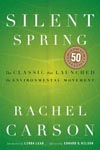 Silent Spring (by Rachel Carson, 1962)
The book documented detrimental effects of pesticides on the environment, particularly on birds. Carson accused the chemical industry of spreading disinformation, and public officials of accepting industry claims uncritically.
 The Limits to Growth (by Donella H. Meadows, Dennis L. Meadows, Jørgen Randers, and William W. Behrens III, 1972)
A book about the computer modelling of exponential economic and population growth with finite resource supplies.
 Cradle to Cradle: Remaking the Way We Make Things(by Michael Braungart and William McDonough, 2002)
The book calls for a radical change in industry: a switch from a cradle-to-grave pattern to a cradle-to-cradle pattern.
 No Logo: Taking Aim at the Brand Bullies (by Naomi Klein, 1999)
The book focuses on branding and corporate censorship. Naomi Klein tells a story
of rebellion and self-determination in the face of our new branded world.
 Square foot gardening (by Mel Bartholomew, 2005)
The book speaks about the practice of planning and creating small but intensively planted gardens. The practice combines concepts from other organic gardening methods, including a strong focus on compost.
 100 Ways to Save the World (by Johan Tell, 2006)
This work outlines what individuals can do in their day-to-day lives to make a positive difference on the environment. Beautiful full-color photos complement the easy-to-implement ideas.
 The Revenge of Gaia: Why the Earth Is Fighting Back - and How We Can Still Save Humanity (by James Lovelock, 2006)
James Lovelock, one of the giants of environmental thinking, argues passionately and poetically that, although global warming is now inevitable, we are not yet too late to save at least part of human civilization. This short book, written at the age of eighty-six after a lifetime engaged in the science of the earth, is his testament.
 Sunship Earth: An Acclimatization Program for Outdoor Learning (by Steve van Matre, 1979)
A guide to a five-day program designed to help elementary-age children understand their world by using all five senses.
 Experience and Education (by John Dewey, 1938)
The book provides a concise and powerful analysis of education. Dewey argues that the quality of an educational experience is critical and stresses the importance of the social and interactive processes of learning.
 Beyond Learning By Doing: Theoretical Currents in Experiential Education (by Jay W. Roberts, 2012)
What is experiential education? What are its theoretical roots? Where does this approach come from? Offering a fresh and distinctive take, this book is about going beyond "learning by doing" through an exploration of its underlying theoretical currents.
 I Love My World (by Chris Holland, 2012)
A new guidebook to rekindle the naturally playful spirit and develop a deep connection with nature from an early age. The book is full of bushcraft, environmental art, nature awareness and outdoor play activities, as well as mentoring tips and beautiful images.
 This changes everything ( by Naomi Klein, 2014)
A book talking about how in order to really tackle the issue of climate change we should talk about the real reasons that are causing it. If we want to deal with the climate crisis we have to abandon the "free-market" ideology, restructure the current global economy and political system.
 Watching giants - the secret lives of whales (by Elin Kelsey, 2008)
An introduction into scientific research and the world of cetaceans. A combination of personal accounts, interviews with scientists, and interesting facts about cetaceans.
 Eco-warriors: Understanding the radical environmental movement (by Rik Scarce, 2007)
An in-depth look into the "radical" environmental movement. It provides better understanding of the movement by telling the history, motives and philosophy of people and organisations behind some of the actions.
 Plastic Ocean: How a Sea Captain's Chance Discovery Launched a Determined Quest to Save the Oceans (by Charles Moore, 2011)
A book on the dark side of plastic - plastic pollution of oceans and potential health impacts on organisms.
 A New Green History of the World: The Environment & the Collapse of Great Civilizations (by Clive Ponting, 2007)
A study of the relationship between the environment and human history. It shows how growth of societies caused their downfall after reaching the point when the environment could not sustain them anymore.
 Respect for Nature: A Theory of Environmental Ethics (by Paul W. Taylor, 2011)
By drawing on biology, moral philosophy, and environmental science the author forms a biocentric environmental ethics - ethics in which all life has value.
 The Skeptical Environmentalist: Measuring the Real State of the World (by Bjørn Lomborg, 2011)
A provocative book by a former Greenpeace member. The author examines major environmental issues using data from internationally recognized research institutes and documents that the world has actually improved.
 What a Plant Knows: A Field Guide to the Senses (by Daniel Chamovitz, 2012)
Using our senses (sight, smell, touch, hearing, memory, awareness) as a guideline, the author explores how plants experience the world.
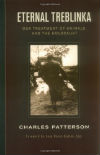 Eternal Treblinka: Our Treatment of Animals and the Holocaust (by Charles Patterson, 2001)
This book examines the relationship between humans and animals, origins of human supremacy over animals and draws parallels between the industrialized slaughter of animals and humans in modern times.
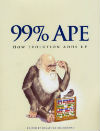 99% Ape: How Evolution Adds Up (by Jonathan Silvertown, 2009)
An introduction to evolution.
 The Human Age: The World Shaped (by Us by Diane Ackerman, 2015)
Humans dominate this world and are currently the main driving force of changes. This book comprises new human related scientific discoveries, possible future environmental threats and innovative solutions to some environmental issues.
 Human Universe (by Brian Cox and Andrew Cohen, 2014)
By combining natural history and astronomy authors present our evolution from apes to space explorers and show why humanity seems to be unique in the universe.
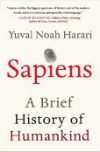 Sapiens: A Brief History of Humankind (by Yuval Noah Harari, 2015)
A chronicle of human history from its prehistoric beginnings to present times. The book ends with provocative scenarios of and questions on the future of humankind.
Send us your book proposals to This email address is being protected from spambots. You need JavaScript enabled to view it.
Below you will find a collection of videos and documentaries that speak about important environmental issues. They can also be a great source of inspiration for your future possible actions in the field.
All the pictures are linked, just click on them.
 |
 |
 |
|
TED Talks
A collection of articles
on the topic of environment
|
The Story of Stuff
A look at our production
and consumption patterns
|
Home
A film about how Earth's
problems are all interlinked
|
 |
 |
 |
|
Binta and the great idea
A liitle Senegalesegirl wants to make the world better
|
Vanishing of the bees
A documentary about why
bees are in danger
|
Queen of the Sun
A film about bad beekeeping
and colony collapse disorder
|
 |
 |
 |
|
The Yes Men Fix the World
Two political activists expose
the faults of big corporations
|
Garbage Island
A story about plastic waste
in the North Pacific Gyre
|
The Human Footprint
The film explores the impact
humans have on the planet
|
 |
 |
 |
|
Blood coltan
A film about warlords in East Congo and mobile phones
|
The silence of bees
What are the problems bees are facing nowadays
|
Earthlings
A film about the inhumane
use of animals
|
|
|
|
 |
|
Garbage Warrior
The story of a new type of
"radically sustainable" houses
|
The world according to
Monsanto
What are the firm's practices
|
The Age of Stupid
A film about climate
change from past to future
|
|
|
|
 |
|
Ashes and Snow
Photographic artworks
about humans and animals
|
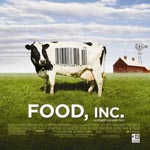
Food, Inc.
About America's corporate
controlled food industry
|
Super Size Me
A man lives only on
McDonald's food for a month
|
 |
 |
 |
|
Promised Land
A film about corporations'
influence over resources
|
Project Wild Thing
A documentary about the
importance of playing outside
|
No Logo
About the incluence of
capitalism
|

Activism: is the doctrine or practice of vigorous action or involvement as a means of achieving political or other goals, sometimes by demonstrations, protests, etc.
Biodiversity: describes the number, variety and variability of living organisms in an ecosystem.
Bee colony collapse disorder (CCD): is a phenomenon in which honey bee colony abruptly disappear because of the combination of a number of diseases, bad practices in the industrial agriculture as the use of pesticides. Significant economically because many agricultural crops worldwide are pollinated by honey bees. Shortages of bees in the US have increased the cost to farmers renting them for pollination services by up to 20%.
Carrying capacity: of a biological species in an environment is the maximum population size of the species that the environment can sustain indefinitely, given the food, habitat, water and other necessities available in the environment.
Certification: is a form of environmental regulation and development where a company can voluntarily choose to comply with predefined processes or objectives set forth by the certification service (eg. Ecolabel). To minimize the harmful impacts to the environment by voluntarily following a set of externally set and measured objectives.
Compost: is the product resulting from the biological decomposition of organic matter into mineral elements by bacterias under aerobic controlled conditions.
Downcycling: is the process of converting waste materials or useless products into new materials or products of lesser quality and reduced functionality. A clear of example of downcycling is plastic recycling, which turns the material into lower grade plastics.
Ecosystem: a biological community of interacting organisms and their physical environment.
Earthship: is a registered trademark by Michael Reynolds, that refers to a type of passive solar house made of natural and recycled materials.
Extinction: is the end of an organism or of a group of organisms (taxon), normally a species.
Ecological Product: is developed in accordance with criteria for the formulation and packaging in order to have less impact on the environment. This does not mean that the product is respectful of the person and the environment throughout its life cycle. In the absence of a recognized label, the consumer has no way to know if these arguments are satisfactory if there are no specific and complete criteria to respect, or official organism to confirm the veracity of the responses to criteria.
Eco-friendly product: should have a very good biodegradability and low ecotoxicity and respect the person, because humans are part of the environment. The European Ecolabel guarantees the consumer that has satisfactory environmental qualities.
Environmental education: is a learning process that increases people's knowledge and awareness about the environment and associated challenges, develops the necessary skills and expertise to address the challenges, and fosters attitudes, motivations, and commitments to make informed decisions and take responsible action
Fracking: is a technique in which typically water is mixed with sand and chemicals, and the mixture is injected at high pressure into a wellbore to create small fractures-earthquakes, along which fluids such as gas, petroleum, uranium-bearing solution, and brine water may migrate to the well.
Folk crops: is the variance in genetic and physical characteristics of plants as a result of adaptation to local conditions used in traditional agriculture
Footprint: is the impression left by a foot or shoe on the ground or a surface.
G.
Gaia theory: proposes that organisms interact with their inorganic surroundings on Earth to form a self-regulating, complex system that contributes to maintaining the conditions for life on the planet.
GMO: genetically modified organism is an organism whose natural genetic material has been altered using engineering techniques to include new characteristics on it for lucrative interest.
Green product: is a product that organic compounds are mainly of plant origin.
Impact: Possible adverse effects caused by a development, industrial, or infrastructural project or by the release of a substance in the environment.
Indigenous: peoples and nations are those which, having a historical continuity with pre-invasion and pre-colonial societies that developed on their territories, consider themselves distinct from other sectors of the societies now prevailing on those territories, or parts of them. They form at present non-dominant sectors of society and are determined to preserve, develop and transmit to future generations their ancestral territories, and their ethnic identity, as the basis of their continued existence as peoples, in accordance with their own cultural patterns, social institutions and legal system.
Natural product: is a product extracted from nature. The word "natural" is more or less defined by legal instruments. On the other hand the term "natural" does not always guarantee a satisfactory respect of the person and the environment. Many natural substances are classified as "toxic" to the person and / or to the environment or are classified as allergens.
Natural environment: encompasses all living and non-living things occurring naturally on Earth or some region thereof.
Organic & eco-friendly: terms used to refer to goods and services, laws, guidelines and policies claimed to inflict reduced, minimal, or no harm at all, upon ecosystems or the environment.
Organic product: is a product which at least has 95% of its ingredients from plants or minerals, and 10% total composition must come from organic farming, which means without GMOs, chemical fertilizers, and pesticides.
Pollution: introduction of contaminants into the natural environment that cause adverse change. Pollution can take the form of chemical substances or energy, such as noise, heat or light. Pollutants, the components of pollution, can be either foreign substances/energies or naturally occurring contaminants.
Permaculture: is a branch of ecological design, ecological engineering, and environmental design that develops sustainable architecture and self-maintained agricultural systems modeled from natural ecosystems.
Pesticide: is a substance used for destroying insects or other organisms harmful to cultivated plants or to animals.
3 R : Refuse - Reduce - Recycle in your goods consumption
Species: is the basic unit of biological classification. Is defined as a group of organisms capable of interbreeding and producing fertile offspring.
Sustainability: is the ability for society to meet its present needs while preserving the ability of future generations to meet their own.
Upcycling:is the process of converting waste materials or useless products into new materials or products of better quality or for better environmental value.
Vermicompost: is the product of composting utilizing various species of worms, usually red wigglers, white worms, and earthworms to create a heterogeneous mixture of decomposing vegetable or food waste (excluding meat, dairy, fats, or oils), bedding materials, and vermicast.
Water footprint
 |
Russia | AYA |
AYA is a Russian non-profit and non-governmental organization with its activities based on the principles of voluntariness, equal rights of members of the organization, self-governance, legality, transparency. We organize international volunteer projects in Russia focused on environmental education and active citizenship. We also promote the idea of volunteering and ecological responsible traveling among Russian youth. |
 |
UK | Look East Wild Earth |
'Look East' is a UK-based voluntary initiative that promotes awareness of global sustainable development and environmental issues. We encourage local action on environmental education and sustainable development, by linking local community organisations and NGOs at an international level. Our focus is on providing an opportunity for networking and sharing of information between UK organisations and similar organisations in Eastern Europe, Russia and Central Asia. |
 |
Albania | EDEN Centre | The EDEN (Environmental center for Development Education and Networking) center is a non-governmental, not politically oriented, not for profit organization aiming to contribute in a sustainable development and healthy environment through informing, educating and offering services in partnership with the interested actors. It works on four thematic pillars: Capacity Building, Environmental Education; Environmental Management Practices; Public Information and Participation. |
 |
Poland | OA PTTK | Brings together people who practice mountaineering, lowland tracking, canoeing, sailing, skiing, horse-riding, cycling, orienteering, scuba-diving & many others...At the same time we're aware of the fundamental truth that the protection of natural and cultural heritage is also the protection of basic tourist resources and, on the other hand, tourism also affects nature and landscape. |
 |
Spain | Oficina de accion solidaria y coopeacion UAM | Born in October 2002 as the institutional commitment of the Autonomous University of Madrid, to articulate and effectively organize any and all activities undertaken in the awareness, training and promotion of values and attitudes, focusing on cooperation, solidarity and justice, thus constituting, a reference in this field for the entire university community, opening also to other entities, bodies and groups. |
 |
Czech Republic | Youth and Environment Europe | Youth and Environment Europe (YEE) is a platform of many European youth organisations that study nature or are active in environmental protection. These member organisations come together from 26 countries. The aim of YEE is to encourage youth to be involved in environmental protection and to provide a platform where these organisations can work together. |
Welcome to the Campaign '30 years of volunteering for environment'
Dates: April - September 2013
Countries: AYA (Russia); Look East Wild Earth (UK); EDEN Centre (Albania); OA PTTK (Poland) and YEE.
In the year of 30th YEE anniversary we would like to promote the concept of volunteering for environment. With promotional ecological materials we aim to reach more young people and to make the work of YEE more visible and known. This international project will help to develop youth participation within YEE member organizations both by involving participants of the international team working over the project and establishing stronger contact with member organizations by distributing the materials.
To promote youth participation in voluntary work for nature as well as celebrating the 30th anniversary of YEE we will:
- to spread and promote voluntary work and youth participation
- to create promotional ecological materials and spread them among YEE member organizations, various NGOs in Europe and also during local actions.
- an international team of young people involved in various environmental NGOs, will reflect the work of YEE and encourage people to take action and become active locally
MATERIAL: Sticker, leaflet, folder, bag
Funders: The main funder of this project is the European Youth Foundation, The Council of Europe.

The project was co-funded by the Youth in Action Programme

Subcategories
STEP blog Article Count: 19
Deprecated: implode(): Passing glue string after array is deprecated. Swap the parameters in /home/html/yeenet.eu/public_html/www/archives/plugins/content/jw_allvideos/jw_allvideos.php on line 72

Here you can read articles, news, interviews etc. connected to topics of Horizon 2020 project "STEP - Societal and political engagement of young people in environmental issues".
To find out more about the STEP project or receive more news from the project, go to www.step4youth.eu or contact Gosia at This email address is being protected from spambots. You need JavaScript enabled to view it..


Warning: "continue" targeting switch is equivalent to "break". Did you mean to use "continue 2"? in /home/html/yeenet.eu/public_html/www/archives/modules/mod_menu/helper.php on line 97


