Empowering Youth Participation Through the Bern Convention

Nature Protection and Biodiversity as Enablers of Rights, Participation and Well-Being

Written by

Contents

Share this article

The Study Session

The biodiversity space is currently feeling overwhelming. The Commission is pushing its simplification agenda, critical decisions are being made at the ongoing Convention of Biological Diversity’s Conference of the Parties (CBD COP 17), and the recent State of Biodiversity Action report has suggested its targets will not be achieved by 2030. However, Youth and Environment Europe’s (YEE) recent study session on the Bern Convention, held at the Council of Europe Youth Centre in Strasbourg in September 2026, was a welcome contrast. 

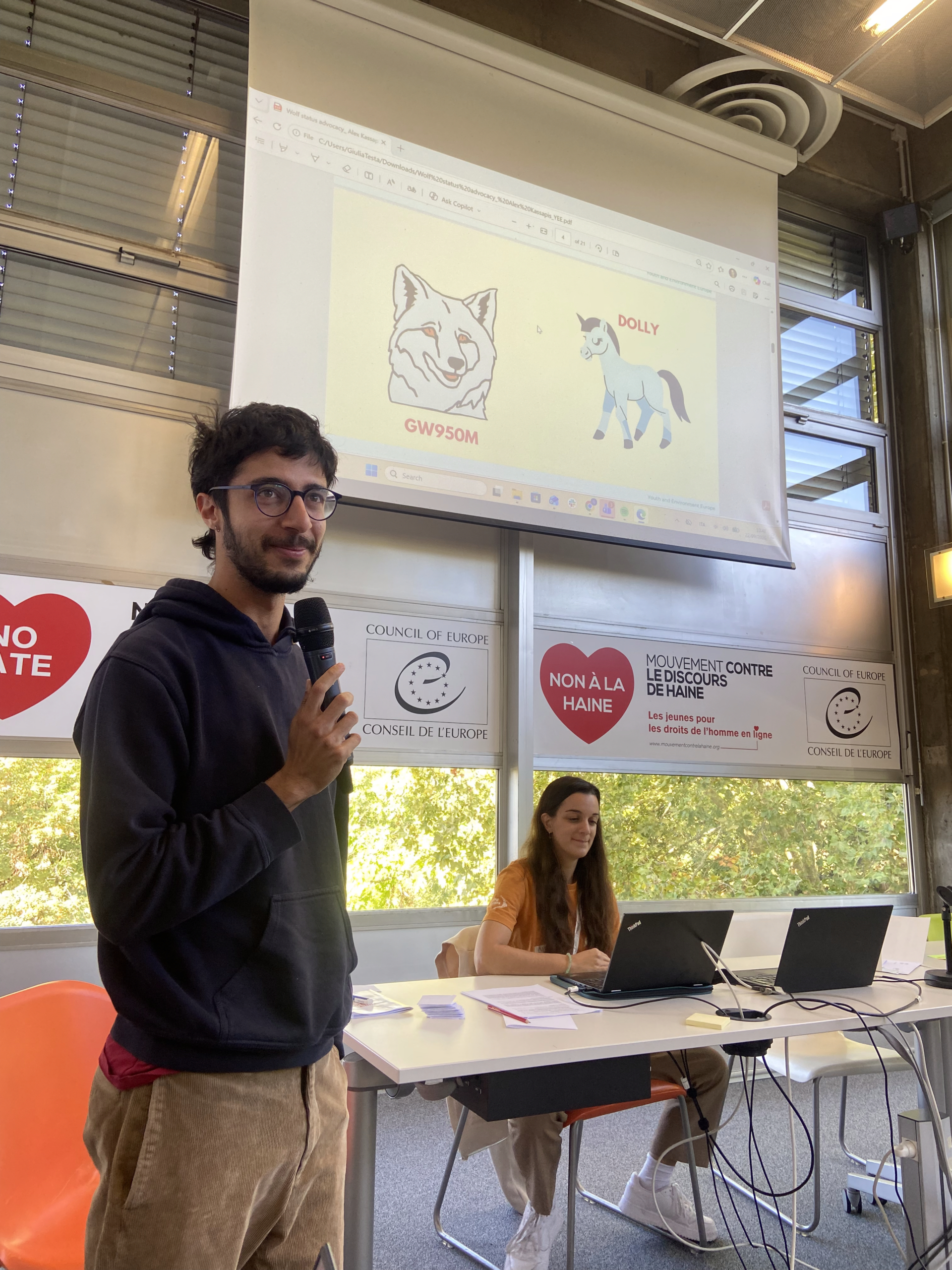
YEE, European Young Rewilders (EYR), and Europarc Youth Council worked together with the Council of Europe (CoE) to develop a session which raised awareness of the Convention, built capacity among participants to engage in environmental governance and decision-making, and encouraged youth-led action. The week felt positive and proactive, and reminded everyone involved of our collective ability to face these challenges.


Why is it Important?

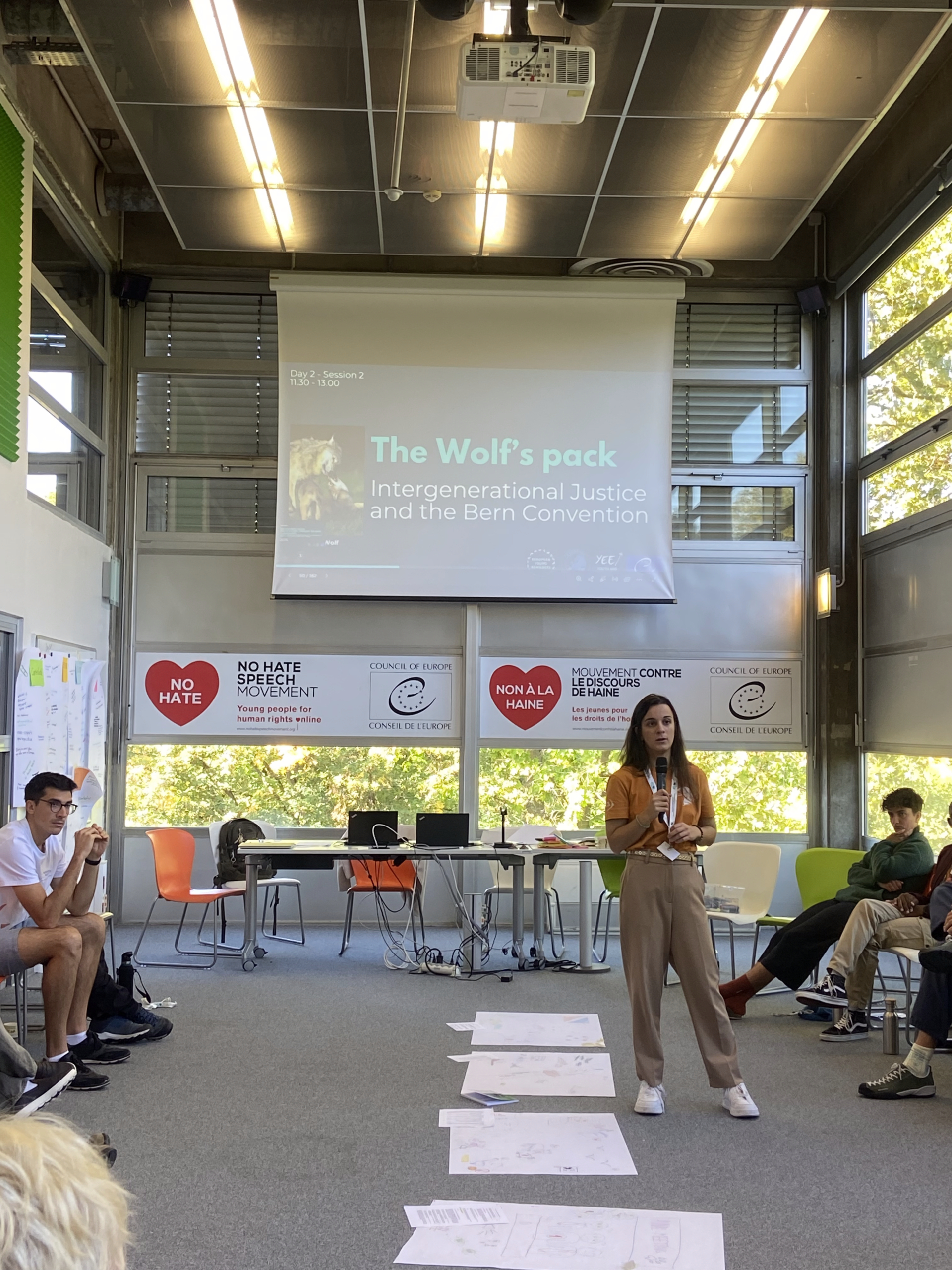
YEE is currently the only youth observer to the Bern Convention’s Standing Committee, but youth engagement with this treaty can go much further. One of the tipping points for the creation of this study session was the down-listing of the wolf from Appendix II to Appendix III of the Convention in 2024. The decision, strongly opposed and campaigned against by YEE, EYR and the Global Youth Biodiversity Network (GYBN), only highlighted the increasing importance of empowering young people to engage more confidently in environmental governance and ensure their voices are heard. Youth participation is essential to ensure that intergenerational justice is not compromised – especially now, as leaders take some of the most consequential decisions for nature to date.


What was Covered?

The session started off with discussions exploring the environmental and youth participation challenges that the participants – coming from over 17 countries around Europe – had experienced. Understanding the perspectives of others in the room was a valuable starting point, and the group embraced the variety of approaches to the activities and problems presented during the week.

A central part of the session was understanding how youth can engage with the Bern Convention. The participants spent time reviewing the text itself, and were even given a presentation on how the Convention works in practice from Marta Medlinska, the Programme Manager for the Secretariat of the Bern Convention.

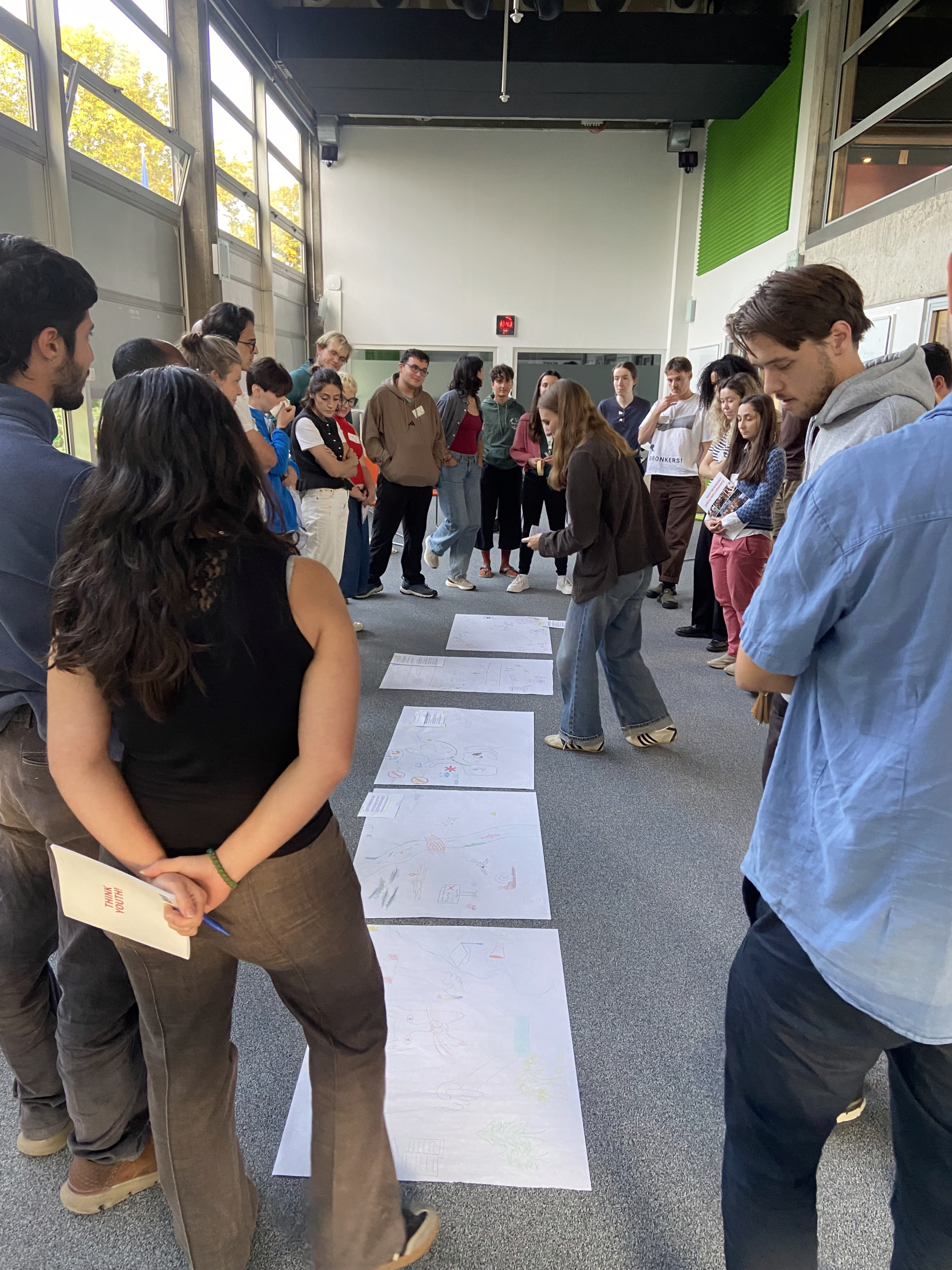
Other activities explored everything from shifting baseline syndrome to conflicting attitudes towards nature. The rights of young people regarding nature were another key focus of the session, and underpinned several exercises. Participants built their understanding of how these rights can be exercised through participation – for example, through a mock session of the Bern Convention Standing Committee based on the 2016 Vjosa case. In this dispute, EcoAlbania submitted a complaint concerning the construction of hydropower plants on the Vjosa River, as well as an airport within the boundaries of the Vjosë-Nartë Protected Area. Small groups were given different roles (including YEE’s own observer position) and were tasked with presenting their case to the room. 

The group also heard from Ashton Melfor, one of YEE representatives, about his experience as an observer at the Annual Standing Committee in 2025, and from Emilie Tamo, a member of the Youth Advisory Council to the Council of Europe. This fed into discussions on tokenistic versus meaningful youth inclusion, and how young people can ensure that their involvement is respected and acted upon.

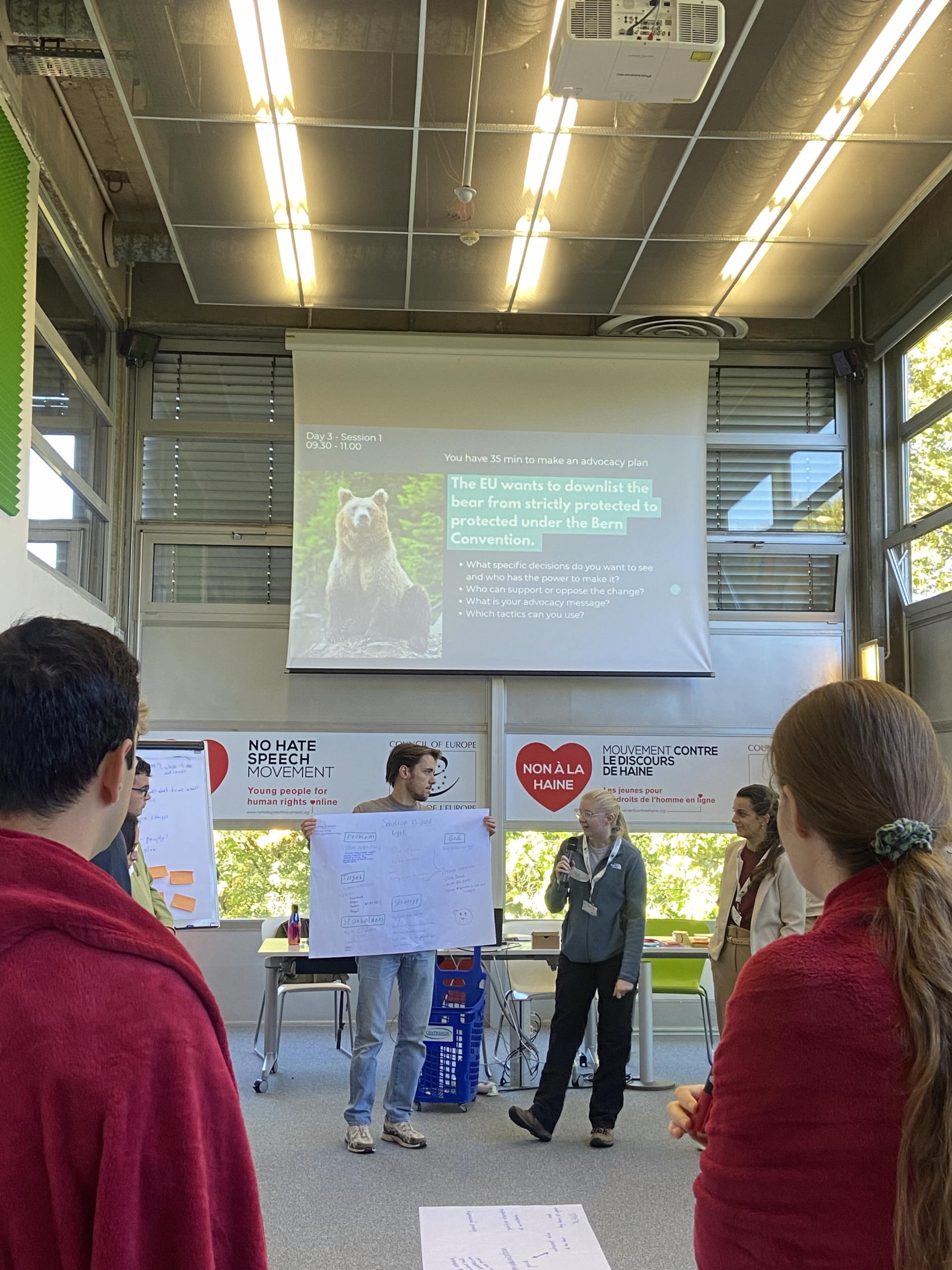
The participants were also given the opportunity to develop advocacy skills and share strategies to engage others. They were tasked with creating advocacy plans for a hypothetical down-listing of the bear, allowing them to build on what they had learnt about the Bern Convention, YEE’s advocacy efforts on the downlisting of the wolf campaign, and their own position as rights-holders and directors of change.

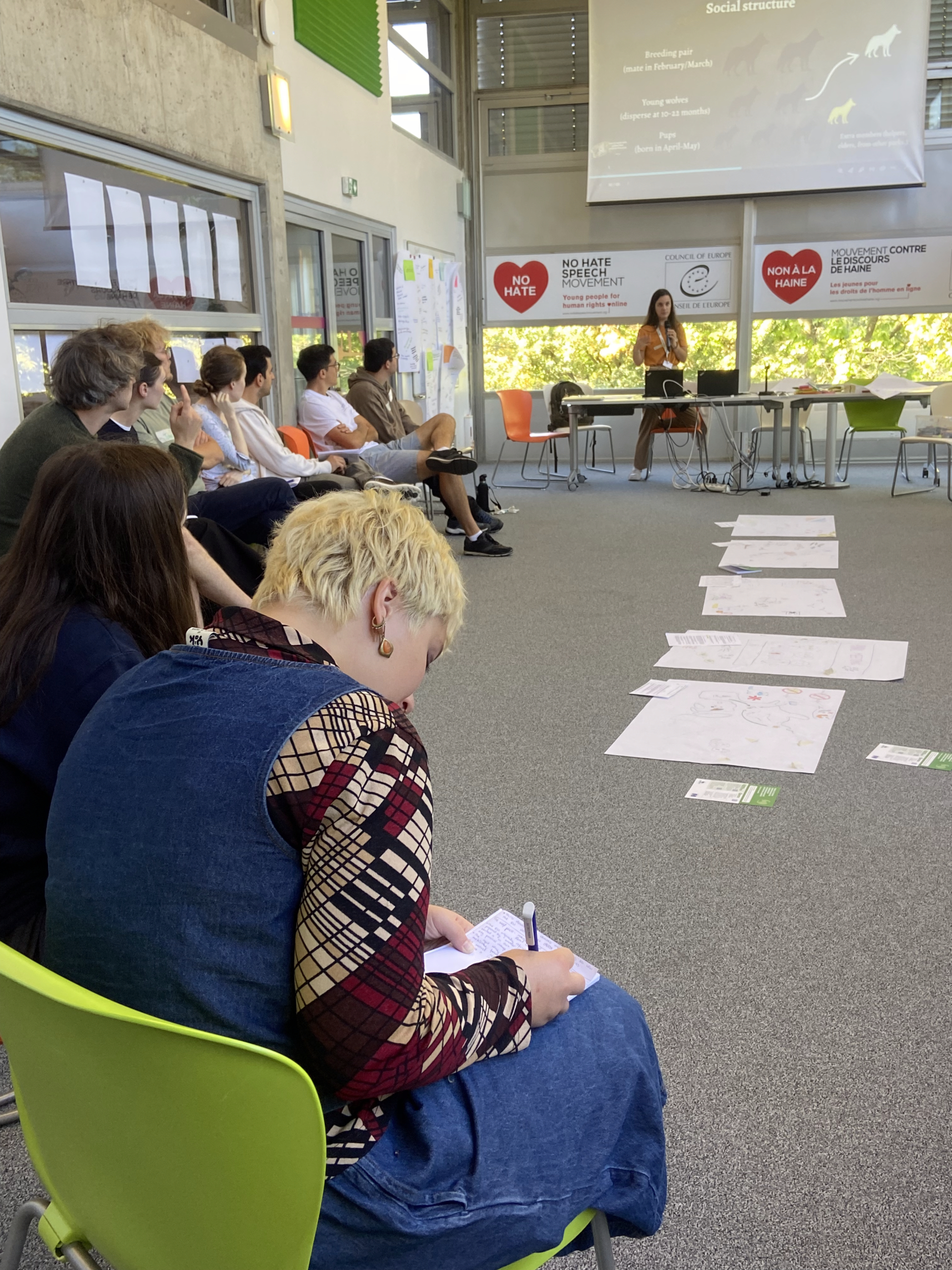
To ensure that the week’s work did not end in the room, the group collated all their shared knowledge and efforts to create a zine – a collective guide to the Bern Convention for other young people. They were also guided through developing their own personal action plans, and had the opportunity to explore ways of connecting their own ideas with the work of others.


Who Participated?

Participants came from over 17 countries from around Europe, all with different experiences and motivations for joining the session. Although the mix of backgrounds in science, policy, law and advocacy meant there was plenty of scope for discussion and comparison, everyone was inspired to find how much their ambitions and priorities overlapped. The group went away with widened perspectives and new connections, but also a renewed realisation of the commitment and support there is to find among people working to protect the planet.


What Happens Next?

With new knowledge of their rights as young people and understanding of the Bern Convention and how to use it, the participants will be able to engage more effectively in conservation efforts and influence decision‑making processes around Europe. The importance of study sessions like this one can be seen in the effect the week had on the participants. The relationships built within the group, their drive to create change in their own communities and countries, and their collectively positive attitude towards difficult problems all show the potential young people have to address these challenges. Building the capacity of young people to participate in governance and decision-making is essential. Youth need a seat at the table when decisions are made, but also the confidence, knowledge, and support network to ensure our message is impactful and considered.

If you are part of a youth organisation focused on addressing environmental challenges, consider applying to be part of the YEE network, and get the opportunity to participate in projects such as this one! (Become a member | YEE).

More articles about biodiversity

, ,

Empowering Youth Participation Through the Bern Convention

Environmental rights at risk?

Youth perspectives on the EU deregulation agenda

Written by

Contents

Share this article


Can environmental protections be simplified without weakening environmental rights? The EU is presenting its forthcoming Environmental Omnibus package as a way to boost competitiveness and cut red tape. But speeding up project approvals could come at the expense of public participation and access to justice, while undermining environmental safeguards. For young people, the debate is ultimately about who gets to shape Europe’s environmental future.

The Environmental Omnibus package is set to include proposals to fast-track environmental permitting and expand the range of projects considered “strategic”. These deregulation measures are presented as administrative simplification, but they also weaken existing safeguards and reduce opportunities for public oversight. At stake is whether environmental rights can be protected in the face of growing corporate pressure.


Environmental assessments are not red tape

Environmental Impact Assessments (EIAs) play a critical role in ensuring that public authorities understand the potential consequences of incoming projects before a decision is made. They help identify risks to biodiversity, climate, ecosystems, and human health. They are also a key opportunity for public participation.

The European Union now proposes to accelerate its timeline. This creates a key risk: reducing the quality of these evaluations. Faster procedures do not make environmental harms disappear; they make them harder to identify and prevent.

This strategy also hides the real bottleneck behind long procedures, which is often the lack of resources and staffing within public authorities in charge of EIAs. The current proposal should not come as a substitute for adequately funding the relevant institutions.


A dangerous expansion of “strategic projects”

Another concerning element currently under discussion is the creation of a broad category of “strategic projects” or “strategic sectors”. Projects falling under this category could be automatically presumed to “serve the public interest” and benefit from a fast-tracked permitting procedure. If adopted, there are only a few guarantees that such projects would then need to meet sustainability or decarbonisation criteria to be approved.

Importantly, some Member States have advocated for an extensive list of eligible sectors, including ports, airports, factories, data centres, AI infrastructure, and military mobility projects, which would de facto dilute the exceptional nature of the mechanism and make it quite mainstream.


Access to justice under threat

Discussions at both the Commission and Member State levels have explored introducing new procedural rules. Under these proposals, communities and civil society organisations would not be able to raise legal arguments in court if they failed to present them during the earlier permitting process.

This is an issue because, in many cases, environmental impacts only become visible late in the process. Restricting the ability to raise new arguments during judicial review could make it harder for affected communities and NGOs to challenge permits.

These proposals also conflict with the Aarhus Convention, an international treaty ratified by both the EU and its Member States, which guarantees access to justice as a core environmental right. Courts and compliance bodies have consistently interpreted the rights from the Convention as requiring broad and effective access to judicial review in environmental matters. 


Civil society is mobilising

A broad coalition of environmental organisations of which Youth and Environment Europe (YEE) is part, and including the European Environmental Bureau (EEB), BirdLife Europe, WWF, and ClientEarth, has warned against the latest deregulation developments. The campaign Hands Off Nature is calling on decision-makers to reject proposals that undermine environmental law and public participation.

Europe needs faster solutions to the climate and biodiversity crises, but not at the cost of public participation and access to justice.

Young people will live the longest with the consequences of today’s decisions. Yet proposals that weaken environmental scrutiny reduce the ability of future generations to influence decisions that will shape their future.

To learn more about the EU Omnibus Simplification Package, read our report on the topic: Understanding the EU Omnibus Simplification Packages | YEE 

To engage with the campaign, you can visit the website: https://handsoffnature.eu/

More articles about environmental law

, ,

Environmental rights at risk?

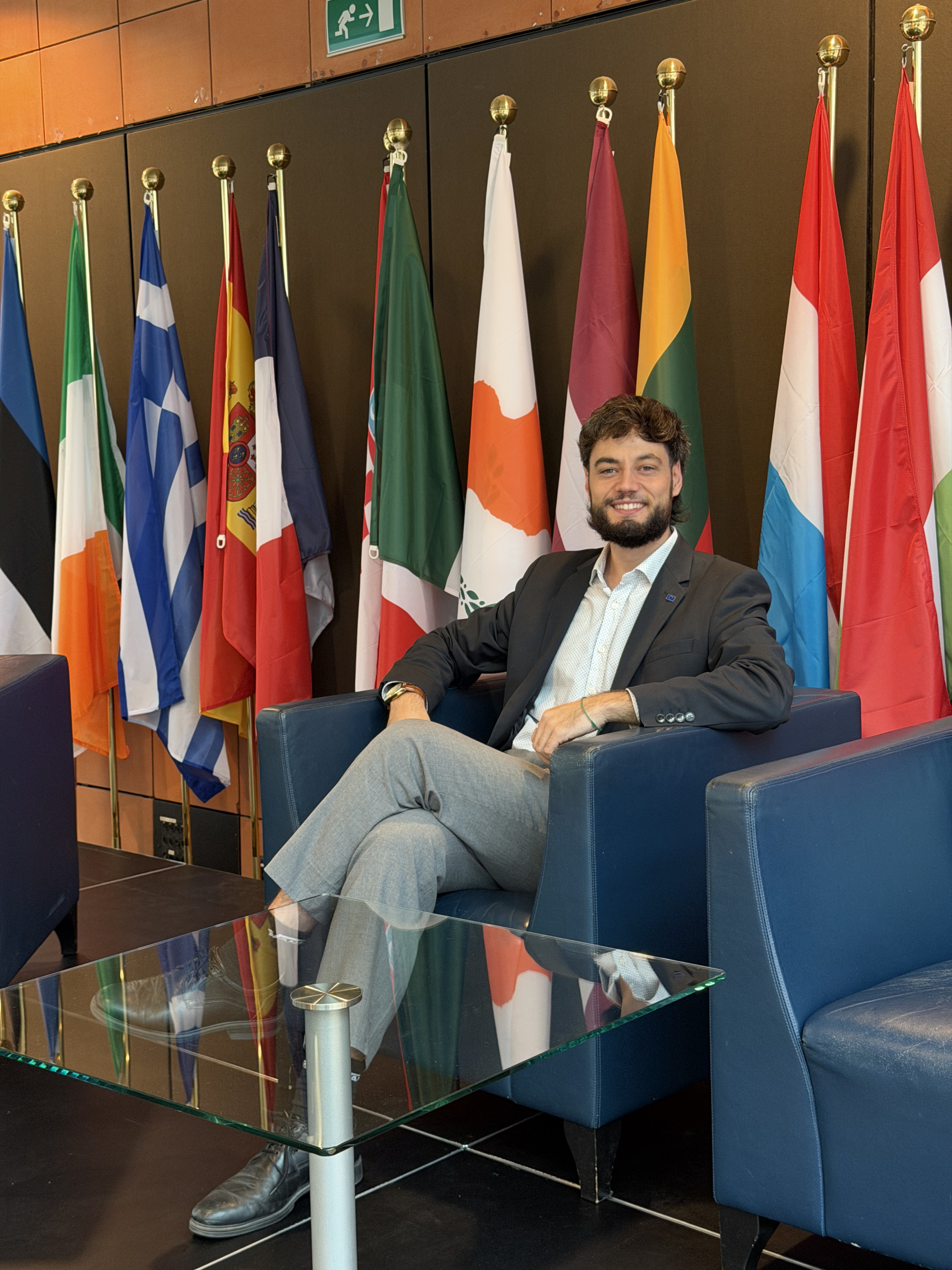
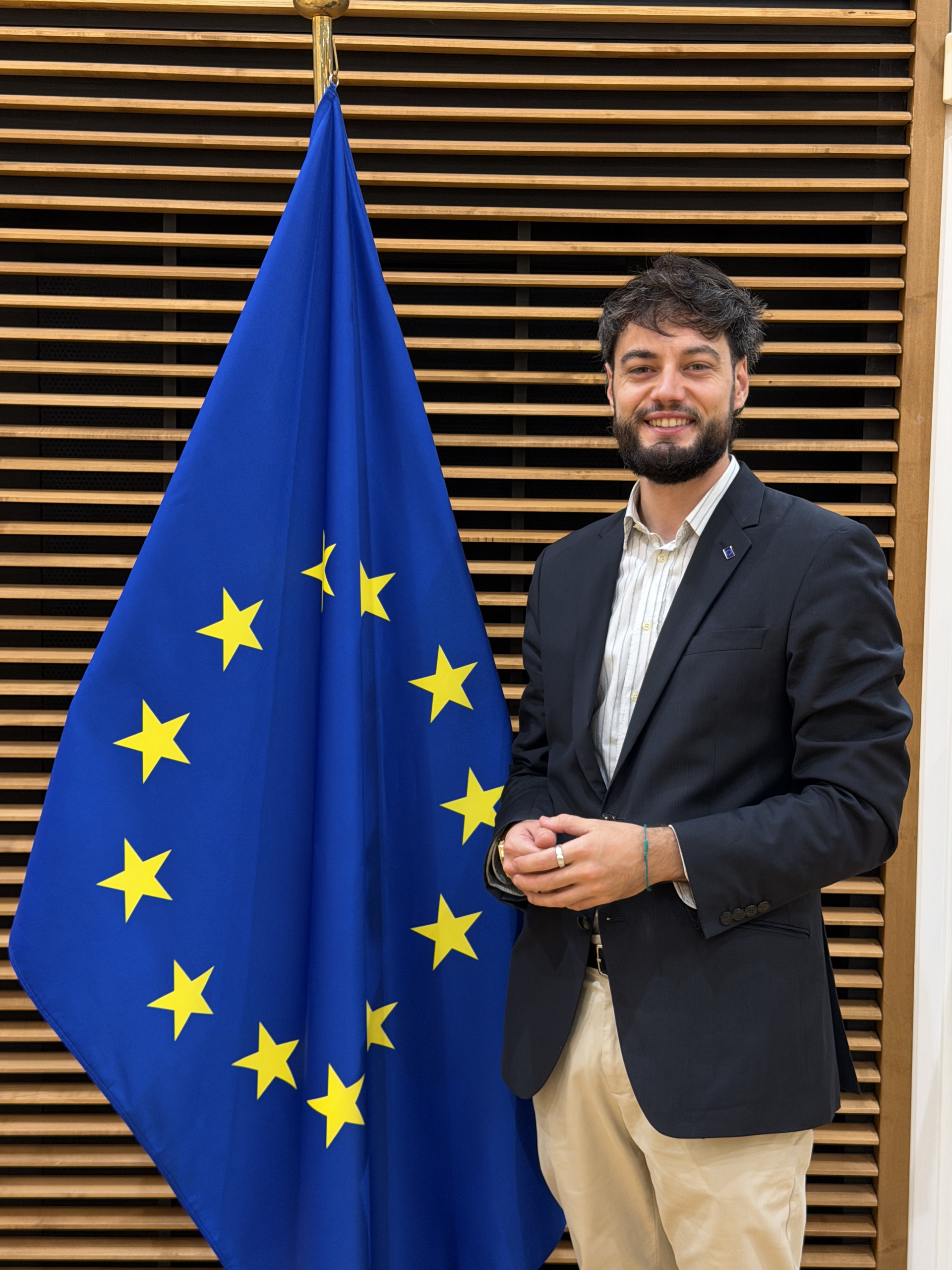
Francesc Almendros Viladerrams

Candidate for Vice-President of the European Youth Forum (2026-2028)

Contents

Nationality: from Barcelona

Pronouns: he/him

My super skills

Bringing people together, EU and international advocacy, building coalitions, project management

Passions & hobbies

Youth rights and climate justice, hiking, chess, and karaoke (loud, not good, fully committed)

Want to connect or ask questions about my candidacy?

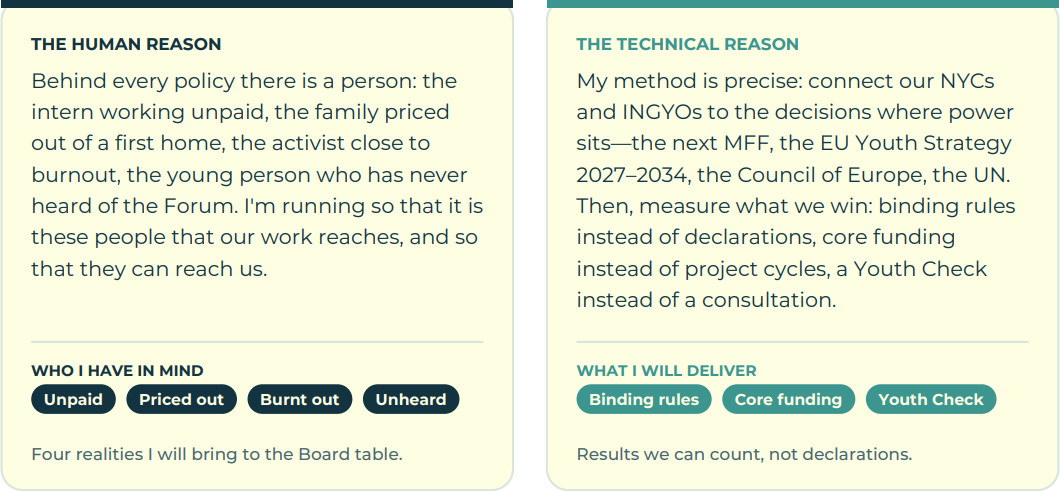
Why am I running?

Europe doesn’t need more promises. Europe needs impact that young people can feel; impact that can be measured.

I’m running to strengthen the connection between the Forum, its Member Organisations, and the young people they represent, and to turn that connection into power.
 

Why now?

The strategy exists. The decisions are being made now. This
mandate is where they meet.

The Strategic Plan 2024–2028 is our shared strategy. Its 2026 mid-term review asks one question: what has it delivered for young people? The Board elected this November holds the second half of the plan, while Europe decides its budget, its youth strategy, and its social and digital rules.

Youth rights as enforceable standards, not declarations

A binding Convention on Youth Rights
Advocacy at Council of Europe and UN level, with a dedicated UN Special Rapporteur on Youth Rights.

Equality for all
Against age-based prejudice, racism, gender injustice, ableism and LGBTQI+
discrimination, and an end to menstrual poverty.

Protect Erasmus+ and its Youth Chapter
Erasmus+ is undervalued and needs a bigger budget. Keep a dedicated Youth Chapter in the next MFF, with the Solidarity Corps included and youth participation fully funded.

Protect young defenders
Concrete protection mechanisms and emergency protocols against legal harassmentand shrinking civic space.

Right to a healthy environment
Formal recognition in European human rights frameworks, with duty-bearers
accountable for intergenerational equity.

A seat for youth at the New Congress of Europe
Secure a youth delegation with a real voice in the New Congress of Europe, so the continent’s democratic future is co-designed with young people, not presented to them.

A Youth Check on every law
Systematic youth and intergenerational impact assessments, including for digital and climate laws, plus co-decision models instead of tokenistic dialogue.

What I bring to the Board

The Board is 11 volunteers who must cover seven competencies together. This is my contribution to each.

Leadership

Executive Board Member of YEE. First President of the Euroregion Youth Assembly, then co-president of the Mediterranean Youth Council, across 40 nations. Founder of ImpulsEurope: conducted 70 policy workshops, received the Medal of Honour of the
French Republic.

Youth advocate leader at COP25 and COP29, the UN ECOSOC Youth Forum, the Council of Europe, and the Union for the Mediterranean. EESC Youth
Representative. Active in YFJ General Assemblies, working groups and motions as YEE’s representative.

Drafted EESC opinions on Euro-Mediterranean cooperation, lifelong learning, non-formal education, and the circular economy. Authored YEE’s Strategic Priorities and led youth lobbying on the EU Nature Restoration Law. Shaped student representation in Spain’s university law.

Led institutional relations with over 100 stakeholders for Palumba.org. Partnerships with the governments of Catalonia and Spain, EU institutions, NYCs and INGYOs. Always putting the priorities of Member Organisations first.

Executive Board roles at YEE and the MYC, from statutes and policies to staff contracts. Audit Associate at PwC. Member of the Senate, Governing Council, and Social Council of the University of Barcelona, and chairman of the Montcelimar Foundation.

Associate Professor of Economics at UAB and teacher at UPF; cum laude in International Business. Approved multi-million-euro budgets at the University of Barcelona. Managed EU-funded projects under Horizon Europe, Erasmus+, LIFE, and Interreg.

Eight months abroad at the Bel Espoir peace school ship and ESC volunteering in Portugal. Fluent in Spanish, Catalan, and English, with advanced or intermediate French, Italian, and Russian. Vast experience and daily collaboration with diverse, multicultural teams.

Helped build Palumba.org, a youth-led voting advice app that helped young people across Europe make informed choices in the 2024 European elections.
Established YEE’s organisational policies on AI and cybersecurity.

Ten years of building

From the University of Barcelona to the European stage, I bring 10 years of experience driving change for youth.

Student leader, University of Barcelona

Founder of Som Universitaris. Member of the Governing Council and the Social Council.
EPSO Ambassador.

2017–2020

Vice-President, CREUP

International relations of the Spanish university student councils. Represented students at CEUNE and ESU.

2020–2022

President, Equipo Europa Catalunya

Citizen projects around the Conference on the Future of Europe, with more than 200 international participants.

2022–2024

President, Euroregion Pyrenees-Mediterranean Youth Assembly

A new youth platform built from zero, connecting young people with regional
governments and the EU.

2023–2025

Co-President, Mediterranean Youth Council

Youth advocacy across 40 nations on the New Pact for the Mediterranean.

2024–2026

Institutional Relations and Project Manager, Palumba.org

Digital platform for youth democratic participation, with more than 5 million data points

2024 - Today

Founder, ImpulsEurope

Full-time Erasmus+ non-formal education and youth expertise, and a youth-led think tank. Received the Medal of Honour of the French Republic.

2024 - Today

Ambassador, Bel Espoir

The peace school ship sailing the Mediterranean for eight months.

2025

Board Member, Youth and Environment Europe (YEE)

External relations and advocacy, representing youth at COP, UN processes, and EU institutions such as the EESC.

2024–2026

A member-led Forum with funding that lasts

Core funding in the next MFF
Multi-year structural grants that end the cycle of short-term project funding,
including for environmental youth organisations through Erasmus+, AgoraEU, and LIFE.

Mobility and fair visas
Learning-mobility visas for volunteers, interns and youth workers, and a defended Schengen Area.

One voice across pillars
A bridge between INGYOs and NYCs, with stronger outreach to candidate countries, the Western Balkans, Eastern Partnership, and the Euro-Mediterranean.

Reach beyond our usual structures
Map what members already do, find where we are not reaching young people, and connect existing initiatives, tools and networks: in schools, universities, workplaces and online, with civic tech.

Simpler Erasmus+ and ESC
Lighter reporting and audit rules so volunteer-led grassroots groups can access funds fairly.

Statutory recognition
Legal recognition of NYCs and INGYOs as social partners, and defence against arbitrary restrictions and funding bans.

Youth work recognised
Cross-border validation of non-formal learning, and youth centres as local hubs of democracy

Decent jobs, a home of your own and a livable planet

Ban unpaid internships
A binding EU Directive guaranteeing pay, learning standards and social security, and a Quality Jobs Act that ends zero-hour contracts and sub-minimum youth wages.

Housing emancipation
Binding rules on speculative short-term rentals and investment in public, cooperative and student housing, with energy-efficient renovation and a Right to Stay for rural youth.

Democratic renewal
Campaign for Vote at 16, with the right to run aligned, inspired by young people’s visions for European democracy towards 2049.

Just ecological transition
Sufficiency-based path to 100% renewables, fossil subsidies ended by 2030, binding material footprint caps, and heatwave protection for workers.

Human-centric AI and digital rights
Human agency in AI, addictive design banned under the Digital Fairness Act, and end-to-end encryption protected.

Well-being of youth and activists
Public healthcare addressing precarity and eco-anxiety, alongside anti-burnout protocols within member organisations.

Want to connect or ask questions about my candidacy?

,

Francesc Almendros Viladerrams – Candidate for Vice-President of the European Youth Forum (2026-2028)