How to Sue a State

In conversation with the youth behind the Aurora climate lawsuit

How to sue a state - article
Many climate lawsuits are started by young people, including an ongoing climate lawsuit in Sweden led by a group called Aurora, led by over 600 youth and children, including Greta Thunberg, are involved. Three young people from Aurora share their experiences.

Written by

What did we ask?

Visual summary

What is Aurora
What is Aurora
Quote by Anton Foley, Aurora
Quote by Agnes Hjortberg, Aurora
Quote by Ida Edling, Aurora

Share this article

Climate litigation is becoming a hot topic, following an upsurge of legal mobilisations globally. In several countries citizens have come together to sue their states for insufficient climate action, and legal mobilisations have opened up new ways to demand climate justice from those in power. A large share of the lawsuits brought forward are driven by young people, who are suing their states for threatening their future human rights. Examples of recent youth driven climate lawsuits include Juliana v. United States, Duarte Agostinho and Others v. Portugal and Others and Soubeste et. al v. Austria et. al. 

We had the opportunity to speak to three young people from the organisation Aurora, who are behind an ongoing climate lawsuit in Sweden. On November 25th 2022, Aurora filed a lawsuit against the Swedish state for insufficient climate policies. More than 600 children and youth are behind the lawsuit, including Swedish climate activist Greta Thunberg. The youth are condemning Sweden’s climate policies to be illegal, as the targets set by the Swedish state are too slow and insufficient, while the  previously set climate targets remain unachieved. Aurora is thus claiming that Sweden is not treating the climate crisis like a crisis. 

The district court of Nacka (a town in Sweden where the lawsuit was filed), considered the claims to be clear enough to be tried in court. On the 21st of March 2023 the Nacka District Court issued a summons, upon which the Swedish state will have three months time to respond to the case. The case is treated as a class-action lawsuit, meaning that a large group of people in Aurora will be represented by a few members of the organisation. The Swedish state on the other hand will be represented by the Chancellor of Justice.

We will now hear from three young people from Aurora: Agnes Hjortsberg (21), Anton Foley (20) and Ida Edling (23), who will share their experiences of filing a lawsuit as a group of young people.

Agnes Hjortberg

Agnes Hjortsberg

Anton Foley

Anton Foley

Ida Edling

Ida Edling

What breaches are you suing Sweden on?

Ida Edling

Ida

The legal provisions that we say the state has violated is human rights under the European Convention of Human Rights. So we're saying that the Swedish state's lack of sufficient climate measures threatens young people's human rights in the future. We're talking about the human right to life, to health, to dignity, to well-being, to home and to property. And that's Article 2, 3, 8 and 14 of the European Convention of Human Rights - and it's the first article of the first protocol of the European Convention of Human Rights.

How did you start this process?

Anton Foley​

Anton

A lot of the inspiration to do this came from people who had already done it in other countries. A natural first step, or one of the first steps, was to reach out and make contacts: at the very early stages we had calls and meetings with lawyers and activists who had pursued similar cases in for example Norway, the Netherlands and France. We learned from them both legally how we should approach it, but also how we should approach it organizationally, financially and from a media perspective. And then as we came to terms with what kind of case we wanted to run, or how we should do it, we also had close contact with international climate litigation groups, to sharpen our arguments and learn from their cases. Thus, I'd say there have been two waves of work: The first one is just about figuring out what is going on and how we should do this. And then secondly, once we had it more figured out, on the legal and technical side, we could focus on sharpening the arguments.

What type of competences are needed to file this type of lawsuit?

Agnes Hjortberg

Agnes

In Aurora as an organisation, almost none of the youth and children had any knowledge of how to do something like this from previous experience. Of course, we have law students who manage a lot of the law stuff, but when it comes to funding, media and social media, or how to run an organisation and how to take care of each other, it's something we learn as we go.

Anton Foley​

Anton

And we've collected a network of professionals and people who know what they're doing in lots of different areas. For example: legal experts, climate scientists and public relations people to help us figure out how to get our message out there. But also a lot of climate activists helped us figure out what our actual aims are. Because there are lots of ways you could structure this legally, but not all would be desirable for what we actually want to achieve. Thus, “where are we going” is the first question we need to answer. Then, “what do we want to achieve? “ and thirdly “how can we use law as a tool to achieve that?”

Ida Edling

Ida

I think that the way we have decided to structure our work within the Aurora case is quite unique. And we've heard that from people who have worked with many different climate cases in other countries too, that our work culture is original because we have a very mixed work culture. We are completely led by youth who have no particular academic background, but who are firmly rooted in what we're actually trying to do. Like Anton was saying, the direction we're actually headed in. And then on the same decision making level or level below even, we have the actual competences. So this democratic way of working together from different age groups and different competence levels is unique I think, and has proven to be very dynamic and successful for us.

What would be your advice to a group of young people wanting to start something similar? What is the first thing to start with?

Agnes Hjortberg

Agnes

One thing we've begun doing is creating a network of youth doing this all over the world. For example we have contacts in Norway, South Korea, Austria, and the Netherlands. I think one of the first steps is to reach out to one of those groups. We've had meetings with new groups, but we have also been the new group in other meetings. I think using the platforms and networks available is a good tool.

Anton Foley​

Anton

Yeah, and I think in general, if you're young and you want to make a difference in this or any social or environmental cause, the most important thing to do is to start from where you are and use whatever expertise, interest and platform you have available to you. And if you have a big idea, just go for it! We were just a group of people who thought this would be a cool thing to do and then we started talking to people who knew what they were doing. And then it took a while but over time we assembled this sort of group. And I think that, it sounds very cliche, but just do it, go for it and see where you end up. Nobody thinks they're going to start a global movement when for example deciding to school strike. You just do it because it's the right thing to do and then people sort of catch on. So, I think that wherever you are, start affecting change in your community and whatever spaces you are active in, in school, student unions, trade unions, religious groups, and wherever else you are active. Just start making a difference and speaking up in those circles and then see where it takes you.

Ida Edling

Ida

Yeah, educate yourselves, take action and then take inspiration and learn from those who have done similar things before you, because you don't have to reinvent the wheel! The three steps that we advise other youth groups to take, if they also want to sue their states, is to: First find each other and then find competence, find lawyers and scientists, and then find money. Because you will need money. But also remember that all types of legitimate action is vital for sufficient climate action. So, litigation is one way but every other way is also valuable.

How can other young people or youth organisations support Aurora?

Ida Edling

Ida

The first thing is to do what you're doing, continue to raise awareness of the climate crisis, continue to push for urgent action in the climate crisis, continue to try to make people in power see that the way we use Earth today is dangerous and won't last. And try to change that in a way that you're already doing, because that will help us all. We're one movement trying to achieve climate justice and everyone needs to do it in their way and every legitimate way is valuable. But then if you concretely want to help our particular cause, we are always in need of money, because holding the state accountable for violations of human rights is very, very expensive in Sweden. And so this would not have been possible without extensive economic support from the public, and here every contribution matters.

Agnes Hjortberg

Agnes

And also if you're a youth in Sweden and you are interested in Aurora, you can also join Aurora! We always need more people!
, ,

How to Sue a State

Liberalisation of the energy sector | Webinar Recap

Overview of the EU’s legislative system and the energy sector liberalisation

European Energy Sector
Learn about the positive and negative outcomes of the liberalisation process, and how energy communities could play a major role in the green transition.

Visual summary

European Energy Sector

Learn more about the project

Share this article

Liberalisation of the energy sector

The liberalisation of the European energy sector was the continuation of the European Union’s effort to create a European single market.

The underlying idea is that the creation of an economic union would naturally bring European countries closer together leading to further political integration, thus guaranteeing peaceful inter-state relations.

The main purpose of the liberalisation process was to organise the provision of electricity and gas more efficiently by introducing competitive forces where possible and regulation where needed.

Main barrier to the liberalisation of the energy sector

Up until the 90’s the energy sector was structured around national monopolies preventing any kind of competition to emerge.

A major step in this process was thus to break down national monopolies or what is referred to as “unbundling”.

The first “unbundling” obligations appeared with the 1st energy package (1996-98) and required the separation of generation, transmission, distribution, and retail activities.

Secondly, to increase cross-border exchanges the EU massively invested in interconnections. The European interconnected grid is now the largest in the world with 400 interconnectors (cross border pipeline and electric cables) linking 600 million citizens.

What are the results of this process?

Positive aspects
Negative aspects

What are Energy Communities (or energy cooperative)?

Legal entities of citizens getting together around an energy transition project.

They run around 7 main principles :

  1. Voluntary and open membership
  2. Democratic member control
  3. Member economic participation
  4. Autonomy and independence
  5. Education, training and information
  6. Cooperation among cooperatives
  7. Concern for Community

Why are they so relevant to the energy transition?

It is estimated that half of the European citizens could produce their own electricity, covering about 45 % of the overall electricity demand.

89 % of the population could get involved in some energy system activity (for instance with the spreading of electric cars, households could offer energy storage services. Modern appliances like smart metres, remote control thermostats, electric vehicles etc. can offer demand response services*)

Energy cooperatives can get involved in a wide range of activities such as

Production • Supply • Distribution • Flexibility •Storage • Demand response •Energy monitoring •District heating • Transportation – E-car sharing • Energy savings – Collective home retrofits

*demand response: increased flexibility from the demand side to adapt consumption to the available generation.
On top of the technical advantages that the multiplication of energy communities could bring, these structures also fulfil a major social element of the green transition: Citizen engagement. The green transition is not only about switching from dirty to clean energy sources it is rethinking our entire economy and our consumption pattern. By giving the opportunity to our citizens to get directly involved in the energy chain, we create a population more aware of its own consumption and conscient of the behavioral changes needed to achieve our ambitious climate targets.

Major barriers to the creation of energy communities:

  •  • Access to funding
  •  • Lack of upfront investments and specific skills: Volunteer-based & lack financial skills. More risk aversion.
  •  • Lack of knowledge from financing institutions: banks don’t recognize the new and innovative business models of energy communities
  •  • Lack of streamlined/stable Government financing mechanisms: public finance can de-risk and mobilise further community & private capital

Want to learn more?

Watch this video explanation of the virtue of energy communities


More articles

The EU’s ambitious electrification goals promise cleaner cities but recent energy crises show that resilience must power the transition as much as

Read More

The war in Ukraine has highlighted the significance of energy policy as a major power issue. It is an opportunity to break

Read More

How is our generation responding to the challenges posed by the energy crisis and the imperative for a green transition? This thought-provoking

Read More

In this article, we will delve into the exciting world of hydrogen as a potential solution for energy storage, aiming to overcome

Read More
, ,

Liberalisation of the energy sector | Webinar Recap

Intersectional Ecofeminism

A Paramount Approach In Environmental Activism

Intersectional Ecofeminism
We have all heard activists and seen studies claim that women lead better and are peacemakers as they favour intuition and collaboration, so, could ecofeminism really be the ultimate solution for the environmental debacle we are facing?

Written by

Contents

Visual summary

Intersectional Ecofeminism

Share this article

“We are either going to have a future where women lead the way to make peace with the Earth or we are not going to have a human future at all.” – Vandana Shiva.  

Many women have been remarkably stepping into environmental advocacy spaces to make their voices heard, but how important is it to integrate both feminism and climate activism in our advocacy discourse?

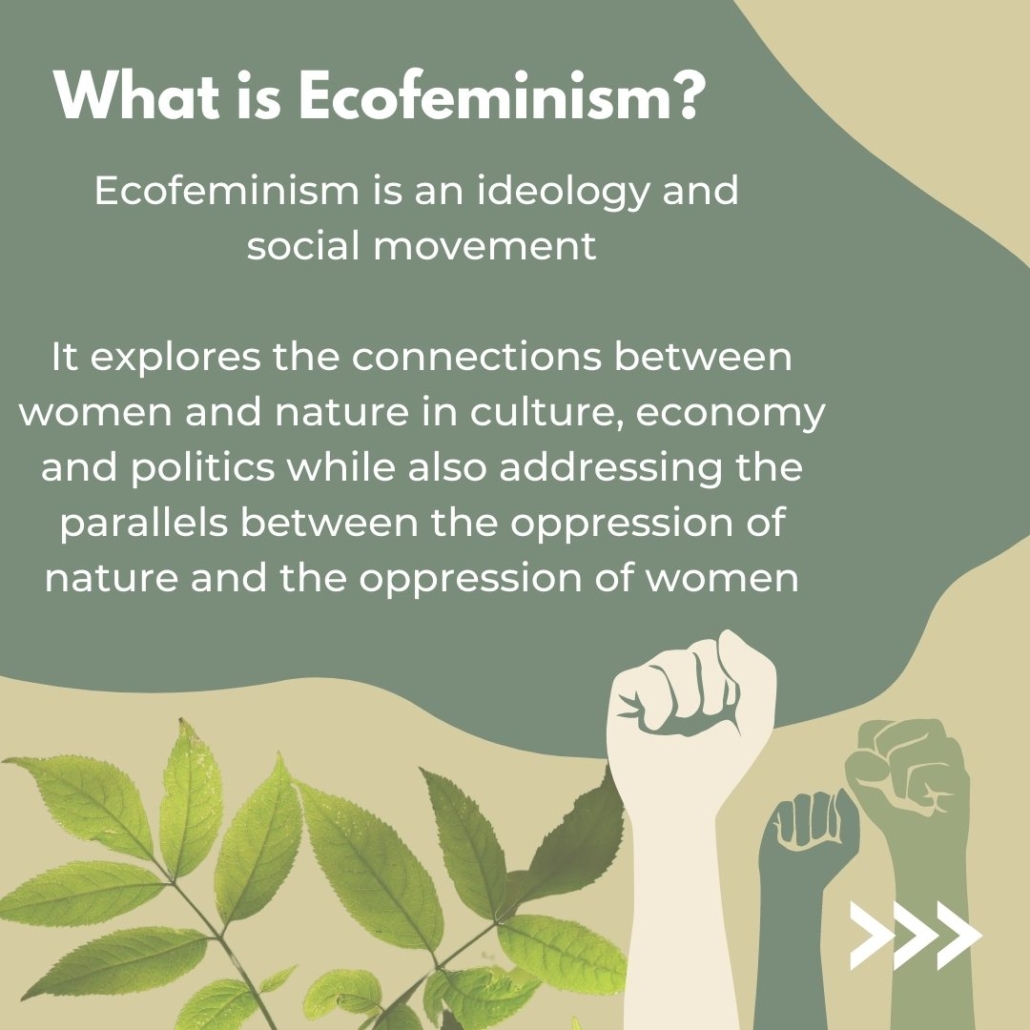
We have all heard activists and seen studies claim that women lead better and are peacemakers as they favour intuition and collaboration, so, could ecofeminism really be the ultimate solution for the environmental debacle we are facing?

The birth of ecofeminism

As we all may know, women are one of the main groups that are at the frontline of climate activism since they are particularly affected by the environmental crisis (80% of the people being displaced by climate change are women according to UN Environment), which is why special attention towards women and the climate change effects on them is needed. This is notably explored by ecofeminism.

The term ‘ecofeminism’ was first coined by the renowned French feminist Françoise d’Eaubonne, who described it to be a branch of feminism that explores the connections between women and nature. What is also interesting about Ecofeminism is that it digs deeply into how both women and the environment are at risk as a result of the patriarchal rule. As a matter of fact, patriarchy has always been strongly linked with capitalism which explains the simultaneous exploitation of both natural resources and women as a social class.

Some not-so-fun facts worth mentioning are that 70% of the 1.3 billion people living in conditions of poverty are women. In urban areas, 40% of the poorest households are headed by women. Women predominate in the world’s food production (50%-80%), but they own less than 10% of the land.

Ecofeminism is believed to be more respectful of nature and women as it decenters males and abolishes hierarchies, men are then not thought to be superior to women or nature. Although ecofeminism originated in Europe, the actual movement started in the USA during the late 1970s and early 1980s, where it took a more inclusive turn as it coincided with the rise of intersectional feminism. Intersectional ecofeminism holistically plunges into the living conditions of women from different backgrounds and dissects the inequalities they endure through an environmentalist lens. It is then considered to be the ideal activistic paradigm. 

Why intersectionality is a necessity

While addressing the struggles of women in the context of climate change, the term “women” tends to be vague as they are not a homogeneous group, they actually exist on a large spectrum that should be meticulously analysed hence the need for an intersectional approach.

Intersectionality sheds light on different issues faced by various women, such as the different geographical contexts. As a matter of fact, women face different challenges based on where they’re from. For example, in areas that are prone to droughts, women often face different struggles than men. Environmental degradation such as droughts often leads to economic instability, and as a result, women may have to give up on resources such as education in order to support the family.

Ecofeminism recognises how gender roles make us experience our environment and nature differently, and how different gender roles may experience different consequences.  Another example is how women in some contexts are forced to travel long distances to collect fuel, food, and water which subjects them to security risks and gender-based violence. Moreover, in Mexico and Central America between 2016 and 2019, about 1,698 acts of violence were recorded against female human rights defenders.

Different journeys equal different constraints

All struggling communities should then be provided with a platform that allows them to speak up about their experiences and share their stories that are a testament to their resilience. We can never do justice to the representation of the different journeys led by different women in the context of climate change, however, the best we can do is to make their names known, especially the non-white and underrated ones like Isatou Ceesay, Vandana Shiva, Susan Chomba, Sônia Guajajara and many others.

Going back to the initial question, women have the ability to make this world a better place: they are the backbones of their communities and the shapers of the future that we can’t overlook the importance of their role in eradicating the climate crisis, empowering them locally and globally could definitely revolutionise our dystopian foreseeable future.

So, if you were to envision a non-patriarchal world where women were predominantly leaders, don’t you also think that our history and present would have been vastly different? 

Recommendations

If you want to explore this topic more, check out the podcast “Outrage + Optimism”, episode number 191.

More articles

The EU’s ambitious electrification goals promise cleaner cities but recent energy crises show that resilience must power the transition as much as

Read More

The war in Ukraine has highlighted the significance of energy policy as a major power issue. It is an opportunity to break

Read More

How is our generation responding to the challenges posed by the energy crisis and the imperative for a green transition? This thought-provoking

Read More

In this article, we will delve into the exciting world of hydrogen as a potential solution for energy storage, aiming to overcome

Read More
, ,

Intersectional Ecofeminism

Is the Global Biodiversity Framework enough?

Discussing the outcomes of COP15 and the next steps

Is the Global Biodiversity Framework enough?
While there are concerns about protected areas and funding, civil society and youth play a crucial role in holding governments accountable and pushing for implementation.

Written by

Contents

Visual summary

Between 1970-2018 there's been an average 69% decline in monitored global wildlife population
15th of December 2022, 196 countries came together for the 15th Conference of the Parties (COP15)
The GBF includes four overarching goals
One of the 23 targets had been on the agenda far in advance of COP15
concerns regarding the targets
role of the civil society

Share this article

The Biodiversity Crisis

It is 2023 and we are in the midst of the 6th mass extinction. Unlike the five extinction events before, this one is primarily caused by human activity and the unsustainable use of land, water, and energy. According to the latest Living Planet Report, published in 2022, there has been an average 69% decline in monitored global wildlife populations between 1970 and 2018.

Due to the interlinked nature of the climate and biodiversity crises, rising temperatures are already causing mass mortality events, causing entire species to go extinct. Climate change is expected to replace land use change as the main driver for biodiversity loss if the 1.5-degree target will not be met, underlining the urgency of bold action on both crises.

The 15th Conference of the Parties (COP) of the Convention on Biological Diversity that was held in December 2022 was a crucial moment for 196 countries to come to an ambitious agreement that would put us on the path to come to “peace with nature“. With the stakes as high as they are today and none of the Aichi targets of 2010 being met, the hopes for a complementary goal to net zero by 2050 – net-positive biodiversity by 2030 – were high, together with the delivery of strong targets to set us on the path to a safe future for humanity.

What is the Convention on Biological Diversity?

In 1992, a historic international legal instrument (known as a treaty) for the conservation and sustainable use of biodiversity, and equitable sharing of genetic resources was agreed in Rio de Janeiro, Brazil. Today, 196 countries have ratified the treaty, known as the Convention of Biological Diversity (that’s nearly every country on the planet!).

The Parties of the CBD, meet regularly every two years to set commitments and global targets. In 2010, the countries united to set the twenty Aichi Biodiversity Targets (under the CBD Strategy Plan for Biodiversity 2011-2020) in order to make radical changes to protect and prevent irreversible biodiversity loss across the world. A decade later, on the expiration date, disappointingly, in a UN report, it was found that not a single one of the targets had been met.

With biodiversity declining rapidly over the last decade, an agreement and agenda for 2030 and 2050 was urgent. Two years delayed (December 2022), the members of the CBD met for COP15 which was held in Montreal, Canada with the goal to finalise and agree to targets for protecting and enhancing nature for 2030 and 2050.

Global Biodiversity Framework

The conference concluded with an international agreement that set new goals and targets, recognised as the Kunming-Montreal Biodiversity Framework (GBF). The GBF includes four overarching goals and 23 targets to achieve by 2030.

TargetDescription
1Effective management of land- and sea-use change, loss of highly important biodiverse areas close to zero by 2030
2Effective restoration of 30% of degraded ecosystems by 2030
3Effective conservation and management of 30% of land and 30% of oceans by 2030
4Halt human-induced extinctions and maintain and restore genetic diversity
5Sustainable use, harvesting and trade of wild species
6Mitigate or eliminate the impacts of invasive alien species, reduce the rates of establishment of invasive species by 50% by 2030
7Reduce pollution risks and impacts from all sources by 2030, reduce the overall risk from pesticides by half
8Minimise the impacts of climate change and ocean acidification on biodiversity
9Ensure sustainable use and management of wild species, while protecting customary use by Indigenous peoples
10Sustainable management of areas under agriculture, aquaculture, fisheries and forestry
11Restore and enhance ecosystem function through nature-based solutions and ecosystem-based approaches
12Increase the area and quality of urban green and blue spaces
13Fair and equitable sharing of the benefits arising from the use of genetic resources
14Integration of biodiversity into policies and development across all sectors
15Enable businesses to monitor, assess and disclose their impacts on biodiversity
16Encourage sustainable consumption, including by reducing food waste by half by 2030
17Strengthen capacity for biosafety measures and ensure benefits-sharing from biotechnology
18Phase out or reform harmful subsidies in a just way, reducing them by $500bn by 2030
19Substantially increase financial resources, mobilise $200bn per year by 2030 from all sources, including $30bn from developed to developing countries
20Strengthen capacity-building and technology transfer
21Integrated and participatory management, including the use of traditional knowledge
22Equitable representation and participation of Indigenous peoples and local communities
23Ensure gender equality in the implementation of the framework

30 by 30

One of the targets that had been on the agenda far in advance is target 3. Pushed for by the High Ambition coalition (an intergovernmental group of more than 100 countries), the target calls for 30% of the earth’s land and sea to be effectively conserved and managed by 2030. This should be achieved through the establishment of protected areas (PAs) and other area-based conservation measures (OECMs).

On a European level, the most important categories of PAs are the Natura 2000 network established through the Birds and Habitats Directives, the Emerald network and UNESCO Biosphere reserves. Target 3 acts as the replacement of Aichi target 11, which aimed for the protection of at least 17 percent of terrestrial and inland water, and 10 percent of coastal and marine areas. While that target was not met on a global level, it was partially successful in numbers, the number of terrestrial PAs increasing from 10% to 15% and from 3% to around 7% in marine areas, as reported in the Global Biodiversity Outlook 5.

However, concerns regarding the actual quality of the PAs were high, as many lack connectivity, don’t always safeguard the most important areas for biodiversity and are not equitably and effectively managed. The quantity vs. quality debate is continuing now with the 30 x 30 target, demanding the GBF to emphasise the quality of PAs and OECMs to accompany the 30% target.

In connection to target 22, which calls for equitable representation and participation of indigenous peoples and communities (IPLCs), there is serious concern about the 30 by 30 target on indigenous rights, as it fails to recognise indigenous rights as a separate category of PAs. In a joint statement, a group of major human rights organisations such as Amnesty International claimed that the target “will devastate the lives of Indigenous Peoples and will be hugely destructive for the livelihoods of other subsistence land-users, while diverting attention away from the real drivers of biodiversity and climate collapse”. 

This so-called “fortress conservation” describes conservation initiatives that focus on nature in the very narrow sense and don’t take traditional territories and livelihoods of IPLCs into account, not acknowledging traditional knowledge. Studies have found that areas managed by indigenous communities contribute equally as much to global biodiversity conservation as state-governed areas and other governance types.

Increase finance for biodiversity

Target 19 of the Framework aims to mobilise at least US $200 billion per year in international biodiversity funds and raise international financial flows from developed to developing countries to at least US $20 billion per year by 2025, and to at least US $30 billion per year by 2030.

Directing funds towards developing countries is important since they are often home to the largest share of the world’s biodiversity and face significant economic challenges that can make it difficult to invest in biodiversity conservation and restoration efforts. However, according to a report from the Nature Conservancy, at least $700 billion (again, instead of US $200 billion) a year is needed to fund activities that benefit nature and resultantly, reverse global biodiversity loss by 2030. Therefore, there is a shortfall in international biodiversity funding and concerns about how the gap in biodiversity finance will be achieved.

In addition at the Conference, it was agreed that the Convention through the Global Environment Facility (GEF) will set up a Special Trust Fund (known as the GBF Fund) to act as a financial mechanism for the implementation of GBF. However, the GBF is seen as a shortfall since the Parties failed to create a dedicated international biodiversity fund separate from the existing GEF fund. The GEF is under-resourced and also addresses other global issues such as climate change (it funds UNFCCC and the Paris Agreement). Moreover, there are issues accessing the GEF funds and bias of funding towards countries that have the capacity to submit proposals.

Reduce environmentally damaging subsidies 

Target 18 of the Framework aims to phase out or reform harmful subsidies for biodiversity and reduce them by at least USD 500 billion per year by 2030. A study this year found that global governments spend at least $1.8 trillion a year (equivalent to 2% of the global GBP) on subsidies that harm the environment. Fossil fuel, agriculture and water industries receive 80% of these EHS per year. A similar target for reforming subsidies was part of the Aichi targets which wasn’t achieved. Governments failed to act on subsidies and there is concern that Target 18 of the GBF might not be reached. The loss of biodiversity from perverse subsidies undermines and works against the goals of the CBD.

There is a need to redirect a significant proportion of the subsidies to support policies that are beneficial for nature, rather than “financing our own extinction”. Redirecting and repurposing subsidies can make an important contribution to finding the US $700 billion per year in biodiversity funding needed. In the EU Biodiversity Strategy for 2030, the European Council pledged to phase out EHS and reform subsidies that have negative impacts on biodiversity. Moreover, the EU is working to reform the Common Agricultural Policy, which has historically supported intensive farming that can contribute to biodiversity loss, to promote more sustainable farming and reduce the use of pesticides and fertilisers. In addition, the EU’s Common Fisheries Policy includes measures to promote sustainable fisheries management and reduce the environmental impacts of fishing activities.

Youth NGOs and their role in nature conservation

While The Global Biodiversity Framework has increased ambitions compared to its predecessor, is without a doubt an imperfect solution. Calls for higher numbers in funding, changes in the funding structures as well as concerns about indigenous rights and the quality of Protected Areas are credible and are just examples of weak points of the GBF.

To save the trust in and credibility of the agreement, the actual implementation of the targets in the coming 2 years (until the next CBD COP) will be crucial. If done right, the agreement does have the potential to make a difference in biodiversity conservation on a global scale. However, taking into account the lack of quantifiable measures that make it possible to hold countries and governments accountable, the role of actors of the civil society and ultimately Youth is undeniable and should act as a motivation to push for the implementation of the agreement.

Prior to the Conference, the Global Youth Biodiversity Network (GYBN) had expressed strong concern that judging from the draft agreement, the GBF would lead to another decade of „more of the same“, describing a lot of the proposals as „false solutions“. Following the activities of Global youth networks and NGOs such as the GYBN is the first easy step you can take to step up for global biodiversity conservation. Holding governments accountable is up to us, especially considering the fact that the agreed targets are not legally binding for the signing parties. That is why getting involved on a national level is just as important, which can easily be done by contacting the MP of the department for environment, raising questions, concerns and thoughts. Youth are raising awareness for the issues concerning nature conservation and climate change by getting involved in International Youth Boards and organisations and making sure that their voices are heard.

, ,

Is the Global Biodiversity Framework enough?

Germany has a toxic boyfriend

The relation between the country and coal in the context of the climate and energy crises.

the relation between the country and coal in the context of the climate and energy crises
Germany is particularly vulnerable to disruptions in the global fossil fuel supply chain. Can coal be considered a temporary solution to the energy crisis?

Written by

Contents

Visual summary

2022 Energy in Germany
Can coal be considered a temporary solution to the energy crisis in Germany?
How do you deal with the energy gap that you could have filled with coal?

Learn more about the project

Share this article

How did we end up with an energy crisis in Europe?

The consequences of the sudden cut in oil production caused by the covid-19 pandemic, together with the sanctions (and the related retaliatory policies) that followed the Russian invasion in Ukraine, stifled the supply of fossil fuels to Europe. With gas, coal and oil becoming increasingly harder to source, their price has skyrocketed, thus triggering an energy crisis.

Effect of the Energy crisis in Germany

Of all the countries in Europe, Germany is particularly vulnerable to this disruption in the global fossil fuel supply chain. On the one hand, the country has the highest demand for electricity in Europe. On the other, most of this demand is met by burning imported gas, coal and oil (i.e., those same commodities whose price has gone through the roof recently). To make things worse, until recently the country’s primary supplier was – you guessed it – Russia. I don’t want to bother you too much with the numbers, but in case you are interested here are two detailed sources to learn more about the German Energy Mix and its Fossil Fuels Supply chain.

As of Spring 2022, government officials find themselves in a tricky position. They need to come up with a way to meet the biggest demand for energy in the continent, or else the country’s economy will collapse, but imported fossil fuels are increasingly inaccessible and expensive. To respond to these challenges, a wide set of policies are implemented with the aim to reduce Germany’s dependence on international markets. Some actively foster the energy transition, by boosting investment in renewables and promoting consumer and producer sobriety. Others, however, go in the opposite direction.

Breaking a nine year trend, since 2021 the share of coal used in the country’s energy mix has started to grow again. While in 2019 the government had established a plan to completely phase out coal by 2038, now the priorities seem to have changed. In an effort to replace some of the energy previously produced with Russian gas and oil, it has been decided that 20 coal-burning plants that were supposed to be shut down by 2023 (according to the original timeline) will instead continue operations this year. The inability to source gas from international markets has also been used to provide political legitimacy to the decision to go through with the expansion of the Garzweiler II brown coal (aka lignite) mine, which now also includes the soil under the recently demolished Lützerath. 

Not everyone agreed with the idea of destroying this small town in the middle of the Rehin region. Since 2020, thousands of activists had been occupying the area to prevent the expansion of the mine. The argument was simple: if the fuel under Lützerath is burnt, its emissions will make it hard for Germany to meet the emission reduction targets it agreed to in 2015. This claim was backed by the German Institute for Economic Research. In the end, the pro-coal faction won and in late January the village was evacuated, allowing the expansion to start.

Can coal be considered a temporary solution to the energy crisis?

If what we are looking for is an immediate way to provide more energy to the system, increasing coal consumption seems to be an effective and easily achievable — albeit a bit short sighted — solution to the energy crisis. Firstly, internationally sourced hard coal offers a cheaper substitute to the more scarce and more expensive gas. Secondly, lignite is the only fuel that can still be domestically sourced from the country’s active mines. As such, it is a more reliable, less volatile source of energy, whose use contributes to the temporary strengthening of the country’s energy sovereignty. Finally, the infrastructure to turn coal into energy is already there, meaning that increasing capacity requires smaller investments and less time.

Nonetheless, all this comes at a great environmental and social cost. At the global level, coal is the deadliest source of energy. Throughout the world, for every terawatt-hour of electricity produced using hard coal 25 people lose their lives. The figure rises to 32 deaths when we consider lignite (which, as a reminder, is the type of coal that is mined in Germany).  Looking more specifically at the case of Germany, coal is responsible for up to 2260 preventable deaths. If you want to learn more about how deadly are other sources of energy, you can check out this interesting visualization made by Statista. The reason behind this macabre first place is pretty straightforward : coal (and especially lignite) releases a high quantity of toxic pollutants in the atmosphere. Talking about first places, the burning of coal is also the single largest contributor to anthropogenic climate change, emitting more CO2 per gigawatt-hour produced than any other fossil fuel. Consequently, if coal is not eliminated from the country’s energy mix fast enough, meeting the emission reduction targets agreed upon in Paris becomes basically impossible, as we were reminded by the “1.5 degrees means Lützerath stays” banner outside the entrance of the occupied town.

The example of Lützerath also points at another important limitation of coal. Lignite mining takes space and in doing so, it destroys both social and natural ecosystems. Since the end of WW2 around 300 cities have been destroyed to make space for extraction operations, with that more than 120 thousand people have been eradicated from their local communities and relocated somewhere else. With that, pieces of cultural heritage have also been demolished, such as the church of St. Lambertus in Immerath. Aside from impacting human settlements, land mining also radically changes the landscapes of the areas in which it is performed, thus destroying the habitat needed for the local flora and fauna to survive and increasing the risk of loss of biodiversity.

Ok, but what do we make of this – maybe a bit disproportionate –  pros and cons analysis? In light of what I just said, I would argue that increasing coal use cannot be an answer to the crisis. We know that producing electricity by burning this fuel implies a high environmental and social toll that is hard to justify. Because of this, the government has decided to phase out coal completely by 2038.  At the same time, however, to this day coal is still a pillar of the German economy. In 2021, it supplied 30% of the national demand for electricity and, in 2018, it provided almost 40 thousand jobs (this last piece of data is a bit old, but given the trends we described before I would expect up to date figures to still be a sizable number). Consequently, unwinding this deep integration without causing a socio-economic crisis takes time – as shown by the fact that the final target date set by the government is in 15 years – and erasing the progress done in the last couple of years makes the process even longer. This means more pollution, more land use and more preventable deaths. On top of this, the country really does not have the space of maneuver to delay this process any further than it already has if it wants to meet the emission reduction targets it agreed to in 2015.

How do you deal with the energy gap that you could have otherwise filled with coal?

While renewables are of course an option, I would suggest more emphasis should be put on the reduction of the national energy consumption, rather than on diversification. The energy and environmental crises are showing us that it is now anachronistic to assume we have access to an unlimited supply of energy ready to satisfy whatever demand we might have. Hence, it is time that we come to terms with this reality and start building our production and consumption patterns based on the amount of energy that is sustainable to consume. I understand that this is a radical change, but, whether one likes it or not, we are entering an age of limits. If we adapt to it gradually, we will have to sacrifice a bit more at first, but we will be better fit for it in the long run. If we ignore what is happening, the change in the way we live will be more traumatic and potentially dangerous. 

Of course, this line of reasoning stretches further than the borders of Germany and, mutatis mutandis, applies to every policy solution that is supposed to tackle the environmental and energy crises.

More articles

The EU’s ambitious electrification goals promise cleaner cities but recent energy crises show that resilience must power the transition as much as

Read More

The war in Ukraine has highlighted the significance of energy policy as a major power issue. It is an opportunity to break

Read More

How is our generation responding to the challenges posed by the energy crisis and the imperative for a green transition? This thought-provoking

Read More

In this article, we will delve into the exciting world of hydrogen as a potential solution for energy storage, aiming to overcome

Read More
, ,

Germany has a toxic boyfriend

Climate adaptation at COP27 through a youth lens

Youth and Environment Europe (YEE) and Youth4Nature (Y4N) are international youth-led organisations within the nature-climate nexus that strive to bring the voices of youth from across Europe (YEE) and across the globe (Y4N) to the forefront of environmental discussions and decision-making.

Building on this synergy and upon COP27 momentum – two weeks within the international agenda where all eyes focused on the climate negotiations – the two organisations met on the ground at Sharm el-Sheikh to share knowledge amongst youth peers globally on what adaptation is and how youth experience it, with an emphasis on amplifying diverse youth perspectives and environmental justice.

Points of the discussion

, ,

Adaption at COP27 through a youth lens | Report

3 Billion Trees - Can the EU do it?

What is the 3 Billion Tree Pledge?

3 billion trees – a big number, a big promise. As part of the EU Biodiversity Strategy for 2030, the European Union committed to planting 3 billion additional trees by 2030. Without a doubt, trees are incredibly important to our natural environment – they provide crucial roles in various ecosystems, are home to many diverse species, absorb carbon, improve human health and well-being and serve essential roles in flood control and water filtration. This EU pledge plans to do just that. By increasing forest cover in the EU, “in full respect of ecological principles: the right tree species in forests, agricultural areas, urban and peri-urban areas and along infrastructure corridors”. Is this promise too good to be true?

The forest expansion rate in the EU has been slow in recent years, and a goal of 3 billion additional trees would double the total forest expansion rate in Europe between 2005 and 2020. It is currently estimated that in the EU, 300 million trees are grown annually. Currently, as of October 2022, the activity under the pledge has resulted in 6,787,146 new trees have been planted, carried out in all 27 countries with help from 28 organisations such as Land Life and ReforestAction. 

Afforestation – a solution for the biodiversity and climate crisis?

Afforestation and reforestation are not new policies, humans have been planting trees for centuries. There is a consensus that trees and forests are worthwhile and there is a policy to support it. The EU itself has seen the afforestation of approximately one million hectares of agricultural land between 1994-1999, and 700 hectares between 2000 and 2007. Many countries have afforestation policies in place. Canada’s Forest 2020 Plantation Development and Assessment Initiative, not dissimilar to this pledge, saw the plantation of 6000 hectares of forest and its success encouraged the government’s investment of $3.16 billion to plant 2 billion trees in ten years in 2020. Famously, the African Union put in place the Great Green Wall, an ambitious policy to help combat desertification, the AU has been planting a wall of trees to cover 100 million hectares of land and absorbs 250 million tonnes of carbon from the atmosphere. Other approaches have been taken – in 1981, China put in place a law which requires children over the age of 11 to plant a tree per year. 

What is the impact on biodiversity…? 

What does planting trees do? Firstly, forests are important loci for biodiversity, representing often dense ecosystems with diverse plants and animals. Forests are thought to be important habitats, “home to 80% of the world’s biodiversity on land”. Planting more trees in forested areas or reforesting struggling forest ecosystems can have many important impacts. Forests are important habitats and maintaining their integrity through reforestation can ensure that wildlife remains in the region and isn’t forced to relocate. Increased forest density and diversity have also been linked to an increase in species richness for fungi and soil invertebrates. Moreover, tree plantation in urban areas (included in the 3 Billion Trees Pledge) has been studied as a positive act that attracts and shelters wildlife species, particularly birds and insects, and provides shade.

Forests are also key for soil quality and resilience. A lack of trees has been seen to cause a sensibility to soil erosion. Trees’ overlapping and interconnected roots provide a structural role in the topsoil layer of land. This topsoil layer can erode (runoff) without trees in place, which in turn risks the land becoming infertile and inhospitable to the plantation. Moreover, afforestation has been found to improve watersheds, which are key for water supply. 

.. and for the climate?

The benefits don’t stop there – trees can help us in the fight against climate change. Carbon sequestration is a bit of a buzzword in the environmental sphere but it shouldn’t be dismissed. Restoring forests and increasing generally the number of plants on our earth has the potential to absorb and store large amounts of carbon – these are known as carbon sinks. Through photosynthesis, carbon dioxide is absorbed by trees, and they in turn release oxygen. The absorbed carbon is turned to sugar which is used in the wood, branches and roots, meaning that it remains in the standing tree. Even once the tree dies, it takes years for the carbon to break down, apart from when leaves decompose and when carbon is released more quickly. The age of the tree impacts its carbon sequestration aptitude, with middle-aged trees being the most effective and young trees the least effective due to size. Overall, uneven-aged forests are the best at carbon capture – meaning that planting trees in strategic places would allow for uneven-aged forests and increase the potential for carbon sequestration. 

For this reason, afforestation and reforestation are seen as one of the great ‘natural solutions’ for climate mitigation. Policymakers believe these forms of ecosystem services are probable to be of rising importance and relevance due to their impact both for mitigation and adaptation to climate change, and general benefits to our environment. This potential has been recognised internationally with the Paris Agreement emphasising the importance of carbon sinks in order to achieve a balance between emissions and removals. Carbon sinks are a key part of EU environmental policy with recent targets set to increase carbon sinks by 15% compared to today in the land use and forestry sector. 

Overall, the pledge could be very powerful in this regard: 3 billion trees covering 2 million ha could remove up to 4 million tonnes of CO2 from the atmosphere already by 2030, and as much as 15 million tonnes by 2050, according to the European Commission. The decision to encourage tree planting, therefore, seems a logical one, both in terms of benefits for climate and biodiversity.

The right tree, in the right place, for the right reason

However, as with most environmental solutions, it is not as clear-cut as it seems. 

Simply planting trees isn’t a be-all and end-all solution to our dual crisis.

Virginijus Sinkevičius, the EU’s environment commissioner, commented: “That’s our promise. To plant three billion trees. The right trees, in the right place, for the right reason” – this second half is essential, we can’t simply plant any tree anywhere and assume it is beneficial. It must be done properly – is the 3 billion tree pledge ready for that? 

The pledge, in all its ambition, has limitations. With 8 years left, there are still 2.993 billion trees to be planted and yet, given the voluntary nature of the pledge, it is unclear how the number will be reached. The pledge came along with a roadmap which primarily relies on monitoring through the Forest Information System for Europe and the creation of a new app MapMyTree so citizens can upload and monitor their trees and progress. Anyone can plant a tree – but it is essential that native tree species to the area are planted, and that it is done with care and understanding of the surrounding ecosystem. 

Avoiding Monocultures 

The pledge is ambitious – asking for huge amounts of trees to be planted – but it cannot be stressed enough that monocultures cannot be a solution to short-cut to the end-goal of 3 billion trees.  Monocultures were conceptualised as a way to produce as much wood “in as little time as possible and, technically in the simplest manner” in the 18th and 19th centuries in Europe as a response to timber shortages. Their simplicity is at odds with the necessary complexity of biodiversity. In setting high targets for tree plantation, there is the potential that concerned actors would cut corners and plant large plantations of similar species – not a sustainable approach to forestry. As Friends of the Earth International, World Rainforest Movement and FERN, said monoculture tree plantations done in the guise of carbon sinks would “have to be large-scale and thus even more destructive — are exactly the opposite of “sustainable development”. Ecosystem uniformity means that there is a lack of genetic diversity as well as typically close planting, making monoculture plantations vulnerable to pests and diseases. 

Where’s the money? 

Another issue with the pledge is funding. The reality is that to achieve such an ambitious goal as 3 billion trees, there will be a need for monetary incentives. In the EU’s public consultation on the issue, a main key challenge in terms of planting additional trees was identified: “financial resources/loss of farmland value after conversion to forest land”, an issue raised by 62.88% of respondents. It seems that this pledge is relying on the use of pre-existing EU and national funds and monetary mechanisms such as Finland’s Metso Programme which pays private forest owners to keep some of their lands for biodiversity purposes. In the EU, the Common Agricultural Policy (CAP) helps provide financial support for forests and forest management through national Rural Development Programmes, though the use of these funds has not been achieved to their fullest extent, perhaps due to a lack of awareness of how to apply or implement forest-based adaptation activities. From 2014 to 2020, 27% of these CAP forestry measures went to afforestation.

Unfortunately, we cannot simply hope that 3 billion trees will be planted by pure goodwill and altruism – as Carlos Manuel Rodríguez, Costa Rica’s minister for the environment and energy, acknowledged in relation to Costa Rica’s afforestation approach: “we have learned that the pocket is the quickest way to the heart ”. Instead, this policy must be paired with robust financial support, aid and access.

Is there a risk of greenwashing in all of this? 

Tree planting has become perceived as an easy solution to climate change due to its carbon sequestration potential – it has become the token action in order to offset carbon emissions through offset schemes, a form of commercialised climate mitigation which has been often awarded the label of greenwashing. Oil and gas companies have invested in tree-planting to offset emissions, such as Total announcing a $100 million investment in 2019. Tree-planting has been picked up by politicians across the political spectrum due to its feasibility, with even right-wing U.S. former president Donald Trump supporting the proposition of a ‘Trillion Trees Act’. This republican move was recognised as a way to satisfy voter demand for climate action without having to curtail emissions and the interests of the fossil fuel lobby. This encapsulates the key issue at hand: planting trees and carbon sequestration shouldn’t be a replacement for mitigation measures and reduction of greenhouse gas emissions. Indeed, Greenpeace described this EU initiative as simply “feel good”, that overall “lack(s) real action to restore forests and expand clean energy”, representative of “not only (…) a dangerous distraction from the climate crisis, but represents logging industry greenwashing.” Principally, Sini Eräjää, Greenpeace EU forest campaigner, summarised it as: “the potential climate and biodiversity benefits to planting trees are limited, but the risks of greenwashing are endless“. Overall, it is clear, the 3 billion trees pledge should be understood as one policy tool amongst many to promote tree planting and help Europe’s climate and biodiversity issues. Indeed, it is simply one of the measures of the EU Biodiversity Strategy for 2030.

To plant or not to plant?

2022 has ended, leaving 7 years for the implementation of the 3 billion trees goal and yet the structure in place to support it and allow for its long-term success seems to be lacking. Overall, as was mentioned in reaction to the press release for the 3 Billion Trees Pledge, “in terms of numbers alone, the pledge has raised eyebrows”. 3 billion trees is a very ambitious goal, and we are currently only a tiny fraction of the way there. Hopefully the remaining 2.993 billion trees to be planted will indeed be done with the right trees in the right place with the right support.

, ,

3 Billion Trees – Can the EU do it? ​

The Earth is burning, the COP is drowning

After a hot summer, you’d think the next COP would finally be the one for action, but the negotiations are stalling. We, the young observers of the international climate negotiations, reveal to you the hopeless backstage of this summit’s preparation. There is an urgent need to reform this institution, which remains fundamental in the fight against climate change. We propose the establishment of
a Global Citizens’ Climate Convention.

Written by Lou Collin and Thomas Reboul, this paper benefited from crucial contributions from Anna Antraygues.

Translated from the French original by Lou Collin.

After our first experience of international climate negotiations at the United Nations campus in Bonn, we came back with a bitter taste. While we had the honor of playing the role of young observers at the 56th session of the United Nations Framework Convention on Climate Change (UNFCCC) “implementation” negotiations, we also and above all had the regret of attending a bad play bringing together 198 countries known as “the Parties”. Large, sanitized rooms serve as the stage and the program is always the same. The (non)text machine is launched, fuelled by a ballet of verbal negotiations strictly codified by the UNFCCC to find agreements, present objectives and action plans that are, on paper, ever more audacious. As for their implementation, the Global Assessment scheduled for COP28 should shed light on the extent to which countries are lagging behind in meeting their targets.

In between ‘working’ sessions, a participant who started going to UNFCCC events at COP2 warned us: ‘I haven’t been to the negotiations for years and years. They will never lead to anything concrete. The most interesting thing to do here is outside the working rooms. This is the international climate fair, an invaluable place to find new allies and promising projects to try to mitigate the damage. Indeed, what happens in the negotiating rooms is disconcerting. The will of the nations, which can be measured by the speed and quality of the discussions, is inversely proportional to the climate emergency. Some delegations, often well-funded, from the so-called “developed” or fossil fuel exporting countries are meticulously sinking progress that could help them meet their 2015 Paris commitments. Meanwhile, the less wealthy countries and those most vulnerable to the consequences of climate change cannot follow all the negotiations: small teams due to poor resources, lack of trained negotiators, difficulties linked to master English, the technical UN language, etc. In addition, there are appalling visa problems that prevent delegations, observers and indigenous communities from arriving in time in the country of the negotiations. It is difficult to negotiate when you cannot travel to the country where the talks are taking place…

We also question the slowness of the UN process. Discussions very quickly move away from the substantive issues to argue about the progress of the negotiation, the format of the document, whether or not to display the text under NBC 1 discussion, the placement of punctuation, etc. All too often, therefore, we found ourselves faced with debates on the form of a text, emptied of its initial substance. Entire passages are discussed at length and then finally excluded if a consensus is not reached. Indeed, with the principle of unanimity that reigns in these negotiating forums, as soon as one Party opposes a term, the machine breaks down. Thus, on several occasions, the Parties only agree on the fact that they did not agree.

In rare working sessions, we have the right to speak. We have taken advantage of this to denounce the Parties’ desire to turn land, forests and oceans into economic assets. For example, during the first “dialogue” on oceans and climate change, which featured four hours of self-congratulatory statements by the Parties, one of the signatories of this forum called on the assembly to address issues that have been avoided until now: overfishing and deep-sea trawling. This appeal, as well as the one on the need to develop truly protected maritime areas, without industrial fishing, remained unanswered. Behind the scenes, a delegate from a country with significant fisheries resources, although silent during the dialogue, came to greet the intervention at the end of the session. On the other hand, the delegation from another European country revealed its unease at the non-existent position of the European Union on these issues.

In the end, we sensed a conformism, even apathy, on the part of some delegations in the face of our sometimes disturbing questions. The demands of countries suffering the consequences of climate change today are often ignored. Elements of language and rhetorical pirouettes sprinkled with economic justifications and technological solutions are all techniques that prevent substantive debates and allow the positions chosen by governments to be maintained. These discussions give the impression of a profound disconnection from reality and show the deleterious effects of the structure of international climate negotiations on ways of thinking about and responding to systemic problems.

These are our worrying observations. Unfortunately, the international community is currently relying in part on this mode of operation to reverse the curve of greenhouse gas emissions, the increase in the Earth’s average temperature, the decline in biodiversity, desertification, soil and water pollution, the destruction of primary forests, the frequency and intensity of extreme weather events, rising sea levels, etc. It is therefore urgent to rethink the environmental negotiations, which are vital for facing the climate crisis together. Young people and most NGOs are the only ones who can express themselves freely in these international debates. In Bonn, negotiators encouraged us to act, even though they are the ones at the negotiating table. In response to this invitation, the No Bullshit Coalition (NBC) has formed to sign this platform.

In addition to calling on the Parties to respect their promises of action and financing, here is our innovative recommendation to transform the functioning of the UNFCCC and, why not, try to save the COPs from drowning.

We propose the establishment of a new body within the UNFCCC processes, one that is decision-making, inclusive and citizen-based: the Global Citizens’ Climate Convention. Based on the principles of the French Citizens’ Climate Convention, it would bring together the world’s citizens in a representative and inclusive manner, for example with regard to indigenous representatives or NBC 2 The Non-Bullshit-Coalition is calling for ideas and recommendations from citizens to make this proposal a reality in order to save the COPs from sinking and to spare as many people and ecosystems as possible from the effects of climate change. If you have ideas on how to make this idea more concrete, debate with #NBC. Because the political and ruling class has given up on international climate negotiations, it’s time for citizens to take matters into their own hands.

The following organisations support it: ● Youth Environment Europe ● Avenir Climatique ● NOISE – Office of Governance and Inter-school Coordination ● NOISE – bureau de gouvernance et de coordination interécoles ● NOISE – AgroParisTech ● NOISE – ESSEC ● NOISE – ESCP ● Esp’r – HEC ● Les Agros à la COP – Agro ParisTech ● Dévelop’Ponts – Ponts ParisTech ● PC Durable – ESPCI ● Terre à Terre – ENS Saclay ● ENvertS – ENS de Lyon ● Make a difference (MAD) – Télécom Paris ● Écosyst’aime – ENSTA ● SupAero for Earth – SupAe ● Esp’r – Supoptique ● Eole – ESTP NBC  ● Greensae – ENSAE ● Les ENSGagés – ENSG ● Assas Environnement NBC

 
, ,

The Earth is burning, the COP is drowning | Opinion article


Energy crisis and ecological emergency: is the REPowerEU plan THE solution? 

Author: Mathilde Angeledei

Following the Russian invasion of Ukraine on the 24 of February 2022, the European Union faced a lack of gas distribution from Russia due to its support to Ukraine in the conflict. In reaction, the European Commission presented on March 8 the idea of coming up with a new project which aims at phasing out Russian fossil fuels and becoming more autonomous and independent regarding its energy supply and security. The plan was well received by EU leaders, who signed the Versailles declaration. They all agreed on the necessity to make the EU independent from  Russian energy imports as soon as possible. On May 18, the Commission presented the REPowerEU plan and a week after the EU Energy Platform Task Force was established to secure alternative supplies.

The REPowerEU plan sets out a series of measures to rapidly reduce dependence on Russian energies by developing new energy cooperation agreements while investing in its own green transition. 

The REPowerEU plan moves around three main areas: 

Energy savings & reduction 

Firstly, rather than waiting for an alternative solution to Russian energy, the EU prefers to count on energy savings from its own citizens and companies. Saving energy is the cheapest, safest and cleanest way to start the REPowerEU plan. The Commission wrote five simple daily life guidelines for EU citizens to follow:

  • reducing heating temperatures or using less air-conditioning;
  • using household appliances more efficiently;
  • driving more economically;
  • shifting to more public transport and active mobility;
  • switching off the lights. 

This is in line with the Commission’s objective to save around 13 bcm (billion cubic meters) of gas import by relying only on citizens’ and businesses’ responsible behavior.

In the long term, the Commission wants to boost industrial decarbonisation with €3 billion of frontloaded projects under the Innovation Fund and increase its ambition on energy savings by raising the EU-wide target on efficiency for 2030 from 9% to 13%. 

On top of that, the EU demands a reduction emergency plan in case of gas supply disruption. 

Alternative Energy Supplies

Secondly, the EU is working with international partners such as Israel and Egypt to find alternative energy supplies. 

In the short term, the EU needs alternative supplies of gas, oil and coal and it is exploring the future of renewable hydrogen too. 

In the long term, the EU will invest in an integrated and adapted gas and electricity infrastructure network. Moreover, the EU is currently writing a proposal to ensure the industry has access to critical raw materials. 

Renewables

Thirdly, for the quantities the Member States still need to consume, the goal is to replace it with renewable energies. Many short and long-term measures have been proposed by the Commission. 

Concerning short-term measures, the EU wants to increase the production of biomethane to save 17 bcm of gas imports and intensify solar and wind energy projects to save around 50 bcm of gas imports

Concerning long-term measures, the EU wants to modernize and simplify the legislation on renewable energy such as wind turbines and solar panels to enable a rapid issuance of building permits at low environmental risk. One of the most ambitious projects of the EU is to build a 17.5 GW hydrogen accelerator of electrolysers by 2025 to fuel the EU industry with homegrown production of 10 million tonnes of renewable hydrogen. 

Why is the REPowerEU plan problematic? 

If exiting from the Russian fossil fuels, gas and coal import is a necessity, should it be then done at all costs? This ambitious REPower EU plan will challenge the EU more than any other plan before. Indeed, this plan should combine a rapid transition to decarbonised energy with the building of strong partnerships between democratic countries while keeping energy affordable and secure for all citizens.

Switching off the light is common sense

The first objective of the project is saving energy, however, it seems clear that asking citizens to reduce energy is a tough job. Electric devices, especially cars and home technologies have increased this last decade, intensifying the need for energy. The solutions offered by the EU have already been implemented in people’s minds for years. Switching off the light when leaving a room is common sense, the same as using less air-conditioning. In the short term period, the EU needs to focus on industries and administration offices to save energy because they are the first consumers of energy and are most able to establish plans to reduce their energy consumption. 

Renewable energy overlooked concerns

For many countries, it is still difficult to envisage such a quick transition at a time when energy prices are causing public anger. An abrupt halt to Russian imports combined with a forced installation of renewable energy facilities will make the working classes, already hard hit by the energy crisis, even more insecure. 

The main objective of the EU is to become independent by investing in renewable energy. However, the creation of an energy park based solely on renewable energies requires several years of discussion and implementation. It will also require strong cooperation between the 27 states and huge financial investments. 

In an amendment voted on June 27, the Energy minister of Member States backtracked on the development of renewable energies. The amendment removes the Commission’s push to increase the target for renewables in Europe’s energy mix to 45%, replacing it with the 40% target. This is below both the European Parliament’s and the European Commission’s positions, which both support the 45% target. The amendment also deleted the legal concept of “overriding public interest” for renewable energies. If adopted, the principle would help protect new renewable projects against legal challenges. Although unanimously welcomed, the REPower EU plan seems in fact creating dissension among the 27.

Another hurdle concerns renewable energy in the EU. When talking about renewable energy, the issue of rare metals is often overlooked. Europe is not a producer of these precious metals. A rapid and brutal change in its energy policy risks putting it once again at the mercy of the countries producing these rare metals, such as China. 

Moreover, the environmental impact of the extraction of these rare metals is an issue. Often criticized, their extraction is a source of significant pollution for the ecosystems. 

Human rights

Concerning the objective of diversifying imports of energy, the EU concluded new agreements with Egypt, regarding the import of hydrogen; and with Azerbaijan, regarding the import of fossil fuels and gas. If these agreements allow the EU to diversify our sources of energy, they are, however, rooted in cooperation with countries that are often criticized for their respect of human rights. For more than two years, the war between Armenia and Azerbaijan over the Upper Karaba has already caused several thousand deaths. If the EU wants to put an end to Russian energy imports for ethical reasons, it should not be at the expense of other populations. 

In conclusion, the REPower EU Plan, born from a very laudable desire to move away from a harmful dependence on Russian energy, does not seem to take the necessary time to prepare a prosperous transition for all. 

More than ever, European citizens must be aware of their energy impact and do their best to control and reduce it. Last but not least, governments should develop energy efficiency laws for businesses to initiate a general awareness movement to promote more efficient energy consumption. 

, ,

Energy crisis and ecological emergency: is the REPowerEU plan THE solution?