Entries by YEE

,

Right to Healthy Environment | Study session

Right to Healthy Environment | Study session

We are looking for organisations and youth activists interested in increasing their capacities to work on the  access to environmental rights of young people

Practical information

  • When

    26th May to 2nd June 2024

  • Where

    European Youth Center Budapest, Hungary

  • Fees

    50 EUR participation fee (deductable)

  • How

    Apply by 24th March 2024

This study session is organised in cooperation with the Council of Europe.

Share This Event


Why are we doing this

We’re embarking on this journey to amplify the youth perspective and influence within the Council of Europe while focusing on the crucial issue of the Right to a Healthy Environment recommendation.

By immersing ourselves in discussions on participation, human rights, and environmental protection, we aim to ensure that the voices of young people are integral in shaping policy recommendations, as well as to create a platform where your insights and contributions can drive tangible change, fostering a global community dedicated to environmental advocacy.

This study session is for you if:

At the study session, you will:

Have questions? Get in touch!


Other upcoming events

, ,

EU Marine Action Plan

EU Marine Action Plan

YEE Calls for Ambitious National Roadmaps for EU Marine Action Plan Implementation, including a ban on bottom trawling in MPAs

More than a year since the EU Marine Action Plan was adopted, there is a critical need to ensure that both the European Commission and Member States are held accountable for its effective implementation. The success or failure of this initiative will hinge upon the national roadmaps to be submitted by each Member State by the end of March. The publication of these national roadmaps will be closely monitored, especially considering the tendency of Member State governments to oppose ocean protection matters, often favouring economic interests over environmental ones. This also became evident in the disappointing response of the European Parliament (EP) to the Communication, which rejected the majority of its content. 


Youth and Environment Europe strongly supports the gradual phasing out of bottom trawling in all marine protected areas (MPAs) by 2030 as proposed in the Marine Action Plan. This would be in line with an agreement made between 196 countries, including the EU, during the Conference of the Parties to the UN Convention on Biological Diversity (COP15) to reach a 30% target of protected land and oceans by 2030 in a landmark agreement for the protection of biodiversity. The method of bottom trawling is notorious for its detrimental impact on marine ecosystems due to several reasons, one of which is significant by-catch, such as marine mammals, seabirds, and other fish species. Bottom trawling can also cause extensive damage to sensitive habitats, disrupting the balance of marine ecosystems and damaging biodiversity. Not least because of the use of bottom trawling, European seas are in a severe environmental crisis. The European Environment Agency recently reported that “almost all marine species groups appear to be in bad condition throughout Europe’s seas, with mixed recovery trends”.


The Parliament had a chance to advocate strongly for ocean conservation shortly before the elections and urge the EU Member States to align its fisheries with nature protection policies. They missed this opportunity: Their report on the Marine Action Plan takes a concerning stance towards the use of harmful fishing equipment, suggesting to continue using bottom trawling within MPAs. The European People’s Party (EPP) holds the view that the proposed ban of bottom trawling in MPAs puts the future of fishermen at risk, labelling the Action Plan “discriminatory”. While coastal communities and the impact of the Marine Action Plan on fishers must not be ignored, YEE believes that this pure focus on the economic impact is too short-sighted. The livelihoods of coastal communities ultimately depend on seas with good environmental status and healthy fish stocks, which can simply not be reconciled with the practice of bottom trawling in MPAs. We need cross-cutting and forward-thinking policymaking to address economic concerns in the fisheries sector alongside the climate and nature crises, including support  to fishers in transitioning away from destructive fishing gear to minimise negative socio-economic effects.


As Youth Environment Europe, we call upon all EU Member States to commit promptly and effectively to implementation of the Marine Action Plan, and urge the Commission to conduct and publicly release science-based assessments of their national roadmaps. Furthermore, we demand that any identified weaknesses be addressed by Member States, and call for close monitoring and enforcement to ensure their timely implementation. Only through concerted effort and accountability can meaningful progress be made towards safeguarding our marine environment for future generations.

Help us spread the word! Share this statement


,

Nature Restoration Law: Youth needs your support

Nature Restoration Law: Youth needs your support

YEE and other youth organisations have sent this letter to European Parliament Members, ahead of the plenary vote on the Nature Restoration Law on Tuesday, February 27, 2024

On behalf of European youth, we are reaching out to you as a coalition of youth organizations representing more than 20 million young Europeans with the European environment at heart. On Tuesday the 27th of February, the European Parliament plenary meeting will take place in Strasbourg. We want to underscore the absolute necessity to vote in favor of the provisional agreement on the Nature Restoration Law, for our future, and the future of our and your children.

As young people, we are inheriting a degrading environment and climate which makes us currently see a gloomy future ahead of us. Every day, we witness more species becoming extinct and ecosystems continuing to degrade. It is proof that existing measures so far have been critically insufficient. We are even more worried due to the recent and ongoing watering down of environmental policies and laws at the EU and national level. 

This EU Nature Restoration Law is the only opportunity for us to get the chance to see nature improving across Europe and benefit from a healthy environment and climate. 

Opposing or further weakening the law would mean condemning our future and fully ignoring all the good things that nature brings to our society. It would mean that young people and future generations, the least responsible for the current crises, will have to address environmental emergencies at a great cost and risk. This is extremely unfair from an intergenerational equity perspective.

On Tuesday, you will cast a vote on our future. The outcome will greatly impact generations of Europeans to come, so we need your vote in favor of the Nature Restoration Law. 

Help us spread the word! Share this statement


Learn more about the #restorenature campaign

The recent positive vote for the Nature Restoration Law by the European Parliament sends a strong message on the obligation to restore


Read More

The coalition of youth organisations released their statements about the necessity and urgency to adopt the Nature Restoration Law within the European


Read More

Join us and over 200 NGOs and ask your decision-makers to adopt a solid and urgent implementation of the law that can


Read More

, ,

What are countries doing about plastic pollution?

What are countries doing about plastic pollution?

A reflection of a INC-3 youth delegate.

Shellan, a Youth4Ocean Forum member and INC-3 observer, reflects on the challenges facing the UN Plastic Pollution Treaty, which aims to be completed by the end of 2024.

Written by

Disclaimer

The views and opinions expressed are those of the author and do not necessarily reflect the official policy or position of YEE.

Contents

Visual summary

Share this article


The “Nairobi Spirit”

At the United Nations Environmental Assembly (UNEA 5, 2022) at the UNEP headquarters in Nairobi, Kenya Resolution 5/14 entitled “End plastic pollution: Towards an international legally binding instrument” was passed to start the process of the plastic pollution treaty.

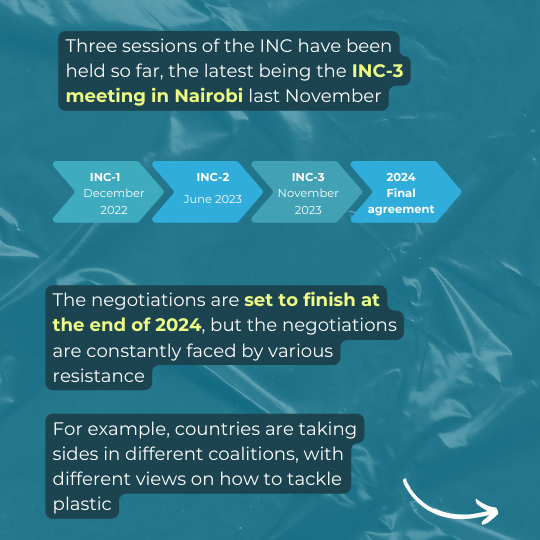
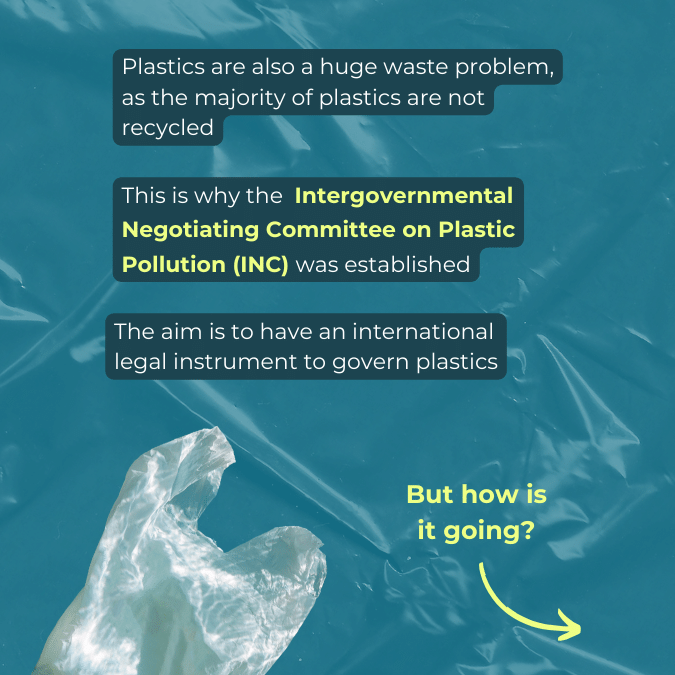
This historic moment marked the beginning of what several major news organisations have called the most important environmental deal in all fields since the 2015 Paris Climate Agreement. This paved the way for the establishment of the Intergovernmental Negotiating Committee on Plastic Pollution (INC) to develop “the instrument”, which is to be based on a comprehensive approach that addresses the full life cycle of plastic, including its production, design, and disposal” (UNEP) (See timeline below).

Five rounds of negotiations (INC) have been proposed for countries to come to an agreement and close negotiations by the end of 2024. This treaty will be the first-ever global agreement on addressing plastic pollution and aims to tackle the full life-cycle of plastic.

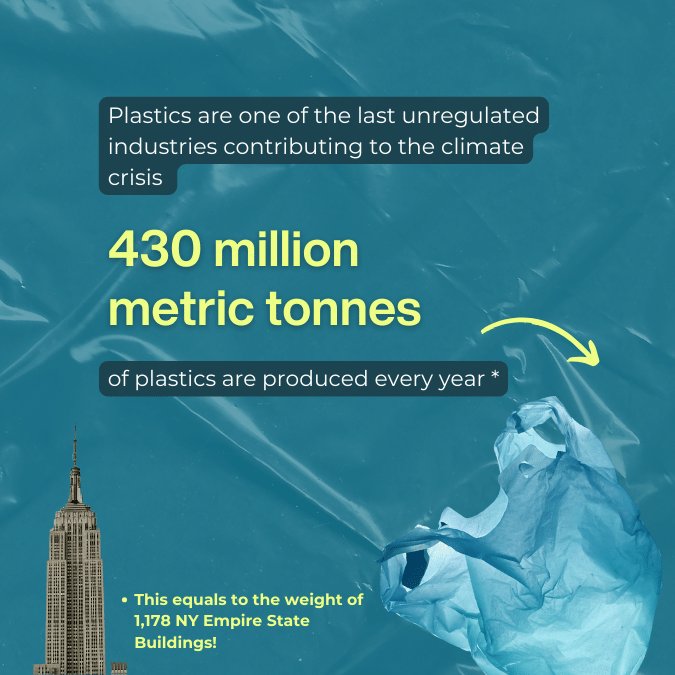
Plastics are currently one of the last unregulated industries contributing to the climate crisis and increased carbon emissions. Currently, 430 million metric tons of plastics are produced every year and without intervention, this could triple by 2060. The majority of plastic is neither recycled nor reused (UNDP).  It follows that a plastics treaty is not only necessary for human health but also for future generations. This statistic was emphasized in the most recent negotiations (INC-3) in Nairobi, Kenya in November 2023.

Timeline of the INC Process

Jun 2023

Apr 2024

Dec 2022

Nov 2023

Nov 2024

The third round (INC-3) was held from 13 to 19 November 2023 at the UN Environment Programme (UNEP) Headquarters in Nairobi, Kenya. After countries voted to create a Zero Draft at INC-2. The Zero Draft was a collection of ideas and views from member states submitted during the international negotiations in INC-2. The draft was released during the inter-sessional period between INC-2 and INC-3, when countries began negotiating the Zero Draft version of the treaty. During a preparatory meeting for INC-3 on November 11th,  Iran announced a low-ambition coalition with other gas-driven countries called the Global Coalition for Plastics Sustainability. There was very little to no mention of the coalition during the rest of the negotiations. Countries negotiated a specific text in three smaller groups called contact groups. Each group debated the following parts of the treaty:

Contact group 1: Part I and Part II of the Zero Draft

Contact group 2: Part III and IV

Contact group 3: Addressed elements not previously covered at previous INCs including principles, scope, and definitions.

While negotiations progressed throughout the week, the “Nairobi Spirit” died at the very last minute late on the last night of negotiations after contact group 3 could not come to a consensus on important intersessional work due to be completed between INC-3 and INC-4. Low-ambitious countries successfully used stalling tactics to threaten an ambitious treaty being drafted by the end of 2024 and aimed to be in place by 2025. While countries are eager to work and close negotiations by the end of 2024, there appear to be a lot of ideas for the treaty which are ultimately hindering progress.

More ideas than agreements after INC-3

The negotiations ended with more ideas than conclusions. During INC-3 the secretariat received over five hundred submissions from member states on the treaty. Due to the number of submissions at one point, some member states were arguing that their voices and inputs were not being heard. This led to threats by some states to quit negotiations.

The result was a revised draft expanded from thirty-one pages released after INC-2 to 71 pages. Some sections such as the scope have sixteen different options on text while several other options have four or more options. This was instead of a first draft that was expected after INC-3, a revised zero draft was released on December 26, 2023.

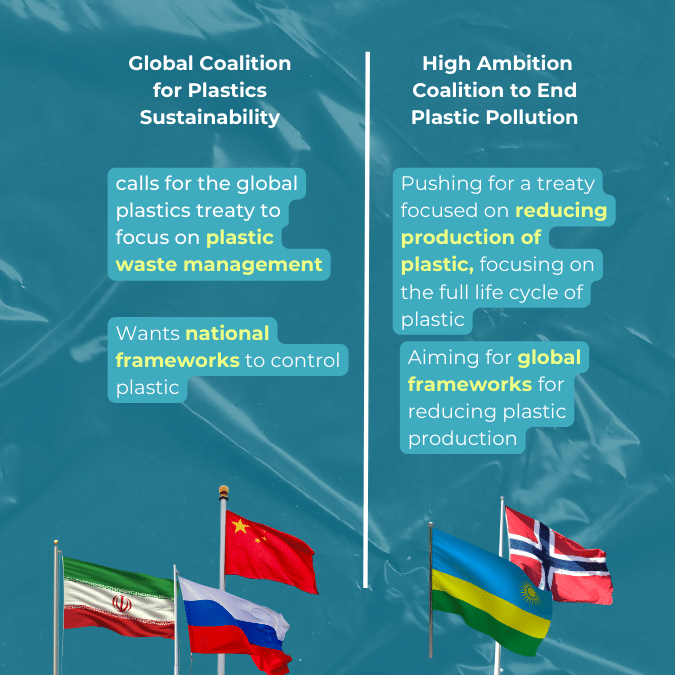
Low-ambitious, gas-driven countries such as Iran, Russia, and Saudi Arabia are arguing for a treaty focused on recycling, waste management and voluntary action, while other countries that are part of the High Ambition Coalition to End Plastic Pollution, co-chaired by Norway and Rwanda, are arguing for a treaty that focuses on global mandates by aiming at reducing plastic and targeting the full lifecycle of plastics. Along with more ideas, the lack of an agreement on intersessional work resulted in more setbacks.

The consequences of a lack of consensus

The initial timeline proposed important inter-sessional work which, as agreed at INC-2, should have happened between INC-3 and INC-4. This intersessional work was supposed to bring in experts on different technical and scientific topics related to plastics, finance, and implementation issues. Many of these topics would help delegates have a better understanding of what they are discussing and negotiating as well as different perspectives to fill in knowledge gaps. 

This would have helped advance negotiations further at the upcoming INCs. At the last minute, the United States tried to reopen negotiations with Brazil agreeing to try to come to a consensus on work for the inter-sessional period (months between INC-3 and INC-4), but Russia and Saudi Arabia struck down the idea. After hearing member states’ opinions, the Chair decided not to reopen negotiations delaying hopes of progress towards an ambitious plastic reduction treaty.

An ambitious treaty threatened by lobbyists

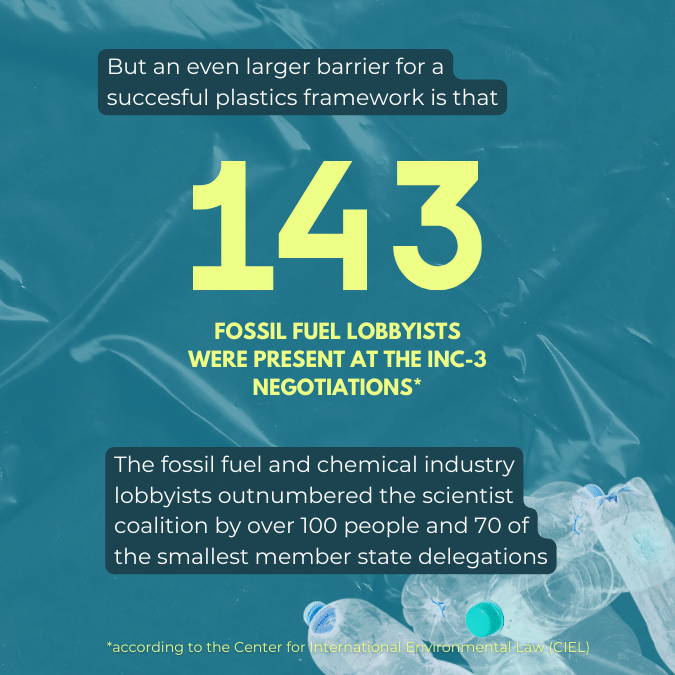
As countries argue the direction of the treaty, several issues externally and internally towards an ambitious treaty remain. The treaty has gained attention from the fossil fuel and chemical industry. According to the Center for International Environmental Law (CIEL), “143 fossil fuel and chemical industry lobbyists have registered to attend the third session of the Intergovernmental Negotiating Committee (INC-3) to advance a global plastics treaty, gaining access to the negotiations at a time when the talks are entering a critical phase”. The article goes on to say this is a 36% increase from previous INCs.

The fossil fuel and chemical industry lobbyists outnumbered the scientist coalition by over 100 people and 70 of the smallest member state delegations, and they will likely increase in the coming INCs. One of the potential solutions to preventing fossil fuel and chemical lobbyists from interfering with the negotiations would be to pass a Conflict of Interest Policy in the upcoming United Nations Environment Assembly (UNEA-6) or future meetings related to the plastics treaty such as the future Conference of Parties (COP). A Conflict of Interest Policy has been requested by several observers. By passing this policy it could prevent a weak treaty.

Lack of representation in the treaty

The treaty continues to lack representation from key groups impacted by plastics and the effects of plastic pollution in the revised Zero Draft text: its seventy-one pages only mention “Indigenous” twenty-eight times, while “youth” and “children” combined are only mentioned ten times. Other vulnerable groups such as women, waste pickers, and workers in plastic value chains are even mentioned less. There are several vulnerable groups not yet mentioned in the treaty such as the disabled (physically and visually-impaired), people of color, and displaced people. Also, the term vulnerable populations/groups remain undefined. This could cause problems during the implementation of the treaty, leaving certain groups at risk of the effects of plastic pollution and unable to benefit from the treaty. 

Final thoughts and looking ahead

The UN Plastic Pollution Treaty faces an uphill battle to be completed by the end of 2024. It is still unknown if the treaty will focus more on waste management and recycling or reduction. Several important groups remain voiceless in a treaty critical for their health and livelihoods. The next two INCs are scheduled to be INC 4 in Ottawa, Canada in April and INC 5 in Busan, South Korea in November.

Many key elements of the treaty such as scope, definitions, and principles remain undecided, which will add to the additional challenge of cutting text and cementing a clearer direction the treaty will take. This will make it more challenging for member states to complete the negotiations by the end of 2024. If the treaty stays on schedule, the Diplomatic Conference will be held in 2025 to adopt it and for member states to sign. This would also be when a governing body will be established for future Conference of Parties (COP) to be held on the treaty.

INC-4 will be critical for countries to decide the direction the treaty will take. The secretariat will provide an update in February UNEA-6 on the status of the treaty. While history has shown it is not impossible, it is going to require total focus and compromises from member states to achieve a historic plastics treaty by the end of 2024.

More articles

The EU’s ambitious electrification goals promise cleaner cities but recent energy crises show that resilience must power the transition as much as


Read More

The war in Ukraine has highlighted the significance of energy policy as a major power issue. It is an opportunity to break


Read More

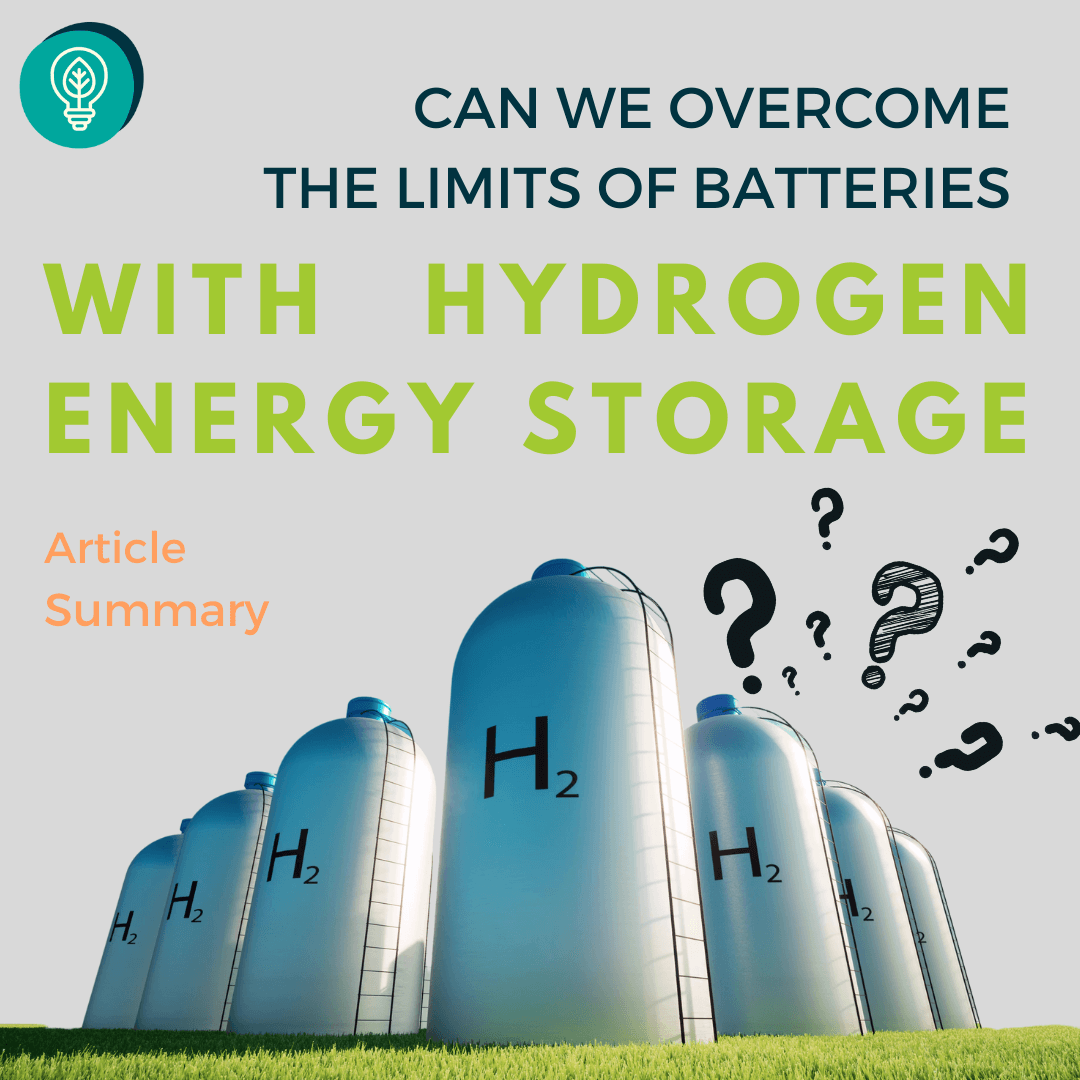
In this article, we will delve into the exciting world of hydrogen as a potential solution for energy storage, aiming to overcome


Read More

European Energy Sector

Learn about the positive and negative outcomes of the liberalisation process, and how energy communities could play a major role in the


Read More

,

Call for Finance Manager | Full-time Opportunities

Call for Finance Manager

to lead our Finance team.

40 h/ week

2800 EUR/month

EU/EUrope

Remote possible

Start 1st April 2024

YEE is seeking a Finance Manager

YEE is excited to announce the opening of a full-time Finance Manager (40 hours/week) from April 2024 to April 2025 (potential extension) to lead our Finance team.

Responsibilities include budgeting and financial planning, grant management, expense management, and team management. The selected candidate must have language proficiency in English (Czech language is a plus). Ideal candidates have experience in budgeting, grant management, nonprofit accounting, and strong communication skills.

Remuneration is 2 800 EUR/month gross salary.

Your responsibilities

  • Develop, implement, and monitor annual budgets. Prepare forecasts and financial budgets to guide organisational decision-making.
  • Prepare accurate and timely financial reports, including income statements, balance sheets, and cash flow statements. Present financial information to the Coordination team and the Board, offering insights and recommendations for strategic planning.
  • Monitor grant budgeting and reporting processes to ensure compliance with funder requirements. Work closely with project managers and department managers to align financial activities with project goals and objectives.
  • Monitor organisational expenditures and implement cost-saving strategies.  Review and approve expenses, ensuring transparency and consistency to budget and organisational policies
  • Coordinate audits and assist in the preparation of audit materials.
  • Meet with the funders on a regular basis to update them on the financial progress.

Cash Flow Management: Manage cash flow and liquidity to ensure the organisation’s financial stability.

Tax Compliance: Ensure compliance with tax regulations.. Stay updated on tax laws and regulations.

Team Leadership and Development: Lead the finance team, providing guidance, support, and professional development opportunities. 

Collaboration and Communication: Work collaboratively with departments to achieve organisational goals, promoting financial literacy and transparency across the organisation.

Leading the travel arrangements such buying tickets, booking accommodations and reimbursements when required. 


Apply now

Candidates we are looking for

Call for Finance Coordinator | Part-time Opportunities

Call for Finance Coordinator

to join our Finance team.

20 h/ week

26k CZK/month

Prague, CZ

Onsite

Start 1st April 2024

YEE is seeking a Finance Coordinator

YEE is excited to announce the opening of a part-time Finance Coordinator (20 hours/week) from April 2024 to April 2025 (potential extension) to join our Finance team.

Responsibilities include financial reporting, grant management, budget monitoring, and data management. The selected candidate must have language proficiency in English and Czech. Ideal candidates have experience in budgeting, grant management, nonprofit accounting, and strong communication skills.

Remuneration is 26 000 CZK/month gross salary.

Your responsibilities

  • Prepare accurate and timely financial reports, including income statements, balance sheets, and cash flow statements. Present financial information to the Coordination team and the Board, offering insights and recommendations for strategic planning.
  • Monitor grant budgeting and reporting processes to ensure compliance with funder requirements. Work closely with project managers and department managers to align financial activities with project goals and objectives.
  • Monitor budget vs. actual performance for various projects and programs. Identify variances and communicate findings to the Finance Manager
  • Organise and archive financial documents, reports, and supporting documentation for audit and compliance purposes.
  • Assisting in ensuring compliance with regulatory requirements, organisational policies, and grant agreements. Supporting internal and external audits by providing requested documentation and explanations as needed.
  • Assisting the financial manager with the travel arrangements such buying tickets, booking accommodations and reimbursements when required.


Apply now

Candidates we are looking for

,

Climate Litigation As a Tool for Youth Climate Movements

Climate Litigation as a tool for youth climate movements

How Climate Litigation Empowers Youth Climate Movements?

Climate Litigation as a tool for youth climate movements​

How Climate Litigation Empowers Youth Climate Movements?

Practical information

  • When

    Friday 9th February 2024 at 16h CET

  • Where

    Online

  • How

    Register your interest

Share This Event


This workshop is open for anyone interested in climate litigation and legal campaigns, and how this can be used as a tool by youth climate movements!
 
During this workshop, we will present the Youth Climate Law Hub and hear from some of the prominent initiatives brought by its members. The workshop will also be an opportunity for participants to understand how to join forces in these actions and build a stronger environmental law youth movement in Europe and beyond.
 

Presenters:

Youth and Environment Europe (YEE), World’s Youth for Climate Justice (WYCJ), Auroramålet, Victorine Nagels (lawyer)

  1. Presentation by WYCJ: The World’s Youth for Climate Justice is an international youth-led campaign that aims to bring climate change to the ICJ. Among others, we will discuss how we can all join forces in this last stage before the submission.

  2. Presentation by Auroramålet: Auroramålet represents 300 young people who have sued the Swedish state for insufficient climate action. We will discuss why we have chosen human rights-based climate litigation as a tool for climate justice, and what we have learnt that could make it easier for others to do the same. This talk will cover how we manage legal strategy, funding, communications and advocacy with limited resources.

  3. Presentation by YEE: We will discuss and present what are National Energy and Climate Plans (NECPs), and why it is important for youth to provide feedback and actively participate in them.

  4. Presentation by Victorine Nagels: We will hear from a young lawyer involved in defending young climate activists. Questions for the discussion include: which young people can take legal action and what are the risks? Is the situation different when young people act through an association? What are the situations in which it might be worth taking legal action? What happens when young people have to defend themselves in court?

Have questions? Get in touch!


Other upcoming events

,

Deploying renewable energy while protecting biodiversity​

Deploying renewable energy while protecting biodiversity

Considering our growing energy needs, is the deployment of renewables compatible with our objectives of biodiversity protection?

Deploying renewable energy while protecting biodiversity​

Considering our growing energy needs, is the deployment of renewables compatible with our objectives of biodiversity protection?

Practical information

  • When

    Tuesday 30th January 2024 at 17h CET

  • Where

    Online

  • How

    Register your interest

Share This Event


About the topic

Renewable energy, particularly solar and wind, has become increasingly popular in recent years due to their low carbon footprint. However, it is important to consider the impact of their development on land use and biodiversity. Solar panels and windmills require a significant amount of space, and this can raise concerns regarding their compatibility with biodiversity protection objectives. Data on the average square meter occupied by these renewable energy sources, both onshore and offshore, can give us a clear picture of the scale of land use involved.

Currently, the deployment of solar and wind energy is rapidly increasing globally, and this trend is expected to continue in the coming years. While renewable energy production contributes to reducing greenhouse gas emissions, it can also have negative consequences for local habitats, migration patterns, and biodiversity. Therefore, it is crucial to carefully consider the potential environmental impacts when deploying renewables and find ways to minimize harm to ecosystems.

Have you missed the webinar? Watch the recording!

Have questions? Get in touch!


Other upcoming events

, ,

Speeding up history in the face of war: How the invasion of Ukraine has shaken up the EU’s energy transition plan

Speeding up history in the face of war: How the invasion of Ukraine has shaken up the EU’s energy transition plan

The war in Ukraine has highlighted the significance of energy policy as a major power issue. It is an opportunity to break toxic dependence in geostrategic and climate terms.

Written by

Disclaimer

The views and opinions expressed are those of the author and do not necessarily reflect the official policy or position of YEE.

Contents

Share this article


In its latest report, the International Energy Agency shows that the geopolitical context since the war in Ukraine has had an unprecedented impact on the energy transition. While a number of changes had already been initiated, such as those concerning renewable energies, the war in Ukraine seems to have accelerated them. In addition, European sanctions have massively reduced Russian gas imports into Europe. Under European sanctions, Russia reduced the flow of its gas pipelines to the EU by around 80%, prompting European states to find alternatives in a short space of time. This episode was an opportunity for many member states to reflect on their energy policy and, above all, the energy transition. 

The war in Ukraine revealed that energy policy is a major power issue. This is illustrated by the expression “war ecology” defined by Pierre Charbonnier. According to him, the war in Ukraine is an opportunity to break a toxic dependence, both in geostrategic terms and in terms of climate policy. Achieving energy sufficiency would kill two birds with one stone, by aligning the imperative of coercing the Russian regime with the imperative of reducing greenhouse gas emissions.

According to the International Renewable Energy Agency, “the period 2020-2021 was marked by a radical shift in the balance of competitiveness between renewables and existing fossil fuel and nuclear energy options”. So let’s take a look at how the war in Ukraine has affected the energy transition – has it accelerated or slowed it down?

What responses has the EU put in place? 

First of all, there is a desire at the European level to promote the EU’s independence, while also attempting to take account of the climate objectives set out in the European Green Deal.

This is illustrated first and foremost by the introduction of the RePower EU plan. What does this plan consist of? This plan, proposed by the EU a few weeks after the Russian invasion of Ukraine and in line with the demands of the 27 member states, aims to massively reduce Russian gas imports, to do without them altogether by 2027. This strategy is based on four pillars: saving energy, replacing Russian fossil fuels with other hydrocarbons, promoting renewable energies and investing in new infrastructures such as liquefied natural gas (LNG) terminals.

We can therefore see that the EU Commission, while wishing to reduce member states’ dependence on Russia, also aims to achieve the Green Deal’s climate objectives. The strategic objective is linked to the climate objective. Through this plan, it is proposing to increase the EU’s renewable energy target from 40% to a minimum of 42.5% by 2030. To reach this objective, at the end of the year, the EU adopted a regulation aimed at speeding up the procedure for granting construction permits for renewable energy projects. 

Through the RePower EU plan, the EU has also decided to bet on hydrogen, setting a target of 10 million tonnes of domestic production of renewable hydrogen and a similar figure for imports by 2030. The creation of a European Hydrogen Bank is also planned, with the task of investing 3 billion Euros to develop this market on the continent, as announced by Ursula Von Der Leyen during her State of the Union address last September.

Are there any concrete examples of the successful implementation of this plan?

Yes, especially when it comes to the development of renewable energies. After the war, the use of renewable energies rose sharply. Between 2022 and 2023, European renewable energies increased by 57.3 GW. This figure is set to rise further, given that the RED III directive, the result of the RePower EU plan, calls for doubling the share of renewable energies in European energy consumption to 42.5% by 2030. This increase in investment in renewable energies has helped bring prices down. However, their role in heating, and especially in transport, is still limited, although growing.

It’s worth noting that this increase in investment in renewable energies has not been confined to Europe alone, as it is China that has increased its renewable energy production capacity the most (+ 141GW)

What initiatives have been put in place at national levels?

Many member states have also taken steps to reduce their dependence on Russian gas imports. In 2022, for example, Lithuania declared its autonomy from the gas pipeline linking it to Russia, thanks to its LNG terminal and links with its neighbours. Shortly afterwards, Poland was able to put the suspension of Gazprom supplies into perspective, thanks to its LNG terminal and cross-border gas pipelines. Co-financed by the EU, the various cross-border gas pipelines have proved invaluable in times of crisis, embodying the principle of solidarity proclaimed in the Treaty of the European Union.  In coastal areas, LNG terminals, previously under-utilized, have made it possible to diversify supplies, even if technical constraints remain between certain member states. 

States have also sought to find other countries that can provide them with energy. So there has been a revival of confidence in nuclear power throughout the EU. Italy and Germany have also sought to establish or renew bilateral partnerships. However, the diversity of national energy mixes and the differing levels of vulnerability between member states could well lead to a situation where each country is left to its own devices.

Finally, the war in Ukraine was also an opportunity for many states to review their position on nuclear energy, as was the case with Germany. 

Can the EU afford the energy ambitions proposed in its RePower EU plan? 

The plan will cost 210 billion euros, and major investments are needed. That’s why InvestEU, the EU’s flagship investment program, was created. Its original aim was to finance a green and digital revival, but with the crisis in Ukraine, the plan is now part of Europe’s drive for emancipation from Russian oil and gas. At present, the EU’s dependence on Russian fossil fuels costs 100 billion euros a year. To free itself from this, an investment of 210 billion euros is required by 2027. However, the EU has already far exceeded 210 billion euros: the 27 countries have spent a combined total of 314 billion euros, bringing the EU’s bill to almost 450 billion euros.

Will Europe emerge stronger from the energy crisis? 

While the oil shocks saw European states reacting in a scattered fashion (not necessarily contradictorily, incidentally), the gas crisis provoked by Russia has confirmed the timeliness and effectiveness of a European approach. This energy crisis has made European countries realise the strategic importance of energy supply and has been the starting point for in-depth reflection on the importance of ensuring their independence.

More About This Topic

The EU’s ambitious electrification goals promise cleaner cities but recent energy crises show that resilience must power the transition as much as


Read More

The war in Ukraine has highlighted the significance of energy policy as a major power issue. It is an opportunity to break


Read More

How is our generation responding to the challenges posed by the energy crisis and the imperative for a green transition? This thought-provoking


Read More

In this article, we will delve into the exciting world of hydrogen as a potential solution for energy storage, aiming to overcome


Read More

,

National Energy & Climate Plans | Webinar

It's NECPs time!

Mobilising youth in the NECPs processes

It's NECPs time!

Mobilising youth in the NECPs processes

Practical information

  • When

    Friday 12th January 2024 at 16h CET

  • Where

    Online

  • How

    Register your interest

Share This Event


Are you interested in a campaign to mobilise youth in the NECPs processes?

 
Join us on Friday 12th January from 16.00 to 17.00 CET for a session in which the YEE Environmental Law team will present the new initiative to launch a campaign to mobilise youth to demand more consideration of young people’s engagement in the NECPs processes.

During the session, attendees will have the opportunity to learn more about the campaign and how they can get involved. The YEE Environmental Law team will provide an overview of the NECPs processes and explain how young people can participate in them.

About NECPs

NECPs, or National Energy and Climate Plans, are an important part of the EU’s efforts to combat climate change. They set out each member state’s targets and policies for reducing greenhouse gas emissions, increasing renewable energy, and improving energy efficiency.

Learn more about NECPs in our handbook.

Have questions? Get in touch!


Other upcoming events