Entries by YEE

, ,

Youth Participation in National Energy and Climate Plans

Youth Participation in National Energy and Climate Plans

Recommendations to the EU Commission on how to address the gaps in the exercise of Aarhus rights with regards to European youth.

Recommendations to the EU Commission

YEE drafted these recommendations to the EU Commission on how to address the gaps in the exercise of Aarhus rights with regards to European youth. More specifically, the recommendations focus on the absence of youth participation in NECPs processes and its concerning implications, calling the Commission to call Member States to fill this gap as soon as possible and with adequate measures.

These recommendations are complemented by YEE’s country-specific reports on youth participation in the NECP processes in Bulgaria, Cyprus, Greece and Italy.

What is included in the position statement

The Commission should monitor the effective exercise of these rights among Member States, particularly amidst the observed shrinking of civic space, especially among young people and youth organisations. It is imperative to safeguard democratic participation rights among the youth population for more ambitious and effective climate action.

The poor exercise of Aarhus rights among European youth is evident in their non-participation in MCED and consultation processes concerning NECPs revision. Member States’ and EU’s failure to involve younger generations and their representative organisations undermines the rights of those who will bear the consequences of NECPs outcomes well into the future.

“There is a need to provide opportunities to engage in these processes that are specifically designed in such a way that takes into account the needs, opportunities and resources that young people have to engage in the deliberation.”

Alexander Georgiev, PanGea Bulgaria

Tweet

Help us spread the word! Share this statement


Learn about other campaigns that YEE supports

The Right to Healthy Environment

This position paper is directed at Council of Europe Member States and those working to empower young environmental human rights defenders. It


Read More

just transition

This position statement reacts to the outcomes of COP 30, specifically on the Just Transition Work Programme.


Read More

The Right to Healthy Environment

This position paper is directed at Council of Europe Member States and aimed at addressing protection gaps and eliminating the root causes


Read More

health

YEE calls for a stronger regulation to better protect the health of current and future generations, and address our main concerns and


Read More

Palestine

YEE Statement in light of Genocide in Palestine and other human rights violations


Read More

Bioeconomy

By Youth and Environment Europe and co-signed by Generation Climate Europe


Read More

oceans

YEE Calls for Ambitious National Roadmaps for EU Marine Action Plan Implementation, including a ban on bottom trawling in MPAs


Read More

Biodiversity

YEE and other youth organisations have sent this letter to European Parliament Members, ahead of the plenary vote on the Nature Restoration Law on Tuesday, February 27, 2024


Read More

,

Hidden in plain sight

Hidden in plain sight

Let’s talk bugs!

Written by

Contents

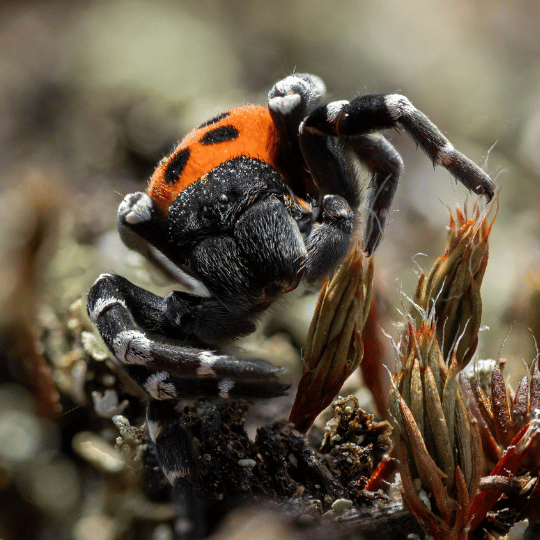
Eresus sandaliatus

Photo credits: Ewout de Vos

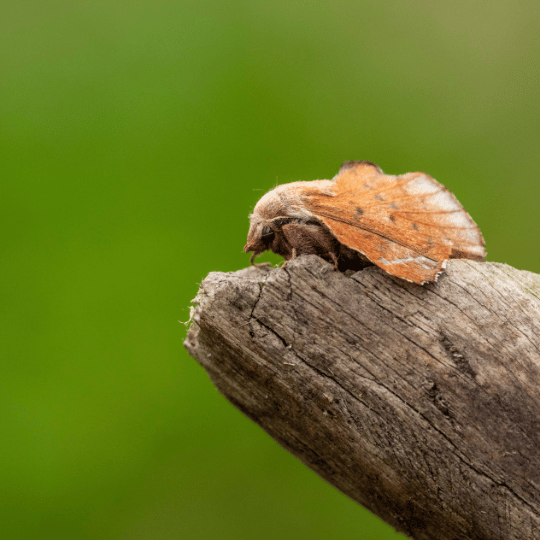
Phyllodesma tremulifolium

Share this article


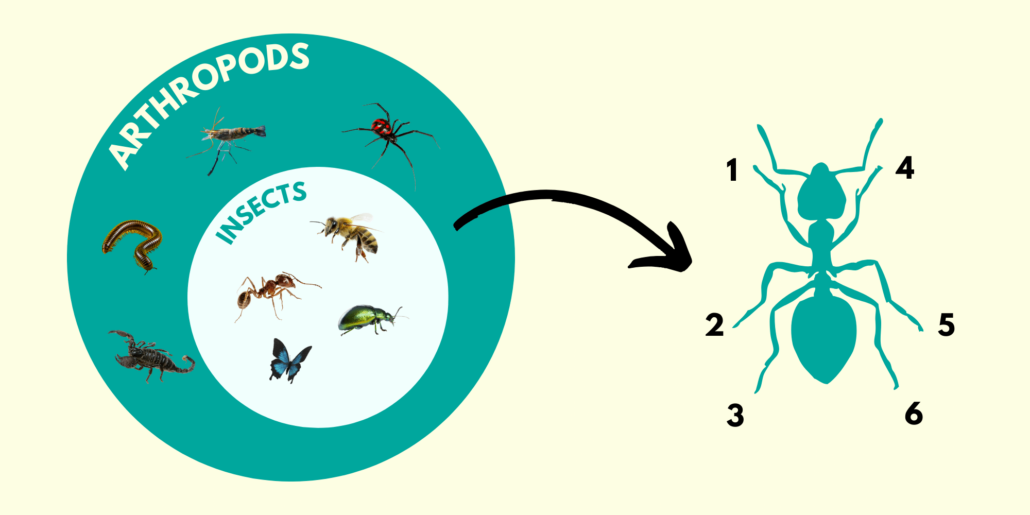
If it has 6 legs it’s an insect and if not it is something else.

With all the hustle and bustle going on in our lives, especially for those of us living in big cities, our time spent in nature is limited to short walks in nearby parks. Even when we do attempt to visit our national parks, some creatures often go overlooked. Many of these overlooked organisms belong to the phylum (group) of arthropods.

The reason why we use the word arthropod instead of insect is because all insects are arthropods but not all arthropods are insects.

Confused? Don’t worry, just look at the legs. If it has 6 legs it’s an insect and if not it is something else.

Examples of insects include: 
  • Bees 
  • Butterflies
  • Beetles 
  • Praying mantis

Examples of non insect arthropods are:
  • Shrimp
  • Spiders
  • Millipedes
  • And yes even ancient trilobites

Let’s look at some of these arthropods that are often hidden in plain sight

One of the more unexpectedly cute ones is the Lady bird spider (Eresus sandaliatus). As with many species in nature, it is the male that boats such vibrant colours. Though they look fuzzy and cute, try not to pick them up as a bite can cause some discomfort. Spiders, even those that look more menacing, play an important role in our ecosystems. These arthropods are mostly predators, as such they control the population of other arthropods lower in the food chain. We call this top down control. In doing so they prevent any one species from becoming too dominant in the ecosystem.

Moving on to some flying arthropods, we have wild bees. Most people are familiar with honey bees and their importance in European agriculture. But did you know that out in nature wild bees are more important than honey bees? Certain bees specialise only on certain groups of plants like yellow asteraceae. There are even bees that parasitise other wild bee nests like the Cuckoo bees from the genus Nomada.

The final arthropod we want to highlight is the Aspen lappet (Phyllodesma tremulifolium). Unlike our first arthropod, the Lady bird spider, the Aspen lappet will definitely go overlooked during your next visit to your favourite Natura 2000 area thanks to its amazing camouflage. The ability to blend in with your surroundings has proven to be beneficial for both predators and pray alike. Praying mantises use it to ambush prey and moths and butterflies like the Aspen lappet use it to avoid becoming lunch. And have you ever wondered why moths are so fuzzy? Well, this is an adaptation that helps them avoid detection from predators and keep them warm so they can fly at night.

So next time you’re in nature don’t forget to keep an eye out for those cool arthropods hidden in plain sight!

More articles about biodiversity

Nature Protection and Biodiversity as Enablers of Rights, Participation and Well-Being Written by Olivia Robertson Volunteer at YEE – Biodiversity Contents Share


Read More

The conclusion of the 16th meeting of the Conference of Parties to the Convention on Biological Diversity (CBD COP16) marks a pivotal


Read More

Despite the law’s importance in combating deforestation, the European Union recently announced a 12-month delay.


Read More

While nighttime activities are popular with humans for a few nights a year, some creatures keep it creepy all year round.


Read More

With the next conference of the parties to the convention on biological diversity (COP 16) right around the corner, let’s look back


Read More

,

Impacts of the European Climate Lawsuits | Webinar

Impacts of the European Climate Lawsuits | Webinar

Unpacking the recent ECtHR decisions on climate cases with Victorine Nagels and Theresa Amor-Juergenssen.

Practical information

  • When

    9th May 2024

  • Where

    Online

  • How

    Sign up

This webinar is part of the Legal Seeds project.

Share This Event


Why are we doing this

The European Court of Human Rights (ECtHR) recently delivered decisions on three different climate change-related cases. These were all lawsuits brought forward by citizens across Europe, who argued that states have not done enough to mitigate climate change and to protect their citizens.

By immersing ourselves in discussions on participation, human rights, and environmental protection, we aim to ensure that the voices of young people are integral in shaping policy recommendations, as well as to create a platform where your insights and contributions can drive tangible change, fostering a global community dedicated to environmental advocacy.

In this webinar, one month after the historic decisions, we will unpack the results of the three different climate lawsuits brought forward to the ECtHR:

Who will be speaking

The speakers for the event are Victorine Nagels (lawyer) and Theresa Amor-Juergenssen (legal advocacy deputy at WYCJ). These experienced speakers will analyse the ECtHR decisions and reflect on the significance that these have on States’ climate commitments. They will also analyse what are going to be the consequences of these judgements on climate action and litigation advanced by youth and on the rights of children, youth, and future generations.
 

Have questions? Get in touch!


Other upcoming events

,

The impact of climate change on terrestrial & freshwater ecosystems

The impact of climate change on terrestrial & freshwater ecosystems

A Wake-Up Call from the European Environment Agency’s debut climate risk assessment

Written by

Contents

Share this article


What is the Climate Risk Assessment?

The Climate Risk Assessment (CRA) by the European Environment Agency (EEA) is a course assessment of the current risks posed by climate change for Europe, for different sectors. The report identifies and analyses 36 risks from the policy perspective and synthesises current scientific consensus on the topic.

The historic decline in habitat quality experienced by Europe’s ecosystems seems to be continuing. This negatively impacts many different species as well as people’s livelihoods. Climate change is already a major player behind these ecosystem changes. However, not all ecosystems are impacted in the same way, and some face other challenges that exacerbate the effects of climate change. Here follows a summary of the climate risk assessment for each of the main terrestrial ecosystems in Europe.

Forests

The CRA makes clear that climate change affects both the structure of forests and their functioning. This influence on forest functioning and structure is both through direct interactions with the forest system and through indirect interactions with other species or drivers of change that do play a direct role in forest systems. 

Examples of climate drivers acting on forest systems are temperature and moisture. However, habitat fragmentation caused by deforestation is the primary driver behind forest habitat quality degradation.

Furthermore, a lack of sustainable forestry practices like monocultures also made Europe’s forests more susceptible to pressures from climate change.

Some of these challenges are: drought-induced mortality, species range shift, increased incidence of wildfires and pest outbreaks. Fortunately, the forestry sector has adopted measures to create more climate-resilient forests. Nevertheless, it remains to be seen how impactful these measures are, given uncertainties surrounding forests’ responses to climate change.

Peatlands

The leading cause of peatland degradation is human development conflicting with the habitat requirements of peatlands. The effects of climate change are just exacerbating these already existing mechanisms affecting peatland water balance.

For example, climate-induced drought reinforces peatland drying that is already happening due to peatland drainage. Unfortunately 50% of peatlands in the EU are degraded (25% Europe-wide). This puts many species dependent on peatlands like the bog orchid (Hamarbya paludosa) at risk of going extinct. Very alarmingly, future projections predict that peatland will become a net carbon emitter under current rates of change. This limits their ability to help us mitigate climate change effects. Peatlands are currently a large carbon sink.

Freshwater systems

Freshwater systems are affected by different climate drivers compared to the previous ecosystems. But most importantly, temperature and precipitation contribute to the most change. The consequences of increasing temperatures include shifting thermoclines or more pronounced thermal gradients in water bodies.

Temperature-sensitive species are also at risk as water temperatures rise. Decreases in precipitation can potentially cause water bodies to dry up significantly, but increases in precipitation can lead to toxic algal blooms. The fact is that surface waters are already increasing at a rate of 0.21-0.45°C per decade. This rate of change is particularly high in northern climates. Widespread eutrophication is already a concern in many European countries.

Arctic and mountain ecosystems

The main drivers of change in arctic and mountain systems are rising temperatures and human use. Both systems are particularly susceptible to climate change as they experience faster warming than on average. Additionally, both systems have a long history of human use, from mining and reindeer herding in the Arctic to grazing in mountain grasslands. The current situation of these systems is one of contrasting extremes.

Both droughts and high water retention are becoming commonplace in the Arctic. This destabilises ecosystem function and the ecosystems provided. Mountains are getting less snowfall leading to glaciers receding and lower snowmelt feeding into rivers.

Unfortunately, these threats are projected to worsen with climate change, as the Arctic region warms faster than most places. Leading to the extinction of arctic species, disruption of livelihoods and disappearance of arctic and mountainous ecosystems.

Urban ecosystems

Though climate change puts more pressure on stressors affecting urban ecosystems like the heat island effect, drought and pollution, the impacts are less strong as urban species are more resilient and adaptable.

Nonetheless, increased urban stress still puts the system balance at risk. Conditions might become more favourable for invasive or alien species. Pests and diseases might also be favoured in these changing conditions. Many of these effects are already being felt across European cities, though it is highly context-dependent.

Future projections also show that on the one hand drought in some cities will become more extreme and in others, floods are to be expected. The rise in urban heat island effect in the future is particularly concerning for tree and shrub species already living at their temperature optimums.

Agro-ecosystems

Climate change-induced changes are fortunately not major drivers of change in agro-ecosystems. However, changes in agricultural practices are changing this ecosystem in unprecedented ways. What is certain, is that agro-ecosystems are facing many challenges. Many ecosystem services like pollination, pest control and water regulation are under threat and declining due to many different drivers.

One of the major changes in this system is the sharp decline in pollinators, a combination of agricultural intensification, climate change-induced phenological shifts and pesticide use are disrupting the intricate interactions between insects and plants. In the future climate change will surely become a major driver behind biodiversity loss in agroecosystems. Furthermore, climate impacts soil conditions, with more extreme droughts and soil erosion to be expected.

Conclusion

Not surprisingly, climate change is causing significant changes in terrestrial and aquatic ecosystems. Marine and coastal ecosystems are disproportionately affected by these changes and thus require urgent action. Policy-wise, long-term prioritisation and planning are required to facilitate adaptive management. So how do we move forward? Stronger policy at the EU level is required and in addition, states must work together to tackle our shared risks posed by climate change.

More articles about biodiversity

Nature Protection and Biodiversity as Enablers of Rights, Participation and Well-Being Written by Olivia Robertson Volunteer at YEE – Biodiversity Contents Share


Read More

The conclusion of the 16th meeting of the Conference of Parties to the Convention on Biological Diversity (CBD COP16) marks a pivotal


Read More

Despite the law’s importance in combating deforestation, the European Union recently announced a 12-month delay.


Read More

While nighttime activities are popular with humans for a few nights a year, some creatures keep it creepy all year round.


Read More

Inside the European Parliament: Country Breakdown of Major Political Groups

Inside the European Parliament: Country Breakdown of Major Political Groups

Share


Good to know

During the elections, you are going to vote for a national party and usually, they are also going to be part of one of the major European groups with representatives from different countries.

Learn more about EU Groups in the European Parliament, their principles and ideology, and their view on the environmental issues!

What is the European Parliament

The European Parliament is composed of Members of the European Parliament (MEPs) who are organised into several political groups, each representing a spectrum of ideologies. These groups are not based on nationality but on political affiliation.

Here’s a brief overview of the major political groups:

  • EPP – Group of the European People’s Party (Christian Democrats)
  • S&D – Group of the Progressive Alliance of Socialists and Democrats
  • Renew Europe – Renew Europe Group
  • Greens/EFA – Group of the Greens/European Free Alliance
  • ID – Identity and Democracy Group
  • ECR – European Conservatives and Reformists Group
  • The Left – Confederal Group of the European United Left/Nordic Green Left
  • NI – Non-Inscrits” (Non-Attached Members)

Overview of the major groups in the European Parliament by country

Check out the national parties in the political groups of the European Parliament!

How to do that?

  1. Click on the country of your interest
  2. Click on the a political  group
  3. Discover the national parties*

* If you hover on the name, you can see their website to get more info

Check out the national parties in the political groups of the European Parliament!

How to do that?

  1. Click on the country of your interest
  2. Click on the a political  group
  3. Discover the national parties*

* If you hover on the name, you can see their website to get more info

Inside the European Parliament: A Closer Look at the Political Groups Shaping EU Legislation

Inside the European Parliament: A Closer Look at the Political Groups Shaping EU Legislation

Share


Good to know

During the elections, you are going to vote for your national party and usually, they are also going to be part of one of the major European groups with representatives from different countries.

Learn more about your national parties and their current position in the European parliament!

What is the European Parliament

The European Parliament (EP) is one of the legislative bodies of the European Union (EU) and one of its seven institutions. It works alongside the Council of the European Union (also known as the Council) to adopt European legislation, following proposals made by the European Commission.

The European Parliament is composed of Members of the European Parliament (MEPs) who are organized into several political groups, each representing a spectrum of ideologies. These groups are not based on nationality but on political affiliation.

Here’s a brief overview of the major political groups:

  • EPP – Group of the European People’s Party (Christian Democrats)
  • S&D – Group of the Progressive Alliance of Socialists and Democrats
  • Renew Europe – Renew Europe Group
  • Greens/EFA – Group of the Greens/European Free Alliance
  • ID – Identity and Democracy Group
  • ECR – European Conservatives and Reformists Group
  • The Left – Confederal Group of the European United Left/Nordic Green Left
  • NI – Non-Inscrits” (Non-Attached Members)

Each group has its own set of core principles and policies, and they work together to influence legislation and policy within the European Union.

Overview of the major political groups

The Group of the European People’s Party (EPP) is a political group in the European Parliament composed of center-right and Christian-democratic parties from across the EU. It is one of the biggest and most influential groups in the Parliament, with 182 seats as of 2019 and Manfred Welbeg as its president. Hence, it holds the presidency of the European Parliament.

The 44 group’s members come from various European countries and represent a diverse range of political ideologies within the center-right spectrum. The EPP promotes European integration and cooperation while prioritizing issues such as economic growth, security, and stability.

Overall ideology

The EPP advocates for conservative and center-right policies, focusing on economic liberalism, social conservatism, a strong European Union, and sustainable development as their main values.

What are their environmental convictions? 

The official EPP’s 2019 environmental vision called for a 50% reduction in emissions by 2030 and carbon neutrality by 2050, prioritizing ambitious climate targets. To encourage the reduction of emissions, they backed carbon pricing, emissions trading, and sustainable economic policies. Their main goals included developing a circular economy, sustainable agriculture, and the shift to clean energy. Global leadership in sustainability, social considerations, and green innovation were also highlighted. In general, the EPP aimed to strike a balance between economic prosperity and climate action, placing a strong emphasis on social responsibility, innovation, and collaboration when addressing environmental issues.

The Group of the Progressive Alliance of Socialists and Democrats (S&D) represents the center-left. As a significant faction in the Parliament, it advocates for policies that focus on social justice, equality, and sustainability. With a focus on issues like workers’ rights, social protection, environmental sustainability, and inequality, the S&D group aims to promote a socially conscious Europe. Thus, social democratic, socialist, environmental, and labor parties from throughout the European Union are among their values. With Iratxe García Pérez as their president, the group’s members come from diverse national backgrounds and share a common goal of advancing policies to build a more equitable society.

Overall ideology

The S&D seeks to balance economic growth with social welfare, advocating for policies that protect vulnerable groups in society.

What are their environmental convictions? 

S&D advocates for immediate action to combat climate change and envisions comprehensive environmental values centered on the Green Deal. Sustainable policies were highlighted, such as investments in clean energy, support for agriculture, and restoration of the environment. Prioritising a just transition, S&D struck a balance between social equity, environmental protection, and job preservation. They supported laws that set aggressive goals for reducing emissions, such as the European Climate Law and the Nature Restoration Law. In addition, they put forth a zero-pollution plan and attempted to harmonise fisheries and agriculture policies with climate goals. In order to achieve a sustainable and socially just future, they placed a strong emphasis on social cohesion and worked to enact environmental regulations in conjunction with the European Pillar of Social Rights.

Renew Europe supports policies that emphasize individual freedoms, human rights, democracy, and the rule of law, alongside environmental sustainability and digital innovation. The group advocates for an open economy with fair competition, aiming for a balanced approach that fosters economic growth while ensuring social justice and protection for all citizens. Within the Parliament, it promotes a centrist agenda that aims to bridge the gap between the left and right. Renew Europe’s influence in discussions on EU governance includes areas such as the digital single market and climate change, advocating for reforms and regulation.

Overall ideology

The Renew Europe Group is a political group in the European Parliament representing a coalition of liberal, centrist, and pro-European parties from across the EU.

What are their environmental convictions? 

Renew Europe’s environmental agenda emphasizes fulfilling the objectives of the Paris Agreement and promoting the shift to a society that is climate neutral by 2050. They underlined that in order to mainstream environmental and climate objectives and expedite the ecological transition, coherence across all EU policies is essential. Innovation, environmentally friendly sectors, and international climate leadership were given top priority by Renew Europe. They demanded bold legislation to increase emission reduction targets, such as an updated European Green Deal and an efficient Climate Law. They also stressed the need to preserve the environment, move toward a circular economy, and guarantee the quality of the air and water. Renew Europe promoted innovation, sustainable production, and renewable energy while attempting to incorporate environmental goals into trade, agriculture, and fisheries policies.

The Group of the Greens/European Free Alliance (Greens/EFA) is composed of green, regionalist, and minority parties from across the European Union. This group, with its 74 seats in 2019, is known for advocating for environmental protection, climate action, and sustainability, pushing for policies to combat climate change and preserve biodiversity. The Greens/EFA prioritise stances on social issues, including human rights, gender equality, and social justice, reflecting a commitment to creating a more equitable and inclusive society, while also supporting a transition to renewable energy, sustainable transport, and a circular economy. The group emphasizes transparency, democracy, and civil liberties within the EU, advocating for citizen participation in European decision-making. Through its work in the European Parliament, the Greens/EFA seeks to influence EU policy and legislation towards sustainable and socially responsible directions.

Overall ideology

/

What are their environmental convictions? 

The Group’s environmental agenda aims to limit global warming to below 2 degrees. They advocate for increased renewable energy targets, simplifying administrative processes for renewable projects, and promoting electric vehicles while opposing liquefied natural gas in transport. They also call for the end of free emissions allowances, integrating aviation and shipping emissions into the Emissions Trading System, and implementing a Carbon Border Adjustment Mechanism for imported goods. Additionally, they focus on addressing energy and transport poverty through the Social Climate Fund, supporting emissions reduction targets in forestry and land use, and advocating for stringent ecodesign requirements for vehicles, along with a ban on new petrol and diesel cars within the next decade.

Established in 2009, the ECR was founded on the principles of Eurorealism, advocating for EU reform, decentralization, and the respect of national sovereignty over deeper European integration. With its 62 seats, the group emphasizes free market economics, individual liberty, and reducing the power of the EU institutions in favor of giving more control back to member states. Accordingly, the ECR has advocated for the preservation of traditional values, stricter immigration laws, and a strong stance on law and order. The group actively engages in the legislative process to influence policies that align with its vision of a more flexible and decentralized European Union, despite its eurosceptic position.

Overall ideology

The European Conservatives and Reformists Group represents a political grouping of conservative, eurosceptic, and right-wing parties from across the European Union.

What are their environmental convictions? 

The European Conservatives and Reformists prioritise initiatives like the EU’s Emission Trading Scheme to reduce greenhouse gas emissions while safeguarding European industries. ECR-led efforts focus on improving air quality through cross-border collaboration and setting stringent emissions ceilings. They address the illegal wildlife trade by outlining challenges and proposing solutions. In fisheries, they advocate for sustainable practices balancing environmental protection, consumer demand, and the livelihoods of fishermen. ECR stresses the importance of science and technology in farming and fishing for sustainable resource management. They aim to protect the environment while ensuring economic prosperity and food security.

The Identity and Democracy (ID) Group in the European Parliament is composed of nationalist and eurosceptic parties from the European Union (EU). Established in June 2019, following the Europe of Nations and Freedom (ENF) group, ID consists of parties that focus on national sovereignty and express concerns about the EU’s approach to federalism. ID advocates for a model where EU member states cooperate on an intergovernmental basis and seeks a reevaluation of powers between the EU and its member states.

Overall ideology

ID represents a perspective in the European Parliament that prioritizes the interests and sovereignty of individual nations, aiming for a more decentralized EU structure. 

What are their environmental convictions? 

On their website, they remain silent.

Established in 1995, the group focuses on reforms in the EU related to social justice, workers’ rights, environmental sustainability, and wealth redistribution. GUE/NGL emphasizes peace, democracy, solidarity, sustainable development, and a transition towards renewable energy. With 41 seats in the Parliament, GUE/NGL participates in policy discussions, aiming to influence EU policies in the direction of social, economic, and environmental considerations.

Overall ideology

The Left group consists of left-wing, socialist, communist, and anti-capitalist parties from the European Union.

What are their environmental convictions? 

The Left emphasises environmental justice, advocating for nature conservation, protection of biodiversity, and strict regulation of toxic chemicals. They prioritise animal rights and welfare alongside sustainable agricultural and fisheries policies, emphasizing support for small communities. They scrutinise trade agreements like the EU-Chile AFA; they highlight concerns over environmental degradation, indigenous rights, and corporate interests. The Left currently calls for trade policies aligned with fairness, solidarity, and ecological integrity, rejecting deals favoring corporate profits over sustainability. They also focus on legislative efforts like the Nature Restoration Law, pushing for strong measures to restore ecosystems. They also address issues such as GMO authorisation and food price crises. They emphasize safety assessments, consumer choice, and fair pricing, advocating for policies benefiting both people and the planet.

Independent MEPs in the European Parliament, often referred to as non-attached members, are those who do not belong to any of the recognised political groups. They may choose to be independent for various reasons, such as differences in ideology or political strategy.

,

Dealing with Eco-Anxiety | Training of Trainers

Dealing with Eco-Anxiety | Training of Trainers

We are looking for 20 participants who are interested in increasing their capacities to work on dealing with eco-anxiety in their organisation and environmental activism.

Practical information

  • When

    18th May to 24th May 2024

  • Where

    Prague, Czechia

  • Fee

    Fully funded

  • How

    Apply by 1st April 2024

Supported by the Council of Europe through the European Youth Foundation.

Share This Event


Why are we doing this

We’re embarking on this journey to empower youth workers to deal with eco-anxiety and focus on the crucial issue of the interrelation between mental health and climate change. Eco-anxiety especially affects young people, who worry about not being able to live in a clean, healthy and sustainable future. Many times this hinders their capacity to be involved in advocacy efforts, as the fear overwhelms them and results in isolation from their community.

Through non-formal education methods, we will equip the participants with knowledge on eco-anxiety and mental health impacts of climate change, enabling them to take meaningful action on these issues in their own communities. We will create a platform for discussions, knowledge-sharing, and active participation, empowering participants to collectively learn about this important topic.

This study session is for you if:

At the training, you will:

Have questions? Get in touch!


Other upcoming events

Call for Eco-Anxiety Experts | Call for Trainers

Call for Eco-Anxiety Experts

to lead our Training of Trainers.

May

200 EUR/day

Prague, CZ

Onsite

Start ASAP

YEE is seeking 2 experts on Eco-Anxiety

YEE is looking for experts between who can host training sessions during a training of trainers on how to deal with eco-anxiety.

About the Training of Trainers

Through non-formal education methods, we aim to equip the participants of the training with knowledge on eco-anxiety and mental health impacts of climate change, enabling them to take meaningful action on these issues in their own communities.

We want to create a platform for discussions, knowledge-sharing, and active participation, empowering participants to collectively learn about this important topic.

Application deadline:

1st April 2024

Your responsibilities

  • ⚬ Plan the training sessions together with the Project Coordinator.
  • ⚬ Attend two preparatory online meetings with the other trainer and YEE staff to plan the sessions.
  • ⚬ Carry out 5 days of interactive training sessions using non-formal education methods.
  • ⚬ Support the participants’ understanding and development.
  • ⚬ Assist in training activities and facilitation.

Candidates we are looking for


Apply now

,

State of the world’s migratory species

State of the world’s migratory species

44%, that is the percentage of migratory species listed under the Convention on Migratory Species (CMS) on the path to extinction. The CMS recently published a first of its kind report on the state of the world’s migratory species. This landmark report shows us that we need to take immediate action in order to preserve these amazing animals that know no borders. 

Written by

Contents

Share this article


What is the CMS?

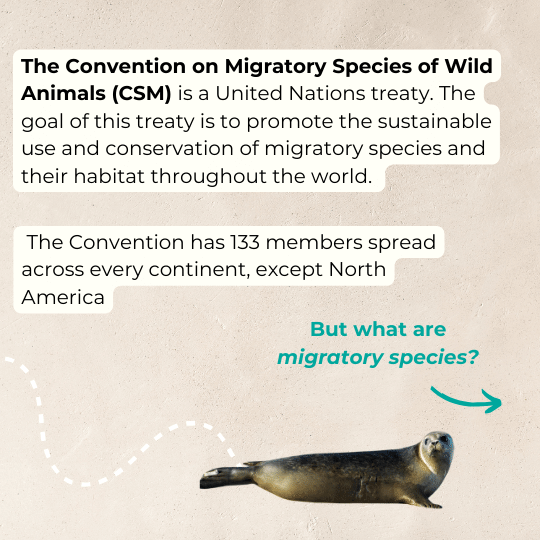
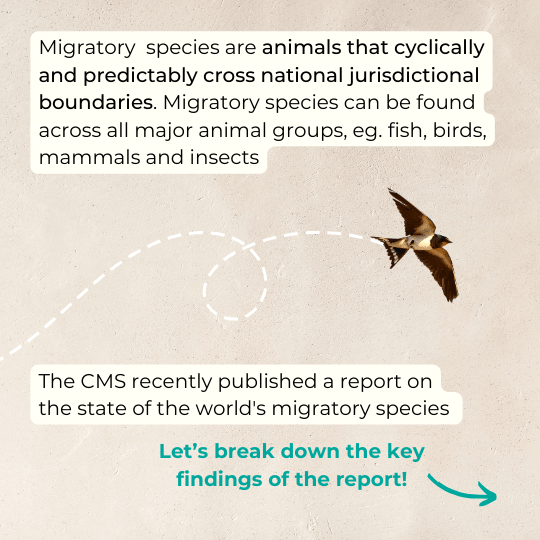
The Convention on Migratory Species of Wild Animals is a United Nations (UN) treaty. The goal of this treaty is to promote the sustainable use and conservation of migratory species and their habitat throughout the world. Under this treaty governments and wildlife experts must collaborate to address the issues surrounding animals that make migratory journeys on land, in the air and sea. The Convention has 133 members spread across every continent, except North America.

Visual summary

Looking closer at the conservation status of migratory species.

We often hear the words critically endangered, endangered and many more terms thrown around, but what do these terms actually mean for the CMS species being categorised and their conservation? 

Let’s explain with an example, the Humpback whale (Megaptera novaeangliae).  After a major decline in population size to 450 individuals from 27,000, the western South Atlantic  sub-population has reportedly recovered 93 % of its population size. This puts the global population of this majestic creature at around 80,000 individuals. For this reason the Humpback whale is classified as least concern. But the same can not be said for other sub-populations of the Humpback whale. Most are still endangered. So we must be careful when discussing threat level classifications. As global classifications do not always reflect regional or local conservation status of species.

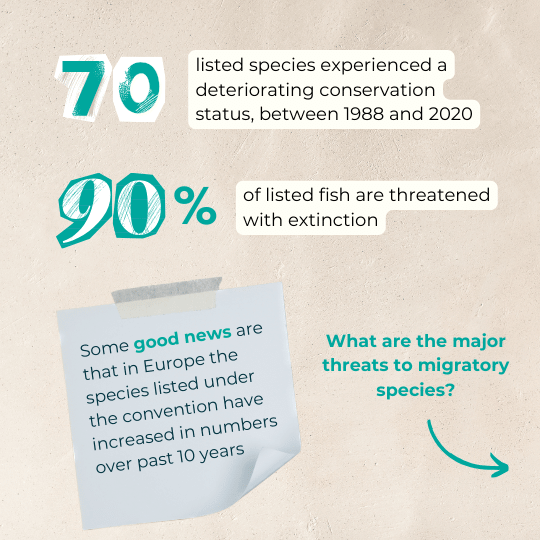
Across the board, the extinction risk is rising for migratory species under the CMS. The report highlights that in the period of 1988 to 2020, 70 listed species experienced a deteriorating conservation status, hence leading to a higher Red List threat category. On the other hand only 14 listed species had a genuinely improving conservation status. Something very important that the report mentions is that, globally 399 migratory species are not listed under the CMS. These species are mostly fish and birds. This is an unfortunate fact as these species can not benefit from CMS protection. They deserve more investigation by the CMS countries and scientists.

Of the species listed under the CMS the future of migratory  fish are particularly concerning. 97% of these fish are threatened with extinction. Furthermore, most have a declining population. Compared to fish, mammals and birds are doing a bit better overall. 78% of birds and 44% of mammals have a population of least concern. However, in reality this still means that 134 (14%) birds and 63 (40%) mammal species are still threatened with extinction.

For us here in Europe, there is some good news. As the report says that in the past 10 years,  migratory species listed under the CMS in Europe have increased in numbers. Which means a more positive Red List threat status. Fortunately, this is also the case for migratory species in the Caribbean, South and Central American regions.

Revealing threats to migratory species: human activities in the spotlight 

Navigating across vast distances, migratory species encounter significant challenges caused by human activities, not only during their journeys but also at pivotal locations for their feeding and reproduction processes. The CMS indicates that 58% of monitored sites, vital for CMS-listed species, are at risk due to anthropogenic reasons. 

The report’s in-depth analysis exposes the two most pressing human-induced threats impacting migratory species:  

  • Overexploitation

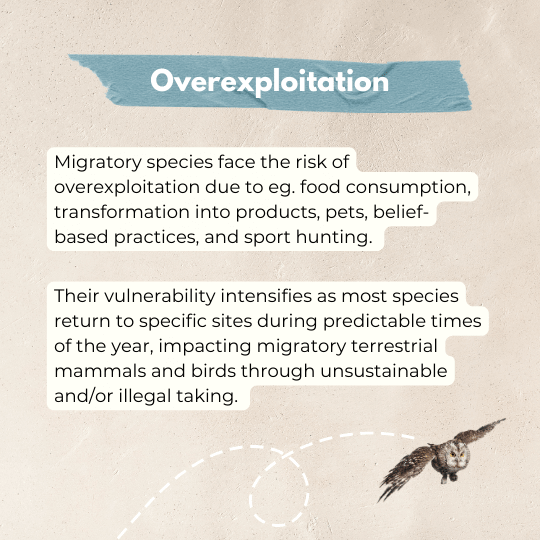
Migratory species globally face the risk of overexploitation serving various purposes such as food consumption, transformation into products, pets, belief-based practices, and sport hunting. Their vulnerability intensifies as most species return to specific sites during predictable times of the year, impacting migratory terrestrial mammals and birds through unsustainable and/or illegal taking. The oceans, too, witness the consequences of overfishing and the unintended capture of non-target animals, posing a significant challenge to marine migratory species worldwide.

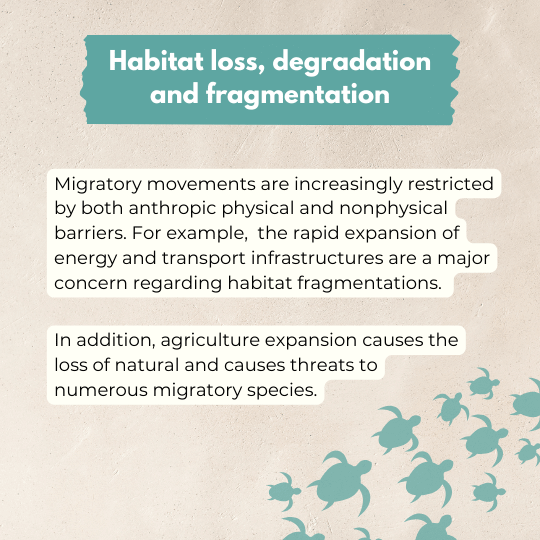
  • Habitat loss, degradation, and fragmentation 

Migratory terrestrial and marine movements are increasingly restricted by both anthropic physical and nonphysical barriers, disrupting vital connectivity for a large range of species. The rapid expansion of energy and transport infrastructures emerges as a major concern regarding habitat fragmentation and its impact on migratory behaviours. In addition, agriculture expansion causing the loss of natural lands and intensification of practices to meet growing human food consumption are key threats to numerous migratory species.

The report reveals other pressures faced by migratory species such as climate change and pollution. These findings highlight the urgent need for immediate intervention to address these threats and ensure the survival of these species and the habitats they depend on.

Unifying efforts to protect migratory species : a wake-up call fo urgent action 

After detailing the numerous pressures confronting migratory species, the CMS issues a clear call to immediate, collaborative and international action. Governments, communities, the private sector, and other stakeholders are urged to come together to ensure the survival of migratory species. 

While the State of the World’s Migratory Species report presents a concerning scenario, it also highlights successful conservation efforts and policy changes from local to international, demonstrating that viable solutions exist. Achievements include multilateral initiatives to tackle illegal taking of migratory birds and the establishment of international task forces like the CMS Energy Task Force, aiming to reduce renewable energy projects impacts on migratory species. However the report emphasises the need to amplify and expand these efforts globally to achieve conservation objectives. 

To combat overexploitation of migratory species, the report’s priority recommendations for action include implementing stricter national legislation, improving monitoring of legal developments, and reinforcing initiatives to tackle illegal, unsustainable taking along with mitigating incidental catch. Addressing habitat loss, degradation and fragmentation requires additional identification and effective protection of crucial sites for migratory species, getting further knowledge on the threats they face, ensuring their ecological connectivity and restoring them when necessary. Urgent attention should be directed towards nearly extinct species, especially CMS-listed fish species. Proposals also include completing the CMS listings with overlooked endangered migratory species, demanding national and international attention. The report finally advocates for implementing ambitious initiatives to tackle climate change and light pollution. 

The alarming decline of migratory species populations and broader biodiversity loss due to numerous anthropic threats raises an urgent imperative: a collective and global acceleration of efforts to ensure their future existence is necessary. The CMS, serving as a worldwide cooperation platform, plays a critical role in providing solutions and mobilising forces at every level. 

As youth we also have a role to play. Whether we are volunteering for local environmental organisations, advocating for the environment or getting involved in political discussions our voice can stimulate change!

More articles on Biodiversity

Nature Protection and Biodiversity as Enablers of Rights, Participation and Well-Being Written by Olivia Robertson Volunteer at YEE – Biodiversity Contents Share


Read More

The conclusion of the 16th meeting of the Conference of Parties to the Convention on Biological Diversity (CBD COP16) marks a pivotal


Read More

Despite the law’s importance in combating deforestation, the European Union recently announced a 12-month delay.


Read More

While nighttime activities are popular with humans for a few nights a year, some creatures keep it creepy all year round.


Read More

, , ,

Dive into action with UK Youth4Nature | Members’ Spotlight

Dive into action with UK Youth4Nature | Members’ Spotlight

Learn about UK Youth 4 Nature's Creative Campaigning for Biodiversity and Nature Conservation.

Written by

Contents

About UKY4N

UK Youth 4 Nature (UKY4N) is the leading UK youth movement calling for urgent action on the nature crisis, and they have been cherished members of YEE since 2022. UKY4N’s mission is to mobilise and empower young people to advocate for decisive action on biodiversity in the UK, emphasising the importance of protecting and restoring nature and wildlife to address the consequences and issues of climate change. March 14th marks the International Day of Action for Rivers, and we find this the perfect occasion to put the spotlight on UKY4N and its creative river projects.


Started in 2019 as a simple Whatsapp group with the mission of bringing nature into stronger focus within political discussions, UKY4N has rapidly evolved into an active organisation with a solid volunteer base all across the UK. The organisation has strategically focused its campaigning efforts on nature rather than climate issues and has today successfully positioned itself as a prominent advocate for biodiversity. We have met with co-director Ellen Bradley, to hear more about UKY4N’s creative campaigning and imaginative projects on rivers, hoping to inspire others to take action on this important topic!

Check out UKY4N

How can you help freshwater?

  • Support nature-friendly farmers, where possible buy organic, local food.

  • Banish pesticides and herbicides from your garden!

  • Celebrate freshwater ecosystems and raise awareness of the threats, share a photo on social media, tag UKY4N and use the hashtag #NotSoFreshwater

  • Research and learn more about the state of freshwater in the UK, sign up for the UKY4Ns newsletter to keep up to date with our campaign.

  • Join the team! UKY4N is always looking for new members to help fight for nature. Email UKY4N at ukyouthfornature@gmail.com to find out more.

Share this article


Making waves for freshwater conservation 

Freshwater ecosystems are the lifeblood of our planet. In the UK, around 3% of land is covered by freshwater and with an intricate network of 200,000 km of streams and rivers the freshwater ecosystems in the UK are of international importance. Thousands of lakes, ponds and ditches provide homes for diverse wildlife species, ranging from dragonflies to water voles. And yet, no rivers in England, Wales or Northern Ireland are considered to be in high ecological health, and in Scotland, as much as 92% of rivers do not meet these standards either. 

Recently, freshwater systems gained more media focus on regulating sewage and plastic pollution, advancing freshwater protection. However, agricultural pollution, affecting 40% of all freshwater bodies in England, remains overlooked. In addition to that, targets for cleaning up waterways, such as the goal set for 2027, have been pushed back to 2063, giving the protection of freshwater systems in the UK an urgency that cannot be ignored.

With the campaign Not so Freshwater, UKY4N launched an awareness campaign giving agricultural pollution a much-needed spotlight. The goal is to cut the use of pesticides in half by 2023 as well as restore field margins and riverside ecosystems to reduce field run-off. Ellen emphasises creative campaigning to facilitate positive change, celebrating sustainable farmers and advocating for political action.

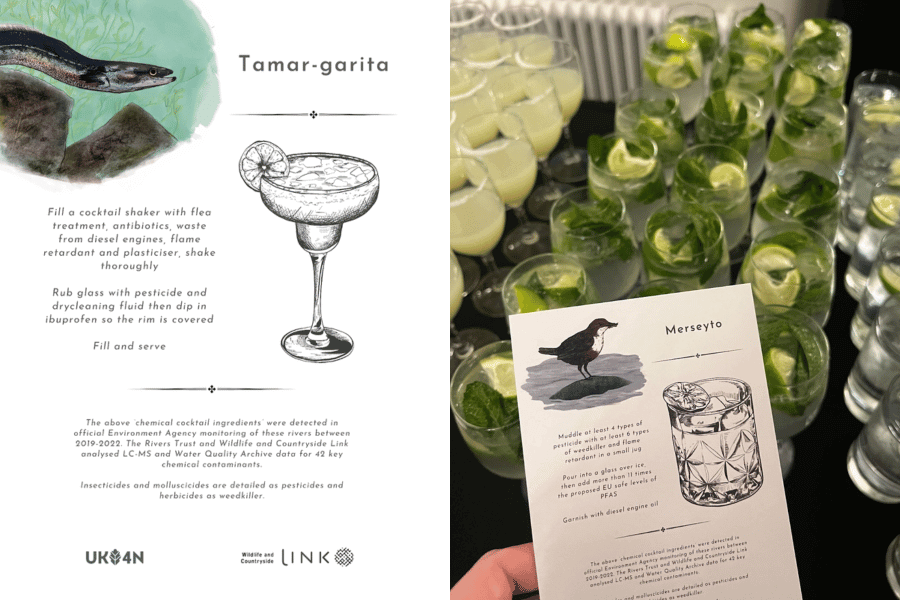
On the 23rd of May 2023, UKY4N was able to host a successful event, summoning a variety of politicians and NGOs. The Chemical Cocktail Bar was one of the highlights of the event, which received a big positive response and even more importantly, political attention. The concept behind the Chemical Cocktail Bar is simple, creative and yet effective. Cocktails, named after UK rivers like the Mersey and Thames, the bar creatively highlighted freshwater pollution. Presented as beautifully designed cocktail recipes, these cards added a lively touch with real added proof of the urgency of freshwater pollution, proving that campaigning for political change does not have to be boring or dry. 

Beautifully designed recipe cards show the pollution of some of the biggest freshwater systems in the UK in a fun and engaging way.

The event successfully brought together young people and politicians in a positive atmosphere, fostering constructive discussions on environmental challenges, as Ellen tells us. UKY4N maintained a balance of fun and passion, ensuring engagement while addressing urgent issues facing our natural world.

UKY4N offers practical guidance for individuals to make a difference in preserving freshwater systems, including a five-step guide for reducing pollution. Additionally, they provide a template for a letter to your regional Member of Parliament to advocate for improved chemical standards and freshwater regulation. Later this year, UKY4N will host The Senedd, an event in Wales, allowing young people to engage with Welsh politicians on nature and freshwater issues.

With its campaign Not So Freshwater and a creative, positive and fun approach UKY4N inspires us to get involved in the movement for cleaner waterways and a more sustainable future. Let yourself be inspired too!

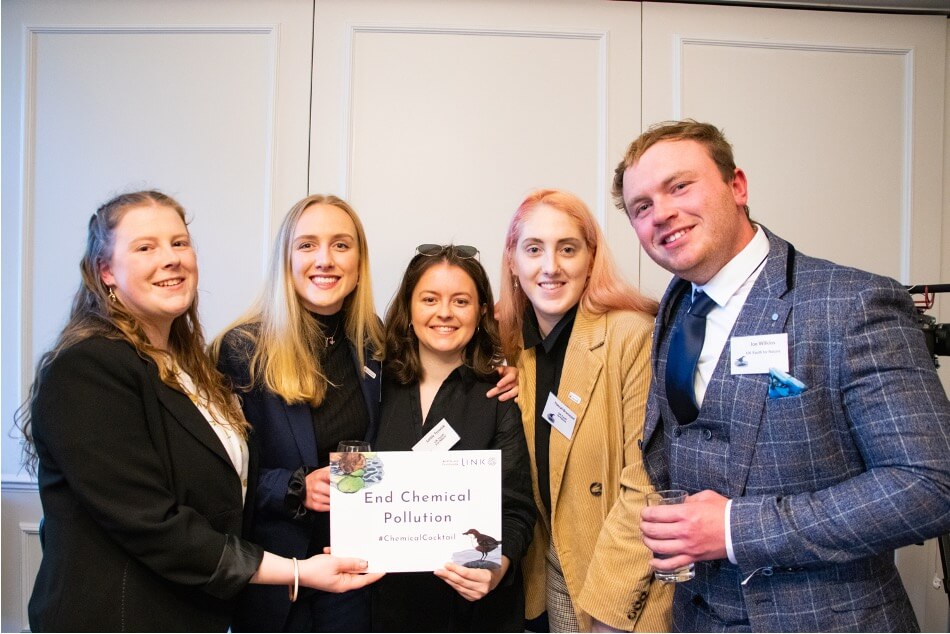
The UKY4N team during the event promoting the end of chemical pollution in freshwater systems in the UK (from left to right: Juliette Bone, Ellen Bradley, Lottie Trewick, Hannah Branwood, Joe Wilkins)

Crafting change with creative campaigning 

The fun and creative methods used in the Not So Freshwater project were not a one-off, but rather lie at the very heart of UKY4N’s approach to advocating for nature. Creative campaigning entails using creative and imaginative methods and employs artistic, cultural and interactive strategies to make an impact. Ellen tells us that the main goal of this approach is to get young people excited about an issue and encourage them to make a positive contribution, even if they are not experts on issues such as the environment, sustainability or politics. That way, different people can contribute in different ways, and that makes it more diverse and even more impactful! 

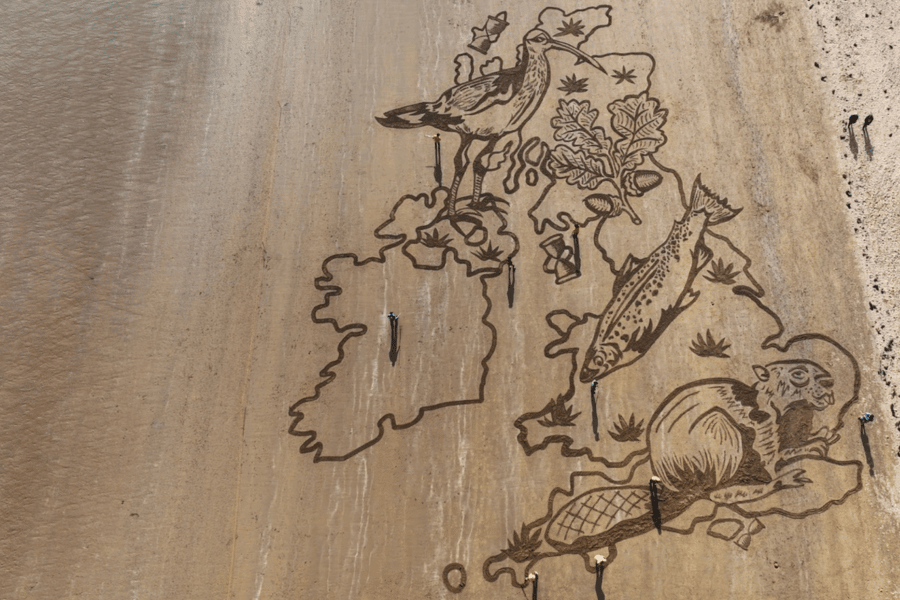
Another example of UKY4N’s bold creative campaigning was in their project Nature Loss: Lines in the Sand. On March 23, 2022, a 50-metre drawing depicting biodiversity in Britain was created on Scarborough Beach, featuring four biologically significant species that are declining. This symbolic act aimed to address the alarming depletion of nature in the UK, urging authorities to prioritise conservation efforts. Their creative ways received public recognition and an international audience, and if you look at the pictures of this impactful mural it is easy to understand why!

An overhead shot of the beautiful mural created by UKY4N on Scarborough beach.

UKY4N also regularly hosts workshops to introduce young people to creative campaigning, the next one to be held in Brighton on the 23rd of March 2024. 

In addition, UKY4N is currently dedicating their time to work relating to the general elections coming up in the UK this year. With the voting turnout among people in the age between 18 to 24-years in the UK in 2019 reaching 47% (compared to over 74% in the group of over 65-year olds), getting young people more enthusiastic and interested in the election is a crucial issue. As Ellen shares with us, only 50% of young people in the UK think they learn sufficiently about politics in school, so another focus of UKY4N lies on knowledge-sharing and capacity-building on the voting system. In order to be able to navigate the different and sometimes confusing party manifestos, UKY4N explains each programme from relevant political parties for everyone to understand. The main reason for that is to underline the importance of casting your vote to support certain policies and causes, as they so aptly put it on their website, “[n]ature cannot vote in elections. But many of us can!” With important elections coming up across Europe this year, not to mention the European Parliament elections, this is something many of us can keep in mind!

And with that being said, it is easy to see the problems that unite us. UKY4N is tackling the problems of the depletion of nature in the UK, but we are seeing similar problems worldwide. Although freshwater ecosystems are so important to nature and human well-being, they are also the most threatened in the world. Since 1970 freshwater species have experienced an 83% decline – twice the rate experienced within terrestrial or marine sources. Let us therefore stand united on this International Day of Action for Rivers, and reflect on the importance each and every one of our actions plays in the protection of our water systems!

More about Biodiversity

Nature Protection and Biodiversity as Enablers of Rights, Participation and Well-Being Written by Olivia Robertson Volunteer at YEE – Biodiversity Contents Share


Read More

The conclusion of the 16th meeting of the Conference of Parties to the Convention on Biological Diversity (CBD COP16) marks a pivotal


Read More

Despite the law’s importance in combating deforestation, the European Union recently announced a 12-month delay.


Read More

While nighttime activities are popular with humans for a few nights a year, some creatures keep it creepy all year round.


Read More